Review: Wilderness Mara
Mara Triangle, Masai Mara National Reserve, KenyaTwo nights • August 8 - 10, 2026A Sundowner Safaris Camp ReviewFor more than fifty years, Little Governors' Camp was one of the Masai Mara's defining addresses. The Governors' balloons have lifted off from behind it every morning since 1978. Wilderness took it on, rebuilt it from the ground up, and reopened it on July 9, 2026, as Wilderness Mara: twelve tented suites, one of them a family unit, strung along a seasonal marsh beneath the Oloololo Escarpment.
We arrived four weeks after it opened. I traveled with my father-in-law, Mo, for two nights. We came up from Botswana, where we had just finished Chitabe and Vumbura Plains, and routed through Johannesburg and Nairobi. Benson wasn't with us on this leg, so everything here is what a guest traveling with the camp's own guide should expect.
This is a classic-tier camp, and this review is written against that standard. For anyone new to Wilderness, that needs a word of explanation. Wilderness runs safari camps across southern and East Africa and has traditionally grouped them into two main tiers. Premier camps carry the highest rates and the most elaborate suites and dining. Classic camps deliver the same model at a lower price point.
That model is all-inclusive, and it is worth knowing exactly what that means. The rate covers your accommodation, all meals and snacks, and house drinks, meaning soft drinks, water, local beers, house wines, and non-premium spirits, whether at the bar or in your room. Laundry, twice-daily guided activities, park and concession fees, and emergency medical evacuation insurance are included too. What sits outside it: premium imported spirits and champagne, add-ons such as ballooning and spa treatments, gratuities, and anything from the shop. Those are settled in camp.
The short version: the location is exceptional, the build is beautiful, and the food is one of the camp's real strengths. What hasn't caught up yet is the team. Service is still finding its feet, and the fireside safari culture that makes a great camp feel like one is not there yet. Both are exactly what you would expect to improve with time, and nothing here would stop us sending guests. But this is an honest snapshot of a very new camp.
Getting There
We spent the night before at Ole Sereni in Nairobi, on the edge of Nairobi National Park, and flew out of Wilson Airport the next morning on Governors' Aviation.
The flight made one stop, at the Mara North airstrip, and it produced the most memorable landing of the trip. As we touched down, a hyena ran onto the runway. The pilot braked hard, let it cross, and carried on as though it happened every week, which in the Mara it may well do. From there it was a short hop to the Kichwa Tembo airstrip.
Collins met us at the strip. He wasn't our guide for the stay; he appeared to have a drop-off of his own to handle, and he got us started before handing us over to Jackson at camp. It worked fine, but best practice is for your own guide to meet you. The first drive in is where that relationship starts.
The transfer is about ten minutes, and we went more or less straight to camp. Collins stopped along the way to hand out chilled welcome drinks and give us an introduction to the area: the Oloololo Escarpment rising behind camp, and where the wildebeest had moved to at that point in the season.
The arrival itself was lovely. The team greeted us with a welcome song. Then, while we signed the paperwork, every member of staff came by one at a time to introduce themselves by name and tell us what they did. It's a small thing and a very good one, and it set a warm tone. From there we went straight to lunch outside.
Setting & Location
The Mara Triangle is the single biggest reason to book this camp.
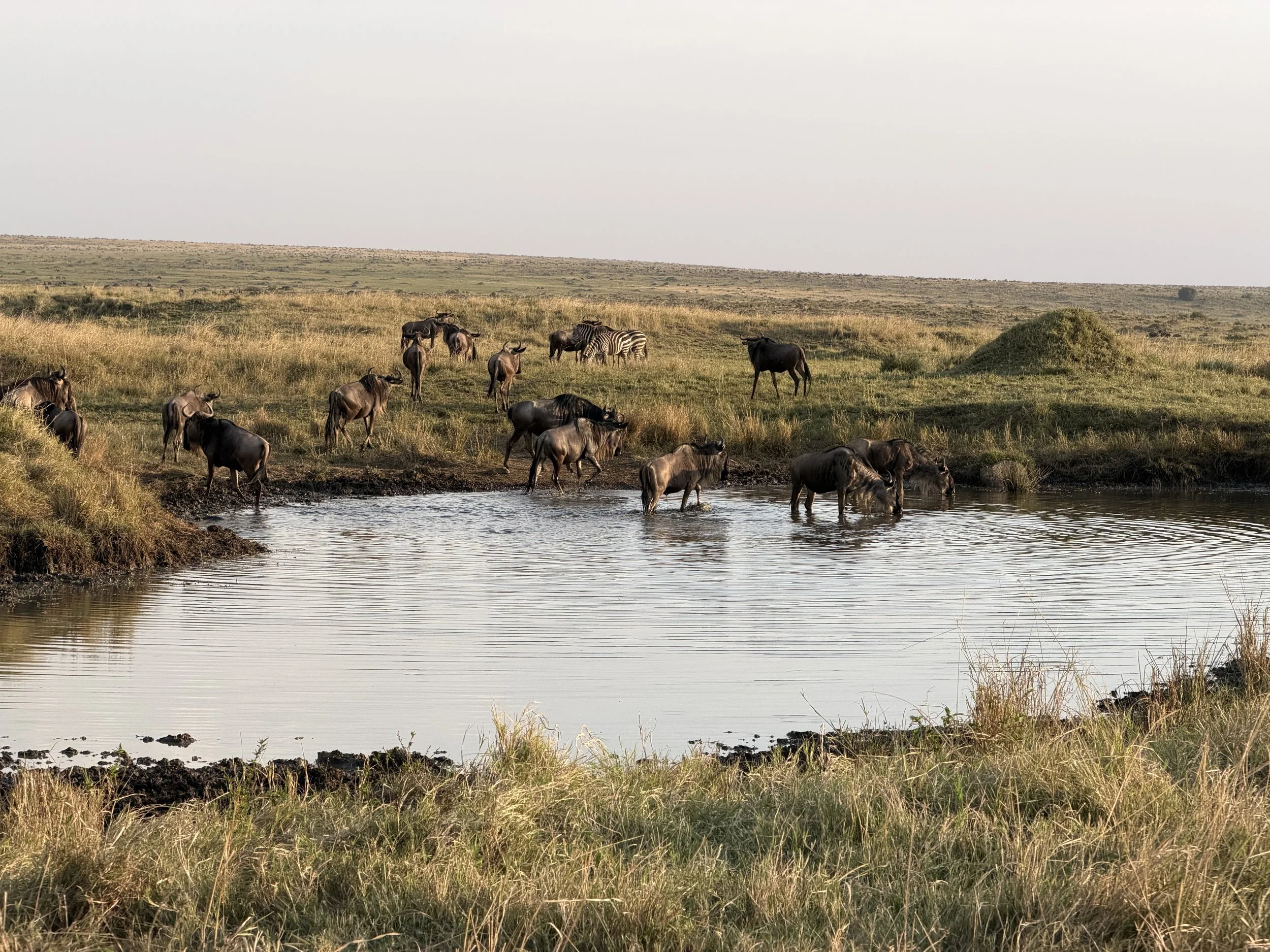
The Triangle is the western third of the Masai Mara National Reserve, about 510 square kilometers (roughly 200 square miles). It is bounded by the Mara River to the east, the Serengeti border to the southwest, and the Oloololo Escarpment to the northwest. It is managed separately from the rest of the reserve by the Mara Conservancy, a non-profit, and it feels different on the ground.
Only two permanent camps sit inside it: Mara Serena and Wilderness Mara. Seasonal mobile camps come and go with the migration, and the other well-known names in this corner of the Mara sit on its edges, driving in each day. That matters enormously during the migration.
The rules are stricter, and they are enforced. Rangers patrol in their own small vehicles, and we saw them out regularly making sure drivers followed the rules. Off-road driving is allowed only in designated low-use zones. At a cat sighting, a small number of vehicles take the viewing positions and everyone else waits in a line some distance back. Under the Conservancy's own park rules, once more than five vehicles are waiting, viewing is capped at ten minutes. The effect is a sighting that feels organized rather than besieged, and after the busier areas of the Mara, it was a relief to see.
It was also much quieter, especially for peak migration season. When we visited, the herds had already crossed the river into the Triangle. We had wildebeest and zebra everywhere around us without any of the crossing-point traffic that defines the busier areas of the Mara in August. We drove to the river to see the crossing points, including Fig Tree Crossing, and saw how chaotic they must become when the herds are on the move. We were glad not to be part of it.
The camp itself sits along a seasonal marsh, set back a little from the main vehicle routes, which keeps it peaceful. The wildlife does not respect the boundary. Elephants graze across the marsh during lunch. A lion crossed in the distance on our second afternoon. A hippo came up to the edge of the main area, by the firepits, during dinner. And a family of resident warthogs, entirely unbothered by people, wanders through camp while guests eat.
This is a national reserve rather than a private conservancy, so the activity menu is narrower. Night drives are not part of the offering, and walking was not offered to us. That is one reason we recommend pairing the Triangle with a conservancy, covered in the Conclusion.
Weather in early August was cold before sunrise and beautiful through the day. After the freezing mornings we had just left behind in the Okavango, it felt positively mild.
Facilities
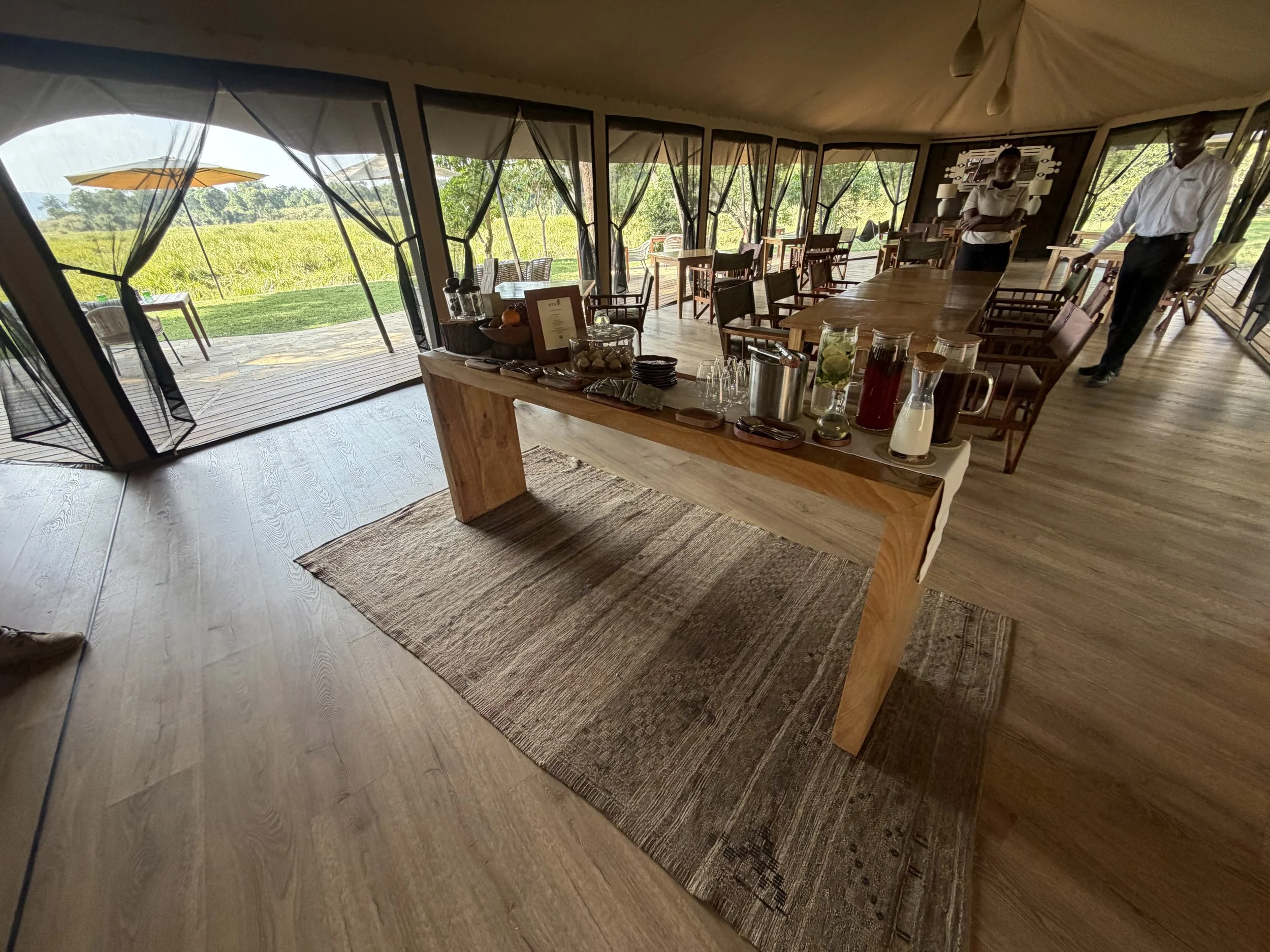
The build is beautiful. Wilderness brought in Chris Payne of White Elephant Trading Company for the interiors, and it shows: natural textures, locally made furnishings, and a palette taken straight from the landscape around it.
The main area is one very large tent covering the bar, dining room, and lounge, opening onto a big outdoor deck with plenty of places to sit. Lunches are taken outside overlooking the marsh, and it is a wonderful place to spend the middle of the day.
The pool is beautiful, well kept, and big enough to swim in rather than just cool off. It faces the marsh and has its own seating and loungers. In early August it looked very cold, and neither of us tested it.
The gym is beautiful and well set up. For anyone who would rather not walk over, each suite also has a portable workout kit with a yoga mat, the same kit we found in the rooms at Chitabe.
The spa has dedicated treatment rooms. I looked at two of them but didn't have time for a treatment. Treatments are charged separately from the all-inclusive rate.
The photographic studio is a quiet space with several computers for guest use. It was empty when I visited.
The shop is there for the usual browse.
The boma is large, with two firepits and seating for the whole camp. It deserves a better evening than the one it currently gets, which I cover under Service.
Wi-Fi reaches both the rooms and the main area, and it worked well throughout. After Vumbura, that was noticeable.
Paths between the suites and the main area are at ground level, while the suites and the main area themselves are raised on decks. Guests are escorted after dark.
The balloon launch is right behind camp, about a three-minute walk from our room. That is covered properly under Activities, but it belongs on any list of this camp's facilities. It is the most convenient balloon launch we have ever used.
The Room
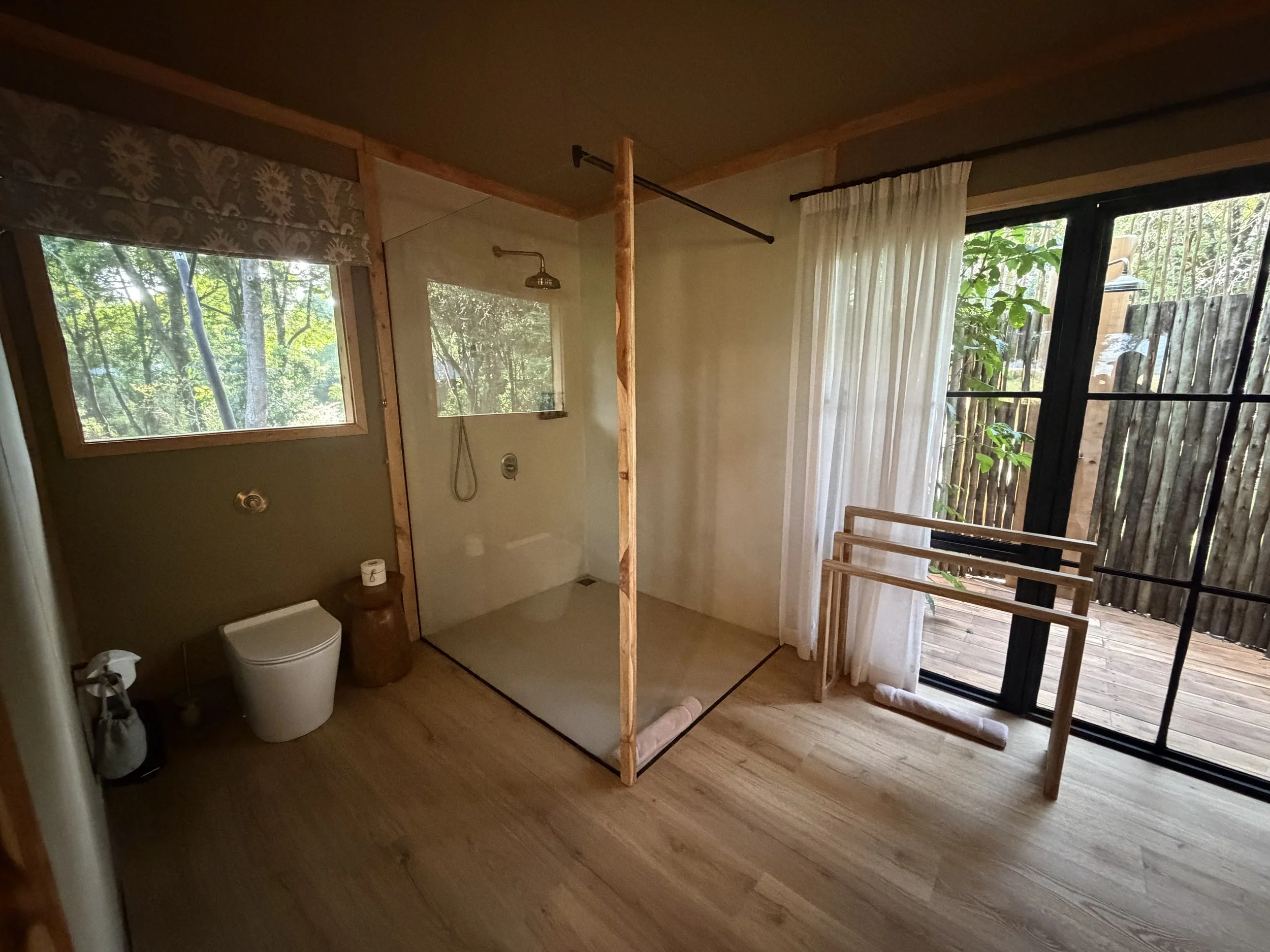

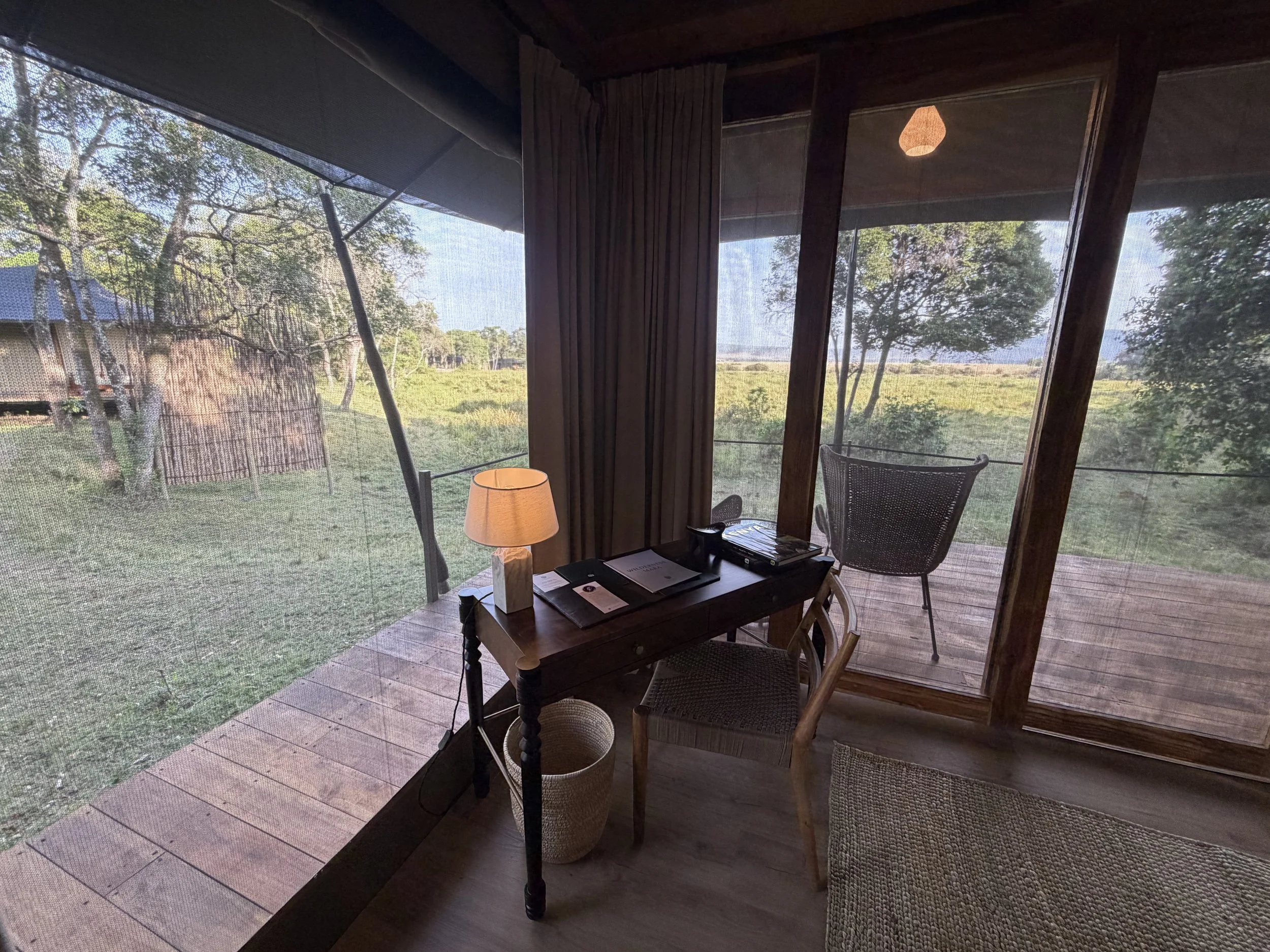
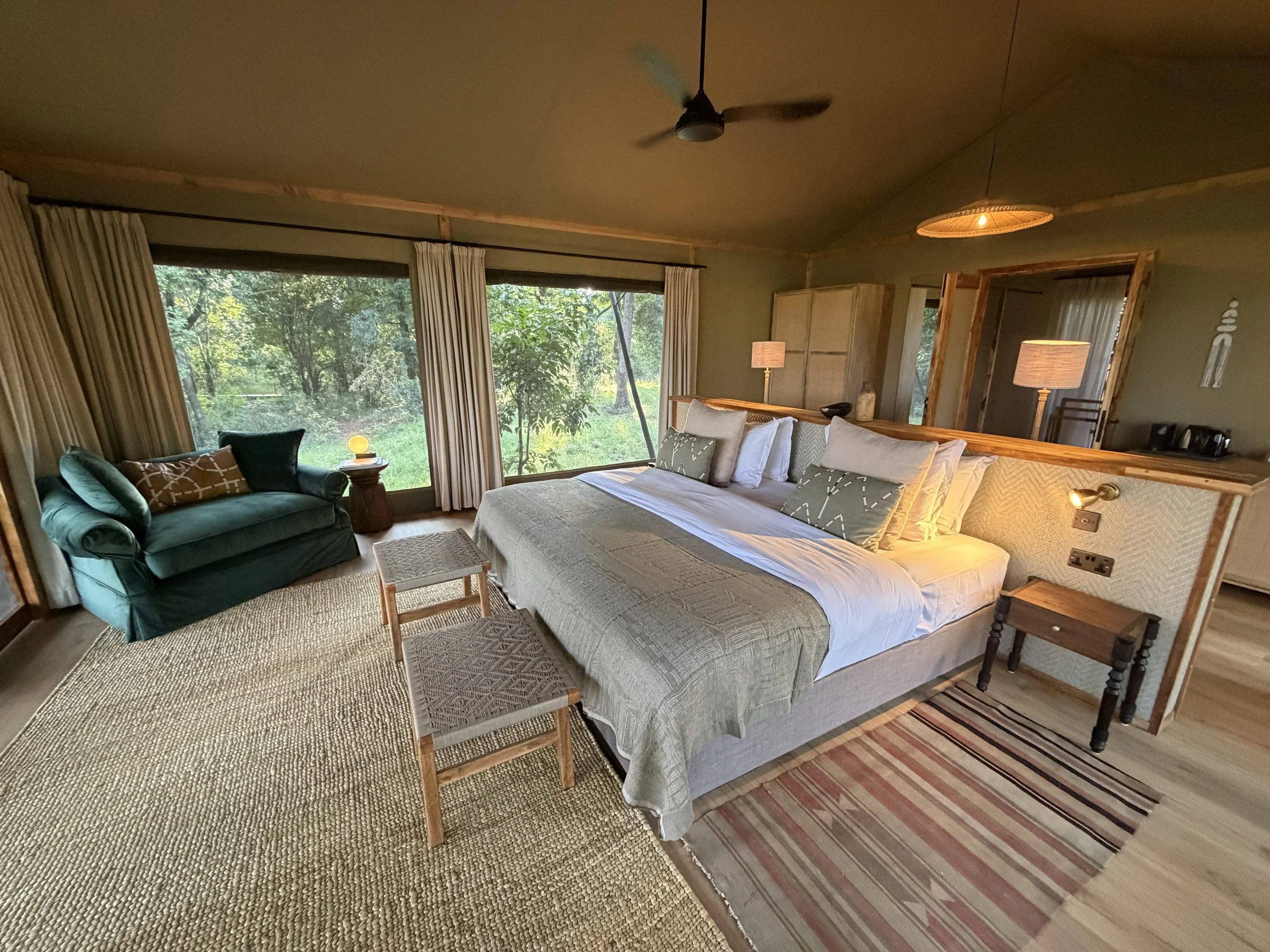

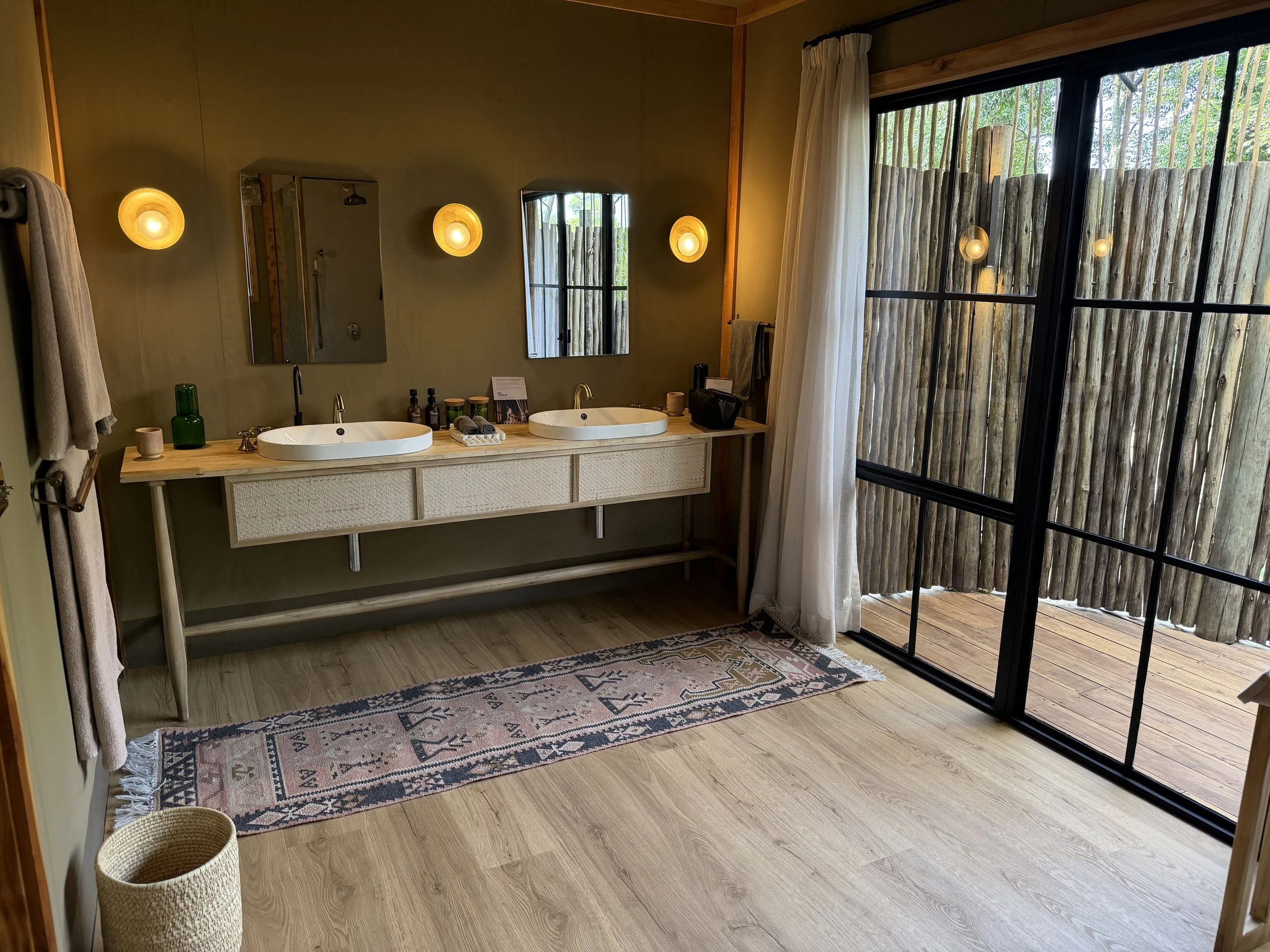
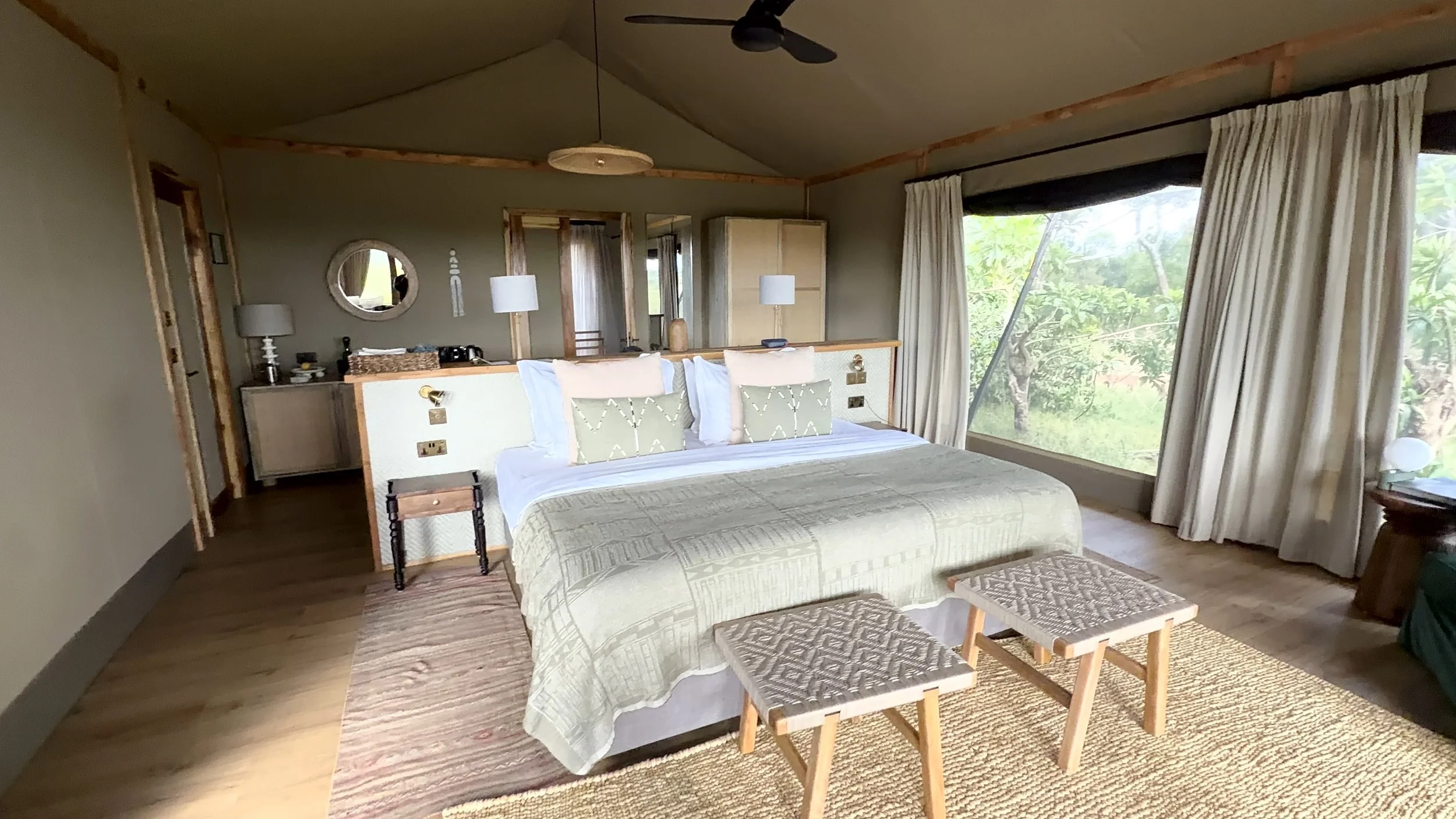
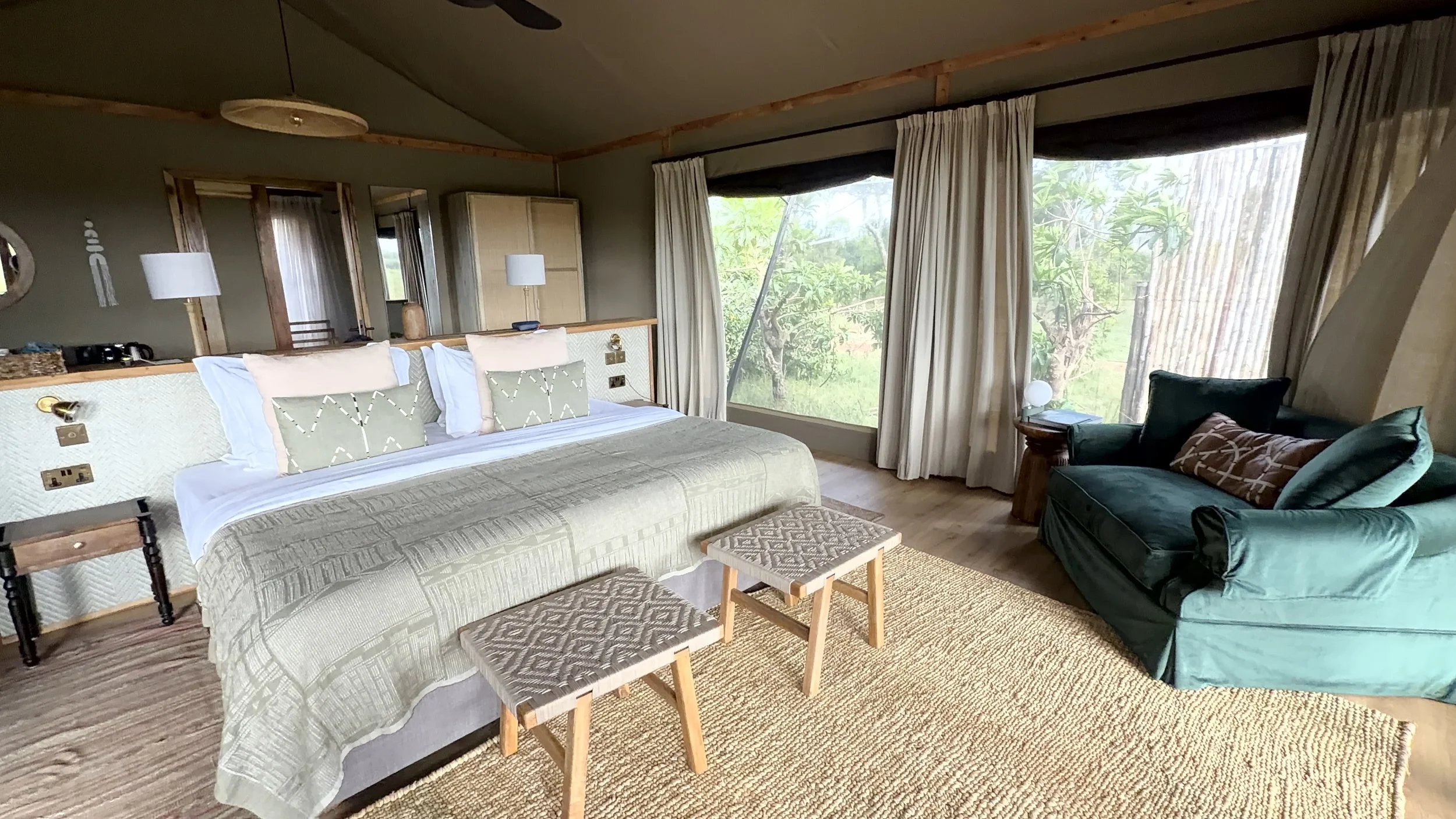
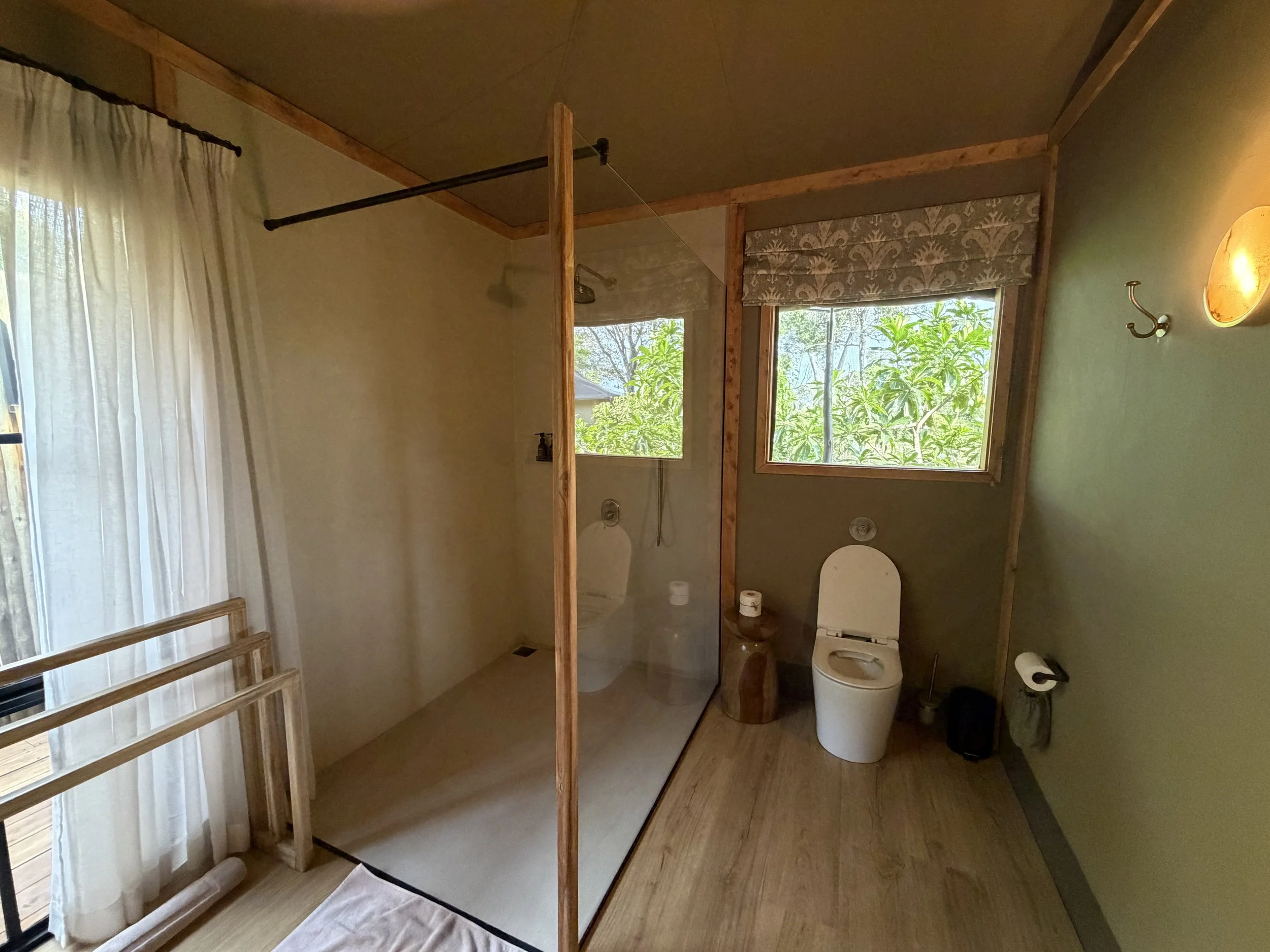
The suites are new, beautifully made, and a generous size. They are fully canvas, but finished with enough craft that they feel considered rather than rustic: hand-loomed curtains from the Nairobi textile studio Siafu, white-oak cabinetry with woven rattan, and brass details in the lighting and fittings.
We stayed in the family unit, and it is very well designed. A single main entrance opens into an internal hallway, and each of the two bedrooms has its own door off that hallway. You can move between the rooms without stepping outside, which parents with younger children will appreciate. Both bedrooms are en suite, and the unit shares one long outdoor deck. The main bedroom has both an indoor and an outdoor shower. The second bedroom is slightly smaller and has an indoor shower only.
The second room was set up as twins when we arrived. We asked for a double and it was changed straight away.
I also looked at a standard suite, and it is almost exactly the main bedroom of the family unit: a double bed with a view straight out over the marsh, a small seating area, a desk, a small closet, and a coffee station with an espresso machine. The bathroom has a very good shower with excellent water pressure, and every suite has its own outdoor deck.
The minibar is included in the rate. As with the drinks around camp, that covers soft drinks, water, local beers, house wines, and non-premium spirits, with premium imported brands charged separately. The team also asked which wine we would like in the room. We didn't want any. They insisted anyway, which is about the friendliest service failure I can imagine.
Cooling is ceiling fans above the beds, with no air conditioning. In August that is all you need.
There are no mosquito nets over the beds. The camp told us mosquitoes are few in this area and nets aren't needed, the tented windows are fitted with fine mesh, and we didn't see a single mosquito in two nights.
The one real weakness is privacy. From the bed I could hear neighbors talking and walking past, and at times I closed some of the blinds so I wouldn't be looking at the suite next door. The fix is straightforward: more planting between the suites would do a great deal. For now, it keeps a very good room from being a great one.
The Vehicle
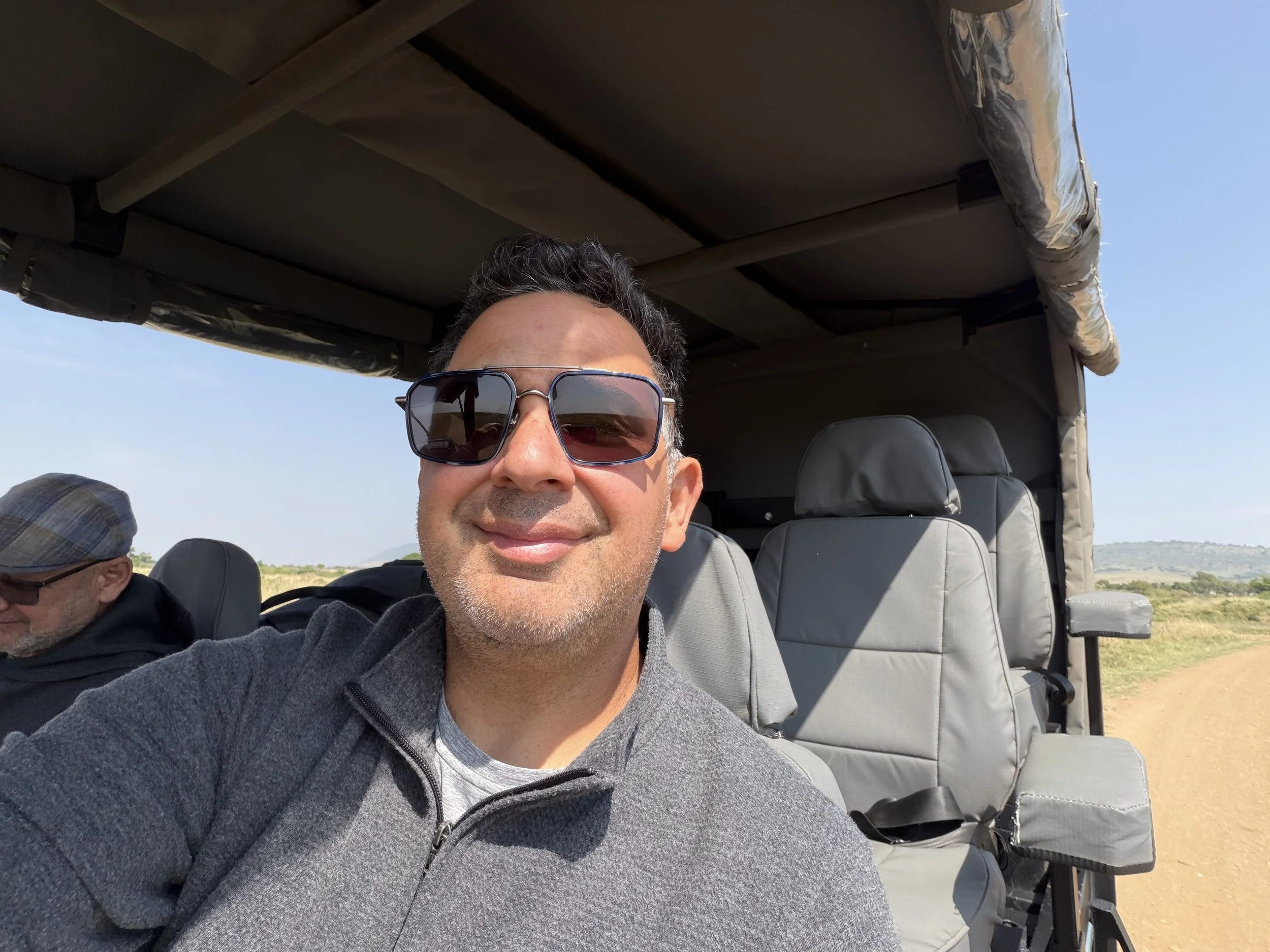
Wilderness Mara runs open-sided Land Cruisers in the standard game-drive configuration, and the interiors have clearly been refurbished. They felt newer and more comfortable than many of the vehicles we rode in across this trip.
Blankets, ponchos, and hot water bottles are all provided, and they earn their place on a cold Mara morning.
The cool box is a plug-in fridge. That keeps drinks cool, but it meant we were short on ice for most of the stay. There are no storage boxes between the seats, so cameras, lenses, and jackets end up on the seat beside you. There are no bean bags or camera supports either. That is not specific to this camp: we did not find them on the Wilderness vehicles at Chitabe or Vumbura Plains on the same trip. Photographers should bring their own beanbag.
Access is easy, with a manageable step and good grab handles. Mo had no trouble with it.
Jackson guided solo, without a tracker, and he worked his own ground rather than living on the radio.
Vehicles are shared by default. We shared ours with one other solo guest, though he skipped the final evening and morning drives, so we had those to ourselves. A private vehicle can be booked, and anyone with photography priorities, or who simply wants to set their own pace in the herds, should ask for one when booking.
Food
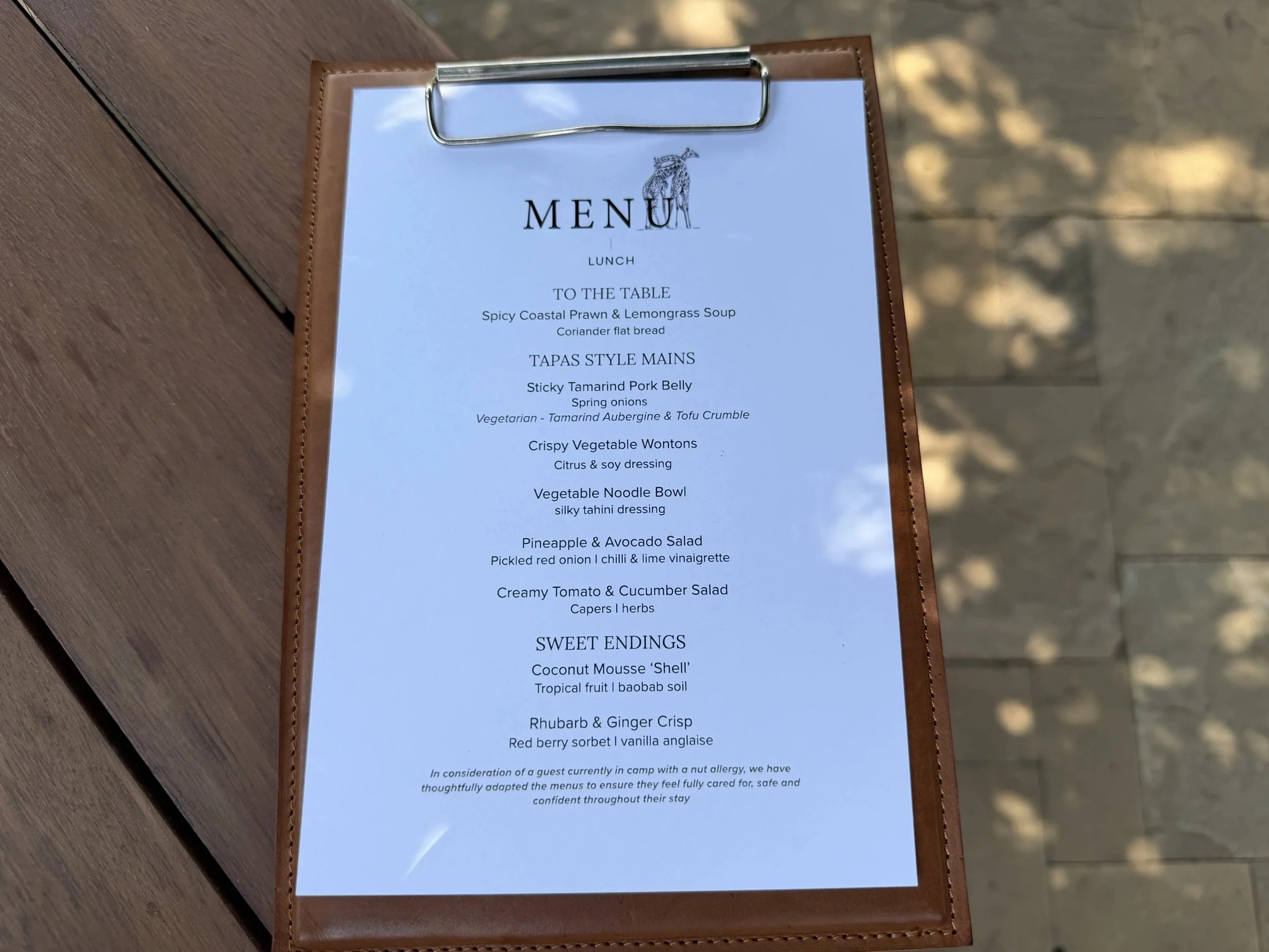

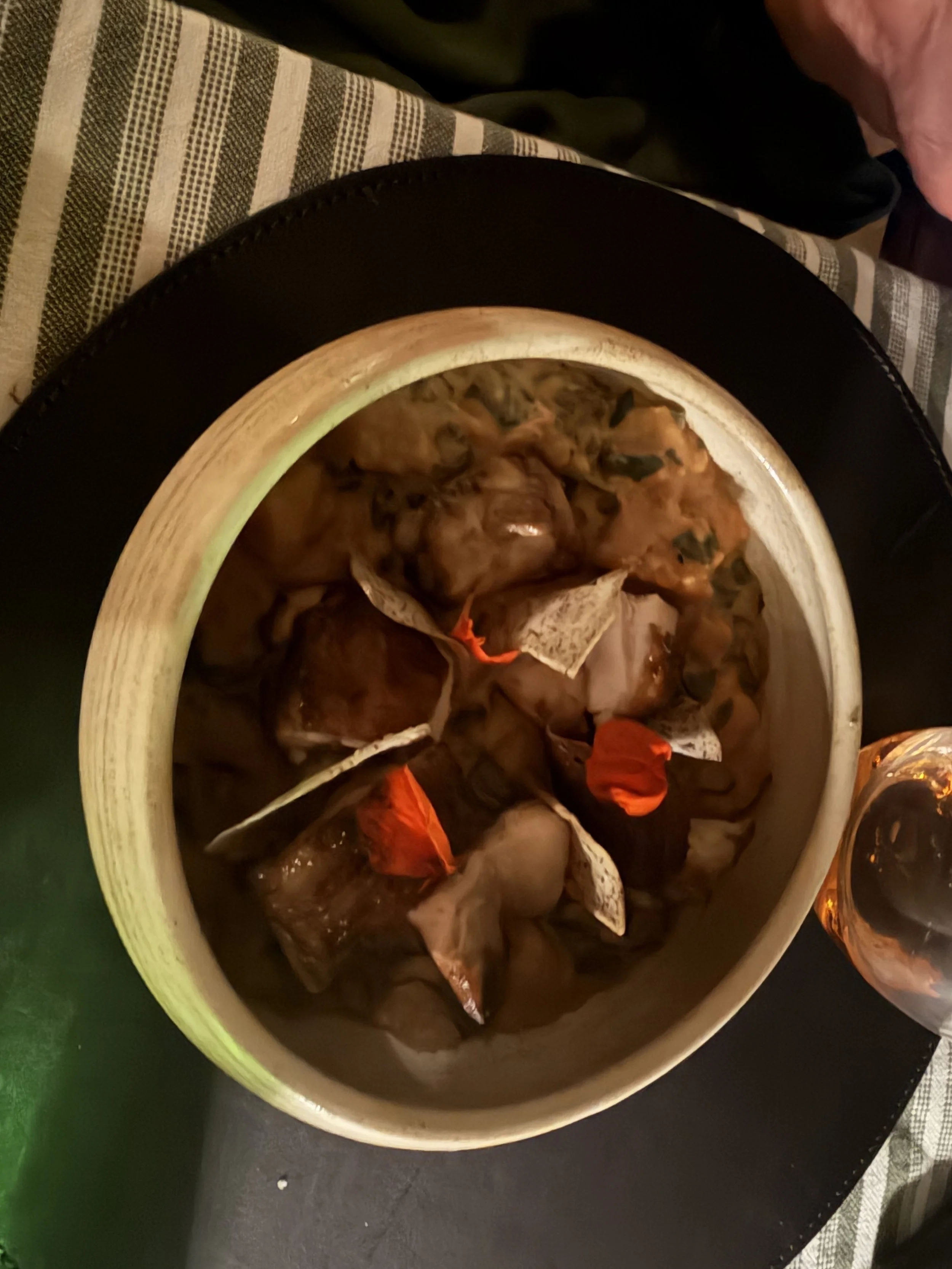
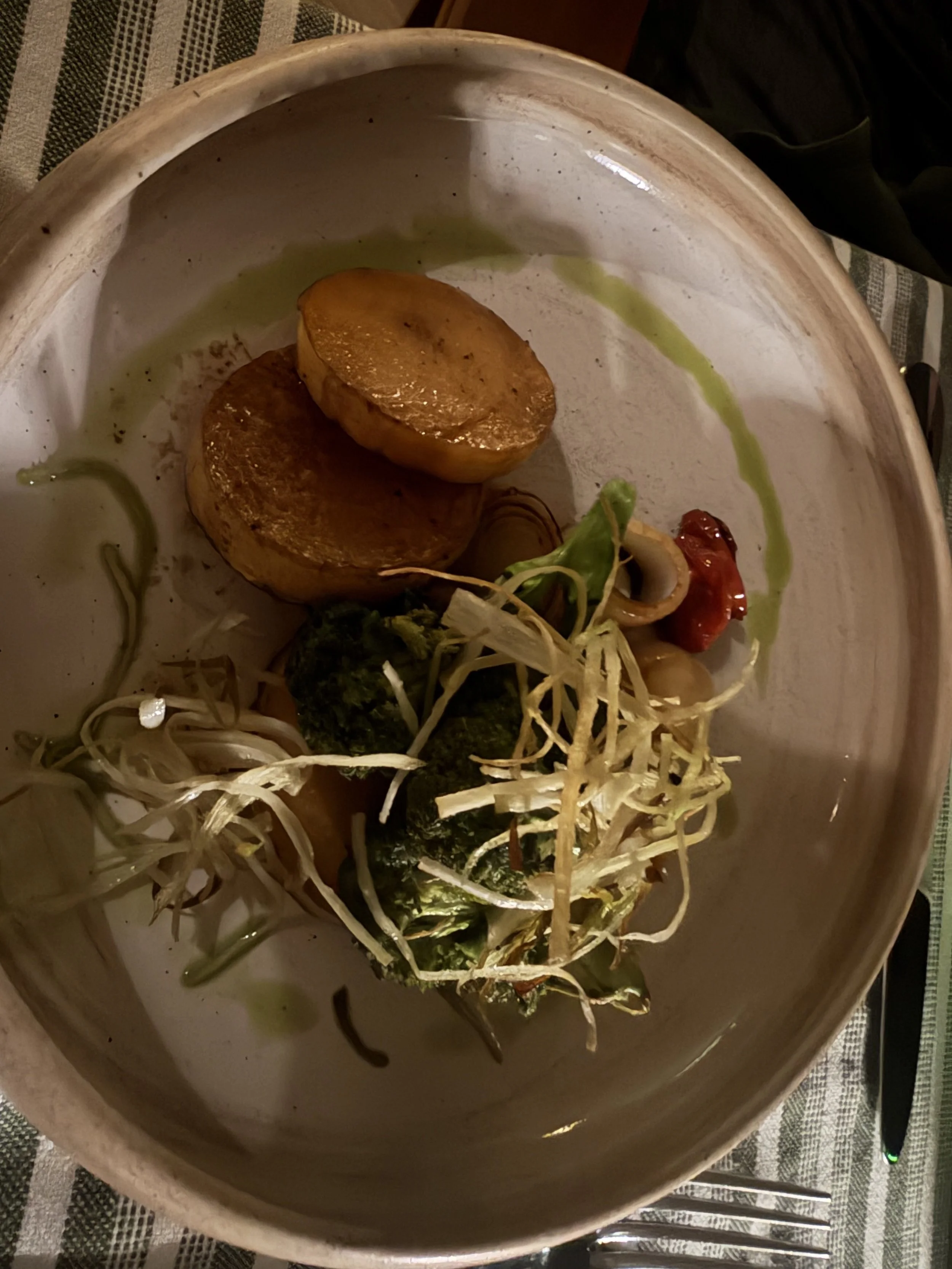
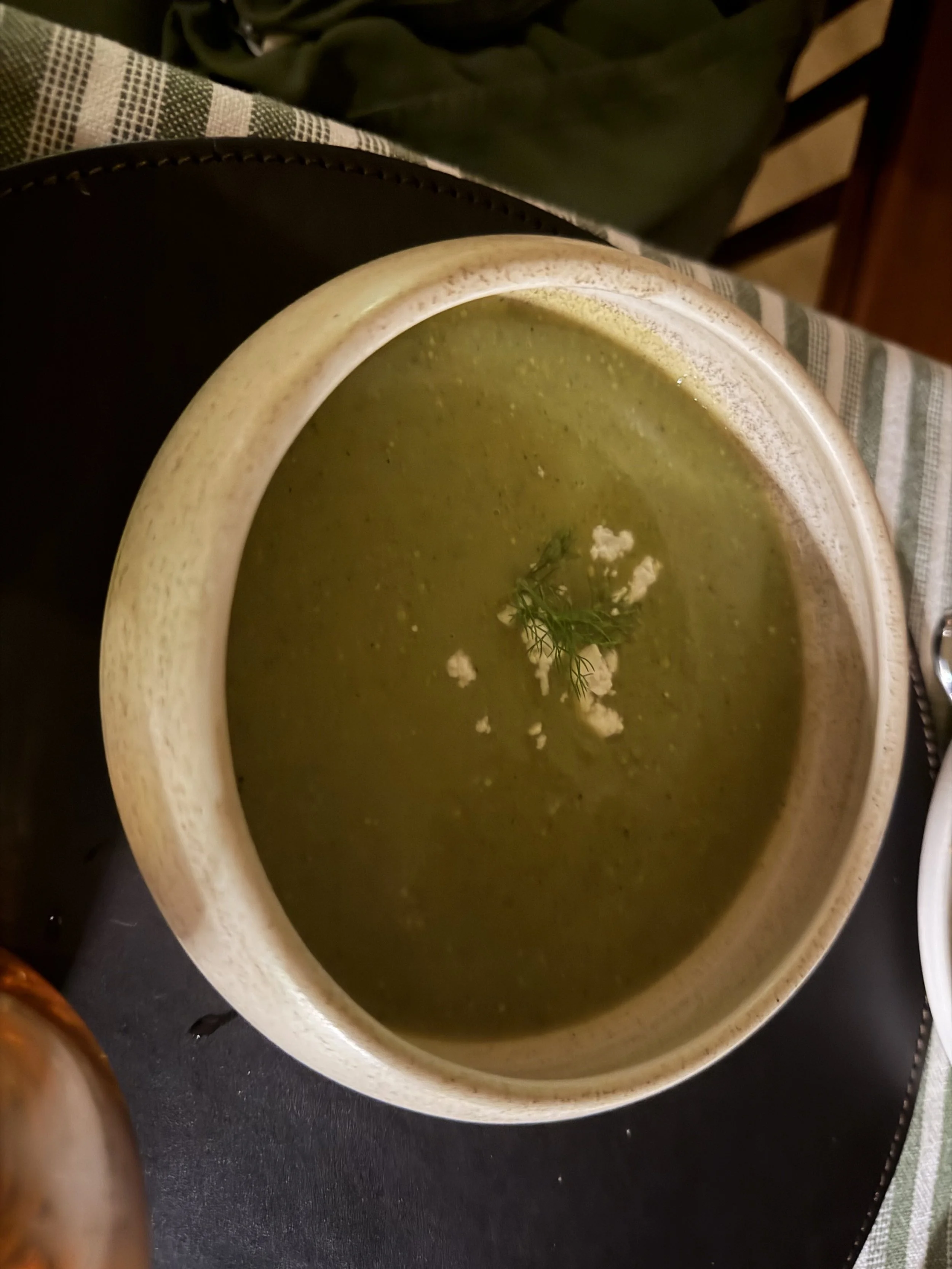
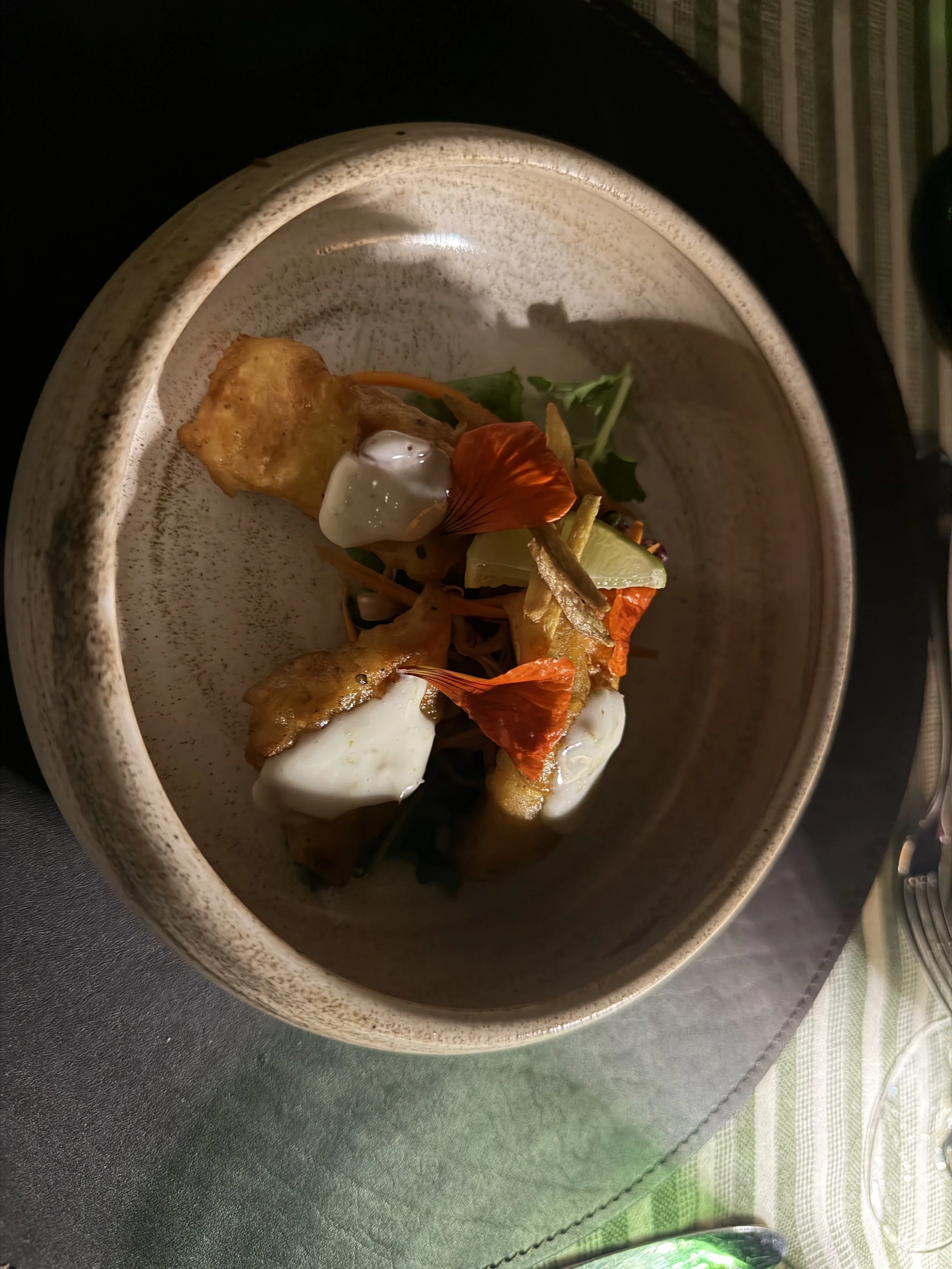
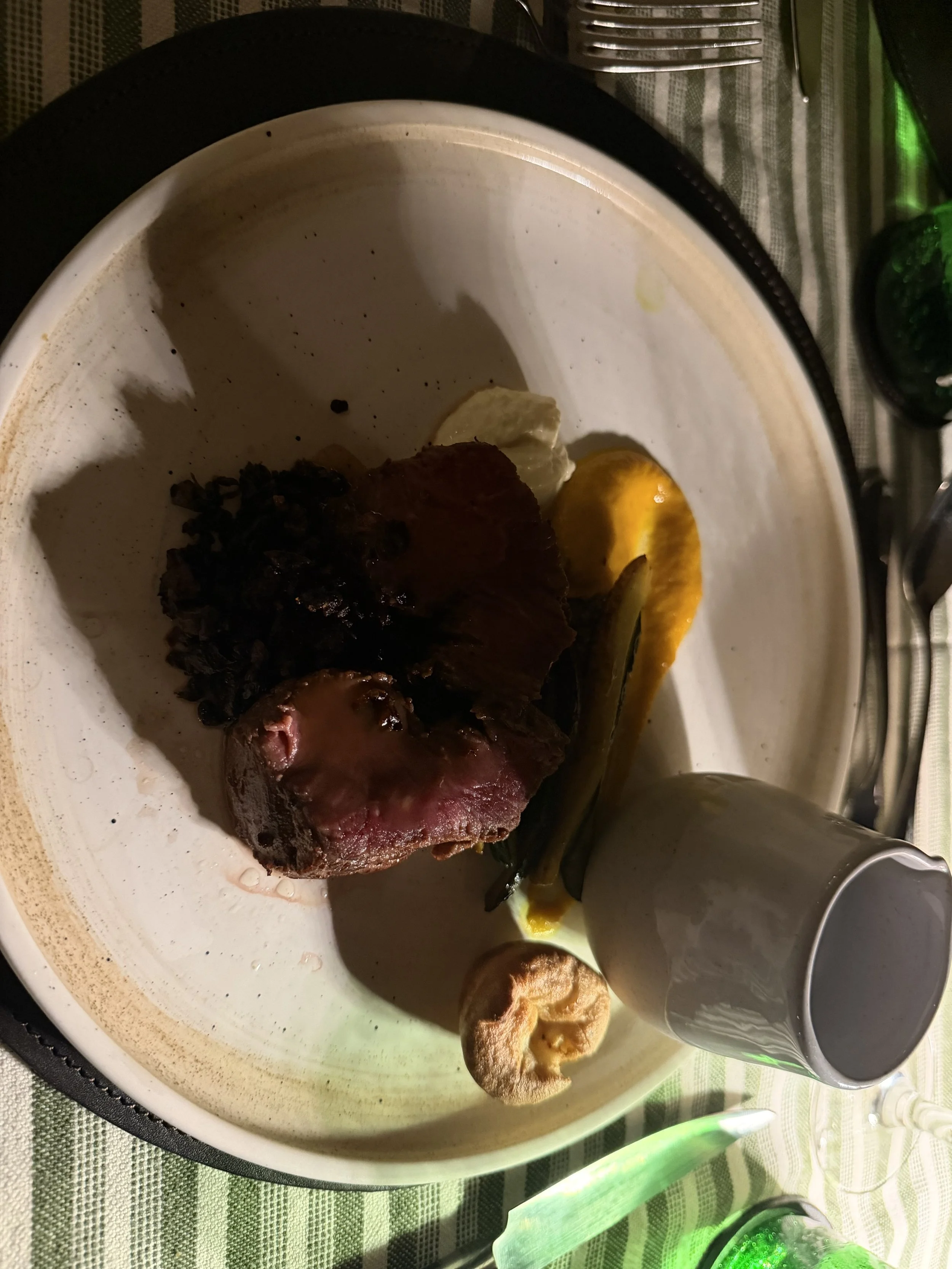
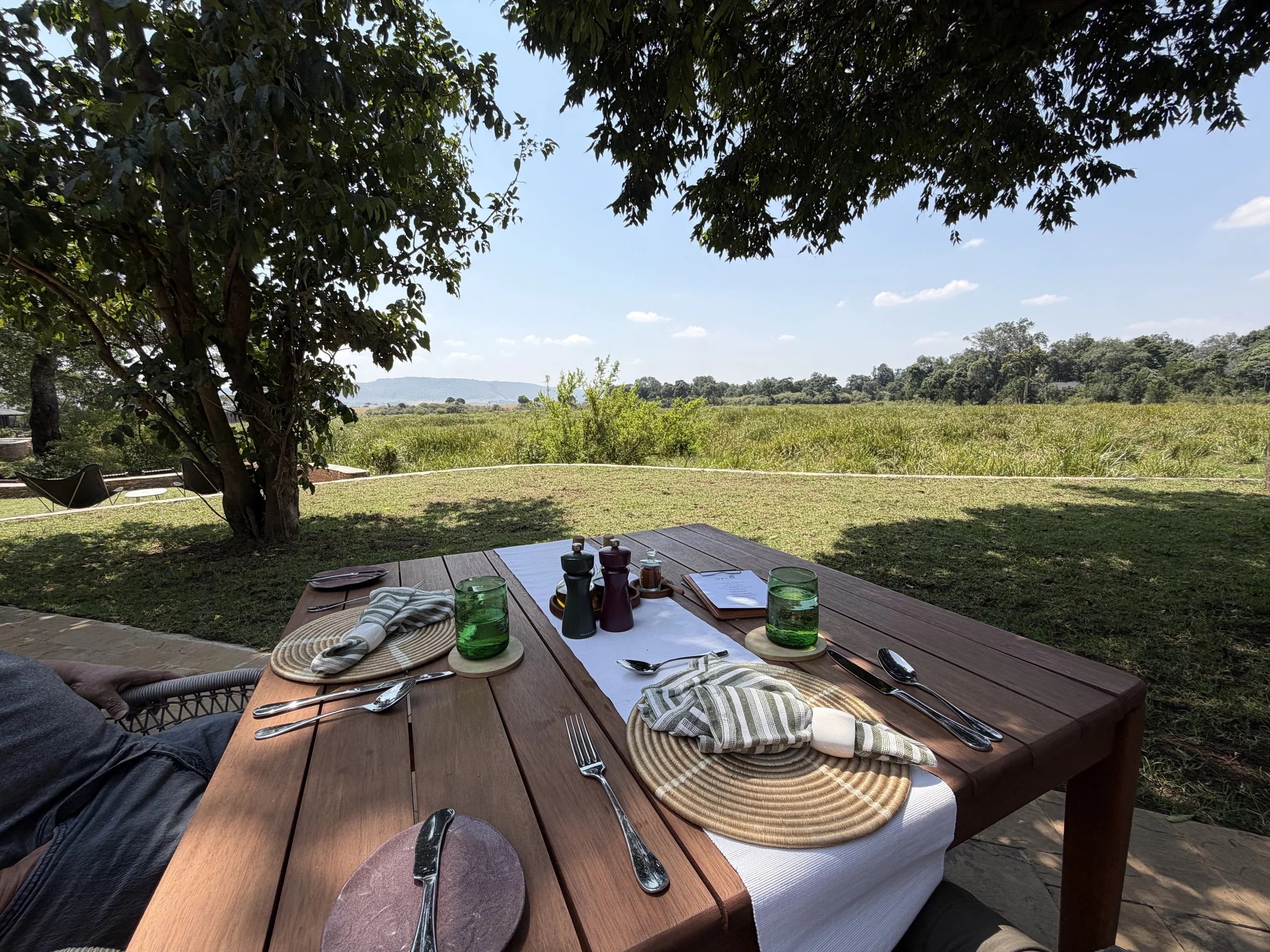
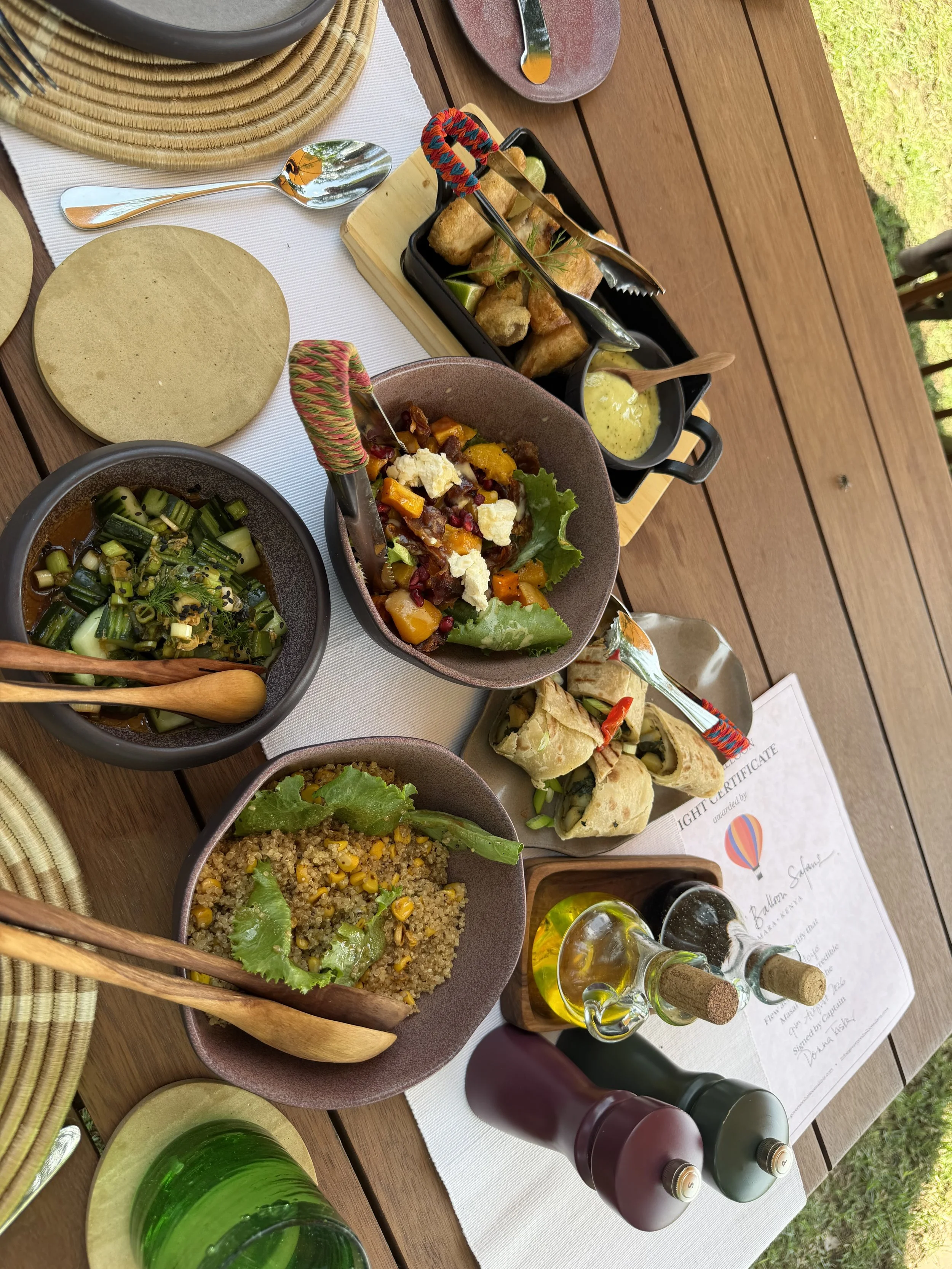
Food is one of the real strengths of Wilderness Mara, and it was consistently excellent across the stay.
Lunches are served outside overlooking the marsh, and our arrival lunch set the tone: a chilled soup to start, then a vegetable-forward spread of small plates, a little of everything, served tapas style. Elephants grazed in the background while the warthogs worked the lawn in the foreground. The second day's lunch, taken at about half past one after a long morning out, was every bit as good, with another chilled soup, and we watched a lion cross the far side of the marsh while we ate.
Dinners are plated. You order at lunch or afternoon tea, choosing a starter, a main, and a dessert. On our first night I had the steak. It was very well cooked, and the chicken and everything else on the table were just as good. The second night was just as strong. The kitchen is doing very good work here.
Breakfast in camp on our last morning was a spread of cheeses, pastries, yogurt, granola, and fruit, with hot dishes cooked to order. It is included, as it is for all our guests.
The balloon breakfast on our second morning was a champagne breakfast laid out on the plains where we landed. It is run by Governors' Balloon Safaris rather than the camp, and it is part of the balloon experience.
Drinks are included, as described in the Introduction: soft drinks, local beers, house wines, and non-premium spirits are all covered, while premium imported brands and champagne are charged separately. The wine list is what you would expect at a classic camp, drawn mostly from South Africa.
Service
One thing first, because it matters. Wilderness makes a point of hiring from the communities around its camps. By its own figures, more than 85 percent of its camp staff come from remote, rural communities, and the company makes training them part of its model. That is the right model for safari tourism and one we are glad to support, because the jobs, and the income they carry home, stay close to the land guests are paying to see. It also means that a brand-new camp opens with many of its team early in their hospitality careers, which is useful context for what follows.
This is the section where Wilderness Mara is still a work in progress, and it should be read in context. We stayed four weeks after the camp opened, with a team that was clearly still learning the Wilderness standard. At the Wilderness camps we know best, that standard means managers who are visible in camp throughout the day, guests who are known by name from the first evening, and requests that are anticipated rather than chased.
It started beautifully. The welcome song and the one-by-one staff introductions at check-in are a lovely arrival ritual.
After that, service wasn't yet buttoned up. Staff were always visible but not always attentive. Several of the team seemed new to the industry and didn't always understand what we were asking for. Our waiter never managed Mo's name across two days and called him all sorts of other things, most often Mark. At a small camp, knowing your guests by name is the baseline.
Management was hard to find. The camp manager, Wilfred, introduced himself at check-in, and we didn't see him again until our last morning. On our second evening I asked to speak to a manager to arrange a few things for the next day, and no one came. I asked again at around seven the next morning, and a manager arrived at about eight. From that point everything was handled quickly and efficiently. It would simply have been better handled the evening before.
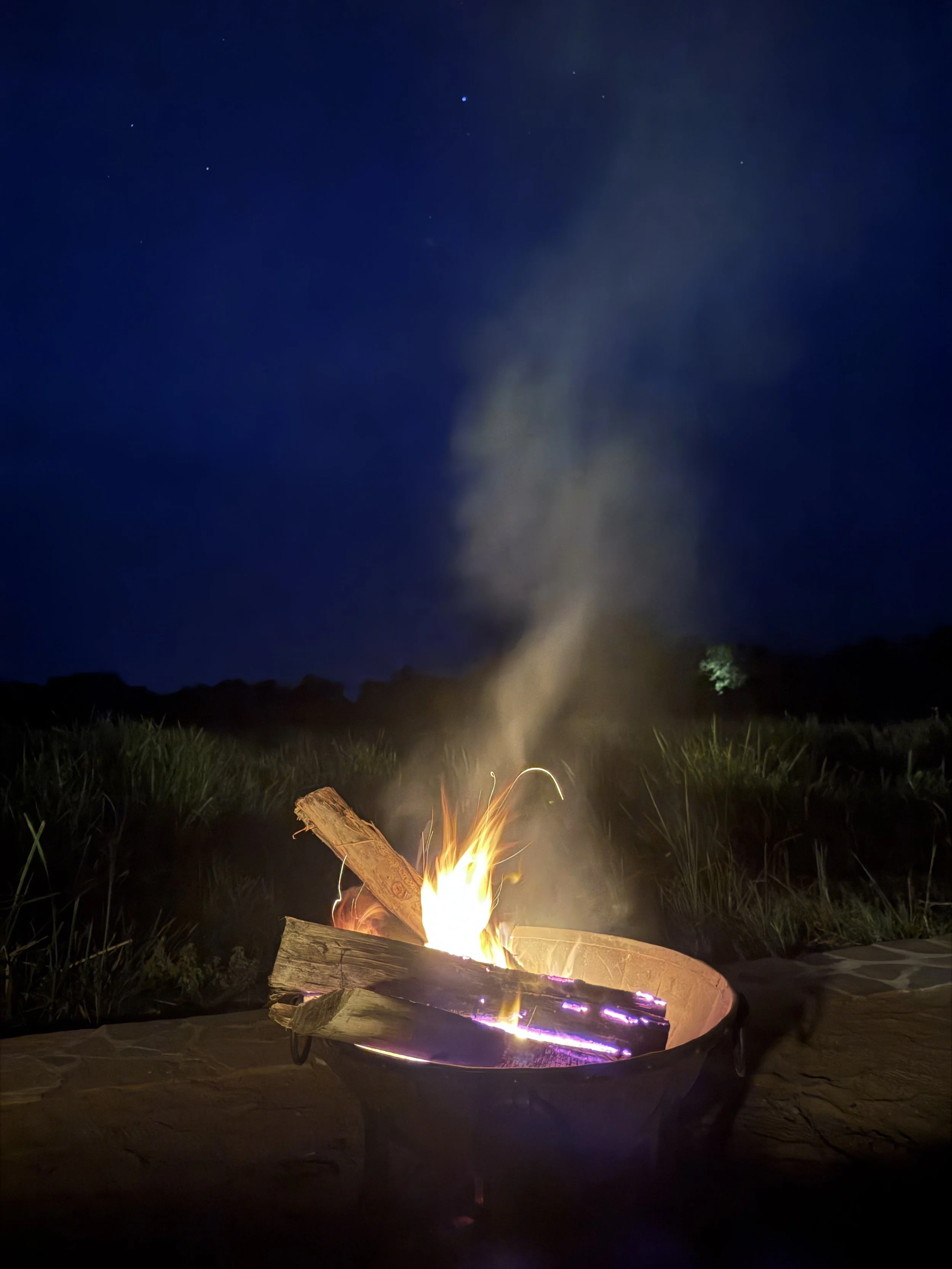
The bigger gap is harder to fix with a checklist: the evenings. The boma has two firepits and room for the whole camp, and Mo and I sat out there every night. But no guides joined the guests, either there or at dinner, and staff came and went. At the other Wilderness camps we have stayed in, and at most good safari camps anywhere, the evening fire is where the day gets retold: guides talking to guests, guests talking to each other, the camp becoming a camp. Here, once you were back from the drive, the place felt quiet and oddly impersonal. The passion of safari was out in the Triangle, but it didn't come home with us.
None of this is unusual for a camp in its first season, and I fully expect it to improve as the team settles and the standards bed in. But guests traveling in the camp's first months should go in expecting a beautiful property with a new team, rather than a polished one.
Activities & Guiding
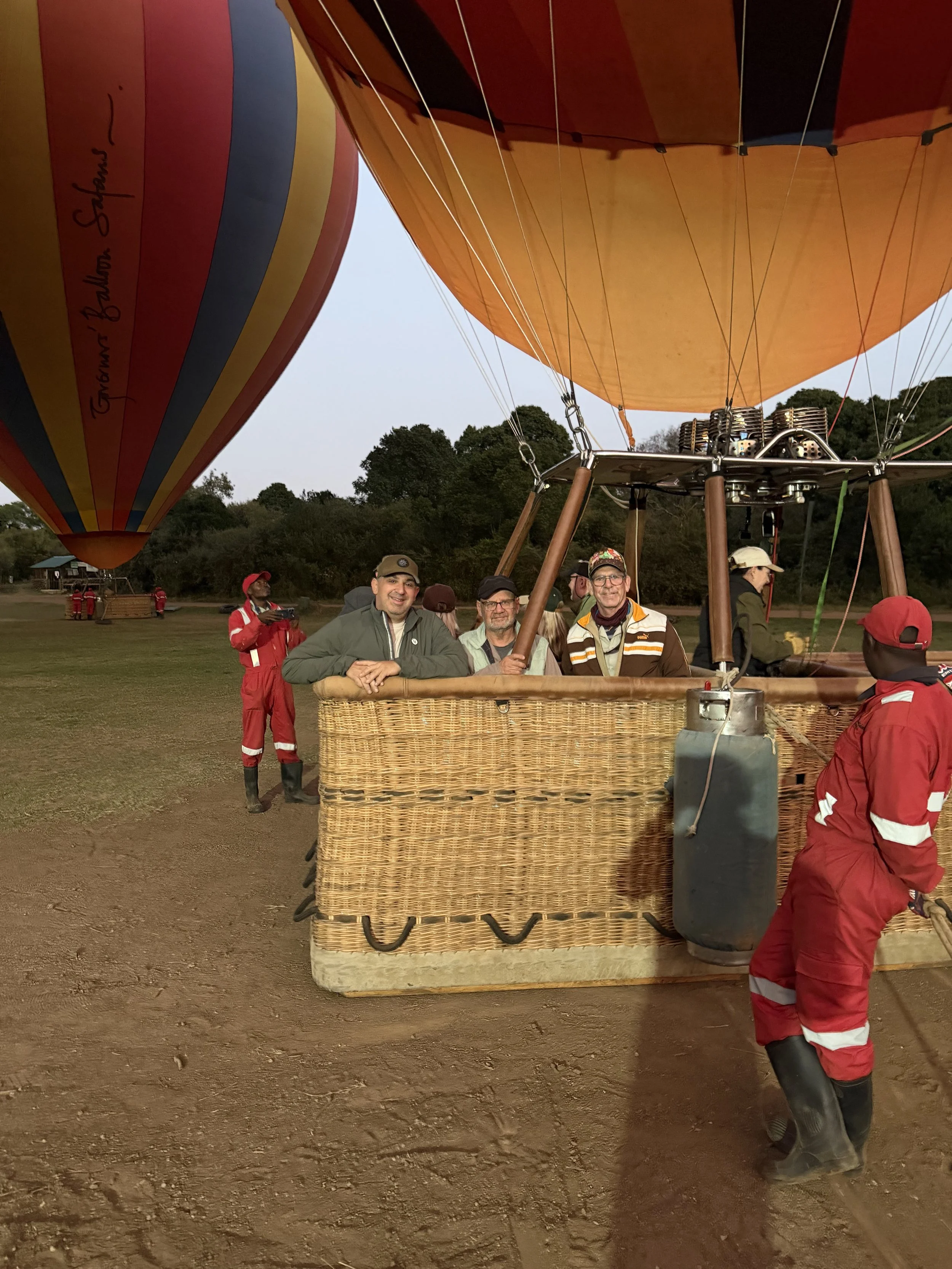
Game drives run morning and afternoon, and hot-air ballooning is available at additional cost. The balloon is the headline here. Guided walks and cultural visits are listed among the camp's activities, but they weren't offered to us during our stay.
Our guide was Jackson, and he was a good guide: knowledgeable, sensible about positioning, and entirely at home within the Triangle's rules. He isn't the best we've had, and his guest service still needs some polish. There was no coffee stop on the morning drives and no private sundowner setup. That is the kind of thing I'd expect to come with time at a new camp.
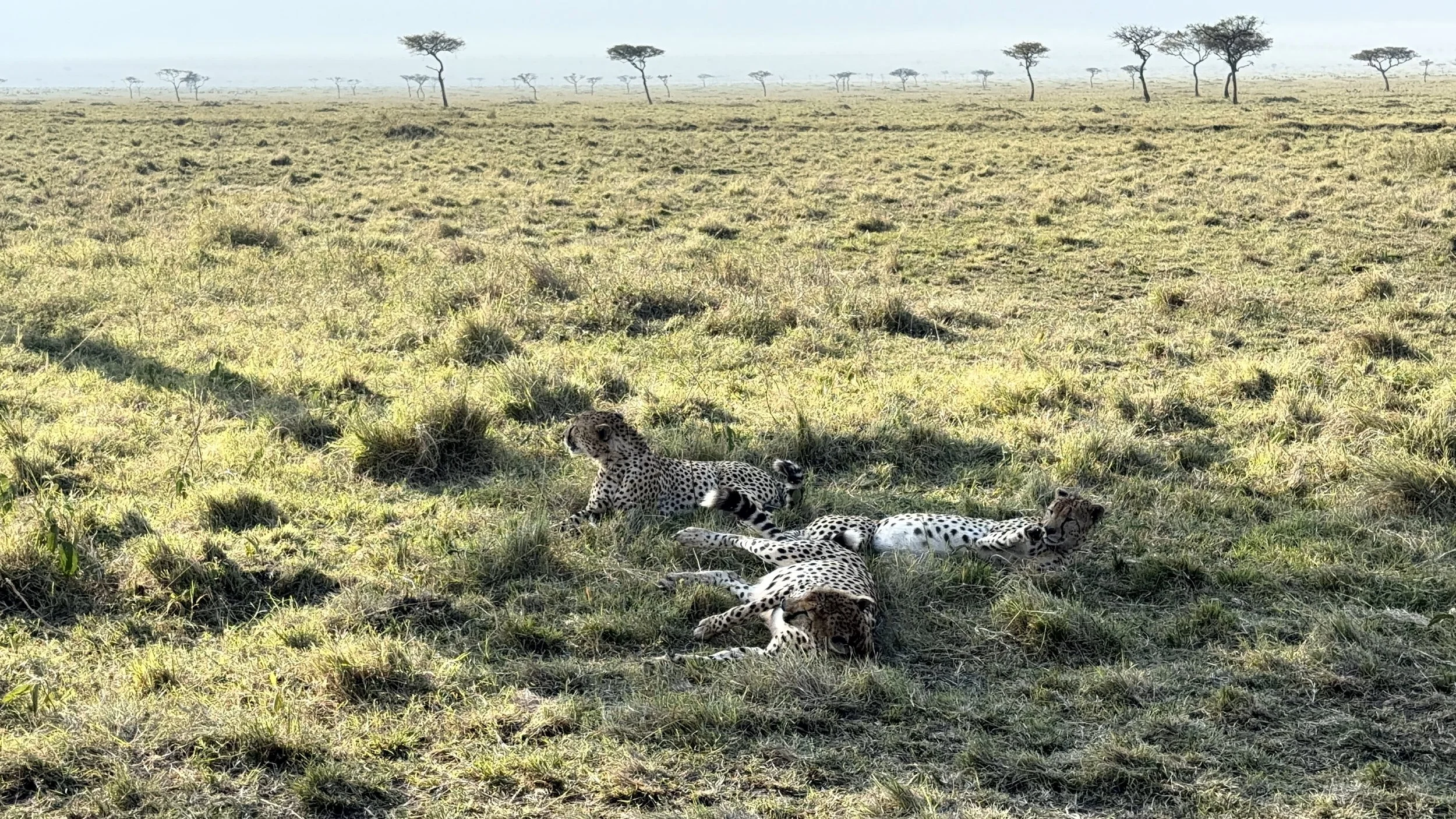
The first afternoon we went out at half past three. Jackson took us straight to the far side of the Triangle, to a coalition of three male cheetahs heading toward the Serengeti border. He wanted to get there that afternoon in case they had moved on by morning. On the way back, the herds were everywhere: wildebeest and zebra in every direction, warthogs underfoot, and all of it moving, grazing, and following each other across the plains. It is something you can simply sit and watch.
That evening the camp laid on a communal sundowner for everyone staying: chairs arranged around a large fire beneath a tree, with drinks and snacks. There were only about a dozen guests in camp that night. It wasn't exclusive, but it was beautifully done and a lovely way to end the first day.
The balloon was the highlight of the stay, and Wilderness Mara has the single most convenient balloon launch in the Mara. Governors' Balloon Safaris has been flying out of this site since 1978, so there is no predawn drive to a launch site. We met at the front of camp at 5:45 and walked about three minutes to the launch site.
The flight lasted about an hour, sixteen of us in the basket, with other balloons scattered across the sky at sunrise. Toward the end we drifted out over the herds and watched the migration from above, which is a completely different way to understand its scale. Our pilot, Captain Donna, was fantastic, and she even filmed the flight and shared the video afterward. The landing was a bumpy one, right in the middle of a herd, which only made it more fun. It was followed by the champagne breakfast out on the plains.
Jackson collected us from the landing site and we spent the rest of the morning on a long drive. We drove to the Mara River, which forms the boundary with the rest of the reserve, to see the crossing points, including Fig Tree Crossing. We found a pride of three to five lions, some asleep in the shade of a tree a little further off, with a mating pair beside the road. At one point we crossed the bridge into the main reserve to look for leopard, though we didn't find one. The green of the Triangle in August and the sheer density of animals are hard to overstate. We took our time and got back to camp at about half past one.
The second afternoon was just Mo and me. I asked Jackson to take us into the middle of a herd and simply park, and he did. We sat there for about an hour with a couple of Tuskers from the vehicle's fridge, and watched the migration move around us. It was the moment of the stay I would most want to repeat, and I'd encourage every guest to ask for it.
Across the stay we saw wildebeest, zebra, elephant, lion, cheetah, buffalo, giraffe, topi, hyena, hippo, and warthogs beyond counting. The only notable absence was rhino.
On our final morning we stayed in camp to take photographs, and Jackson then drove us about fifteen minutes to the Oloololo Gate, near the airstrip, where the team from Serian The Original met us. The handover was easy and seamless.
| The Good | |
|---|---|
| The Mara Triangle. | One of only two permanent camps inside it, with fewer vehicles, rangers who enforce the rules, and organized sightings even at the height of the migration. |
| The migration on the doorstep. | The herds had crossed into the Triangle, and we had them all around us without the crossing-point traffic. |
| The most convenient balloon launch we have used. | Governors' Balloon Safaris has launched from this site since 1978, a three-minute walk from the rooms, with no predawn drive. |
| Captain Donna. | A flight that ended over, and then in the middle of, the herds. |
| A beautiful new build. | Interiors by Chris Payne, local craft throughout, and suites that feel considered rather than rustic. |
| The family unit. | Two en-suite bedrooms off a private internal hallway with a shared deck. A very well-designed family setup. |
| The food. | Plated dinners with real choice, excellent lunches with chilled soups, and one of the standouts of the trip. |
| The arrival. | A welcome song and every member of the team introducing themselves by name. |
| Wi-Fi that works. | Reliable Wi-Fi in both the rooms and the main area. |
| The pool, gym, and spa. | A full set of facilities, all well finished. |
| Wildlife in camp. | Elephants over lunch, a hippo at the firepit during dinner, and a resident family of warthogs. |
| Sitting in the herd. | Ask your guide to park in the middle of the migration and switch off. An hour there was the best thing we did. |
| The Bad | |
|---|---|
| A new team still learning. | Staff were visible but not always attentive, requests were sometimes misunderstood, and Mo spent two days being called Mark. We expect this to settle, but first-season guests should know it. |
| Management was hard to reach. | A request made in the evening waited until we asked again the next morning. It was handled well once a manager arrived. |
| The evenings lack the safari fire. | A beautiful boma, but no guides joined the guests at the fire or at dinner. Back in camp it felt quieter and more impersonal than the other Wilderness camps we know. |
| Privacy between suites. | You can hear and sometimes see your neighbors from the bed. More planting between the suites would go a long way. |
| Guiding extras not yet in place. | No coffee stop on the morning drives and no private sundowner setup beyond the camp's communal evening. |
| The vehicle details. | The plug-in fridge left us short on ice, there are no storage boxes, and there are no bean bags, which we did not find on any Wilderness vehicle this trip. Bring your own beanbag. |
| A narrower activity menu than a conservancy. | Night drives are not part of the reserve experience, and walking wasn't offered to us. Pair this camp with a conservancy for those. |
Conclusion
Wilderness Mara is a great way to see the Mara. The Triangle is less crowded than the rest of the reserve, the rangers are stricter, and during the migration that combination is worth a great deal. The camp is a beautiful new build with excellent food, lovely rooms, and the most convenient balloon launch we have ever used, right at its back door.

What it doesn't have yet is its soul. Service is still being learned, management needs to be more present, and the evenings need the guides and the fire to become the heart of camp. We visited four weeks after opening, and those are exactly the things that come with a season or two. I expect them to.
Who should book it? Almost anyone who wants the Mara, and especially guests who want the migration without the crowds. Anyone for whom the balloon is a priority should look here first. It is also an excellent choice for families, thanks to the family unit, and for repeat Mara guests who have already done the busier side of the reserve. Above all, it suits guests who want a design-led, all-inclusive camp in the Mara: a new suite, plated dining, a pool, spa, and gym, and a rate that covers almost everything day to day.
Who should look elsewhere? Guests whose idea of safari is the fireside evening, with guides at the table and the whole camp retelling the day, may want to give the team a season to settle. And anyone set on walking or night drives should build those into the conservancy half of their trip rather than expecting them here.
How should it be paired? With a private conservancy, either Mara North or Mara Naboisho. The Triangle gives you the migration herds, the balloon, and a well-regulated reserve. A conservancy adds what a reserve can't: low vehicle numbers on private land, off-road driving, walking, and night drives. Together they give you the whole Mara. We went on from here to Serian The Original in Mara North.
Would we return, and would we send guests? Yes to both, for guests who want that level of comfort and an all-inclusive stay inside the Triangle.
“Beautiful new camp finding its fire.”