Review: Mila, Serengeti, Tanzania
Nyasirori, Western Corridor, Serengeti National Park, TanzaniaFormerly Legendary Mila Tented CampTwo nights • August 14–16, 2026Mila is a six-tent camp in Nyasirori, a remote corner of the Serengeti's Western Corridor in Tanzania, south of the Grumeti Reserve. It was built and is run by Legendary Expeditions, a Tanzanian safari company that in May 2026 joined Auberge Collection as part of its new Auberge Safari portfolio. The camp is now listed simply as Mila.
We know Legendary well through its lodge in Arusha, which we have used extensively for our guests. We had never used any of its safari camps. Mila was new to us, so we went in without expectations and reviewed it on its own terms.
I traveled with my father-in-law, Mo, for two nights in mid-August. We came from the Eastern Serengeti and flew on to Arusha afterward. Benson wasn't with us on this leg, and one thing needs saying up front: we were the only guests in camp both nights. That shapes any stay, and I've tried to note where a full camp would feel different.
Mila is all-inclusive, and that covers more than usual. The rate includes your tent, all meals, drinks (including a good wine selection), daily laundry, transfers to and from the airstrip, unlimited game drives, and select cultural experiences. It also includes a private vehicle and guide for every booking, which is a real advantage.
The short version: this is one of the best camps we have stayed in. It's small, remote and beautifully run. What impressed me most was how well the camp chooses where to spend its effort. It gets the things that make a stay better exactly right: the shower, the bed, the vehicle, the food and the service. It skips extras that add little, like a stocked minibar in every tent. Everything works when it needs to, and nothing takes effort.
Getting There
We flew Auric Air from Seronera, in the central Serengeti, to the Grumeti airstrip in the Western Corridor.
Our guide for the stay, Amos, met us at the strip. He is a fantastic guide with a big smile, and he had cold drinks and a few snacks waiting in the vehicle. From there it is about forty minutes to camp, which sits on the far side of the Grumeti area. We took it slowly as a quiet game drive, and Amos talked us through the area, the animals, and what to expect over the next two days.
We arrived to a cold towel, a welcome drink, and the team waiting to greet us. Then we went straight to lunch.
Setting & Location
The Western Corridor is the long arm of the Serengeti that reaches west toward Lake Victoria. Mila sits in the Nyasirori area, near the Grumeti River, on open plains broken by low hills and marshes. The camp looks straight out over those plains.
What struck me first was the silence. Coming from the busier central Serengeti around Seronera, the difference was startling. On our first day we saw one other vehicle, during a game drive, and that was it. It felt remote, and it looked exactly like the Serengeti you imagine before you go.
Amos explained why. In August, most visitors head north for the Mara River crossings, and the Western Corridor empties out. The resident game doesn't leave. We had plenty of zebra, wildebeest, hyena and lion around us, and apart from a handful of vehicles from neighboring camps at one lion kill on our last morning, we had it to ourselves.
The flip side is the migration season. From roughly May to July, the herds move through the Western Corridor and cross the Grumeti River, and the crowds come with them. This is a national park, not a private concession, so everyone can drive here.
The national park rules shape the activities too. Amos could go off-road for certain sightings but mostly kept to the tracks, and the camp works closely with the rangers in the area. Night drives are not permitted in the park.
The camp is unfenced, and the wildlife uses it. We heard hyenas calling all night on our first night. A tower of giraffe wandered through. On our last morning, a black rhino walked out onto the plains in front of camp, about 30 meters away at its closest. The camp believed it had come over from the neighboring Grumeti Reserve, where the Grumeti Fund has been re-establishing eastern black rhino since 2019. It was an extraordinary way to end a stay.
Weather in mid-August was cold in the early morning, warm through the afternoons, and pleasant in the evenings.
Facilities
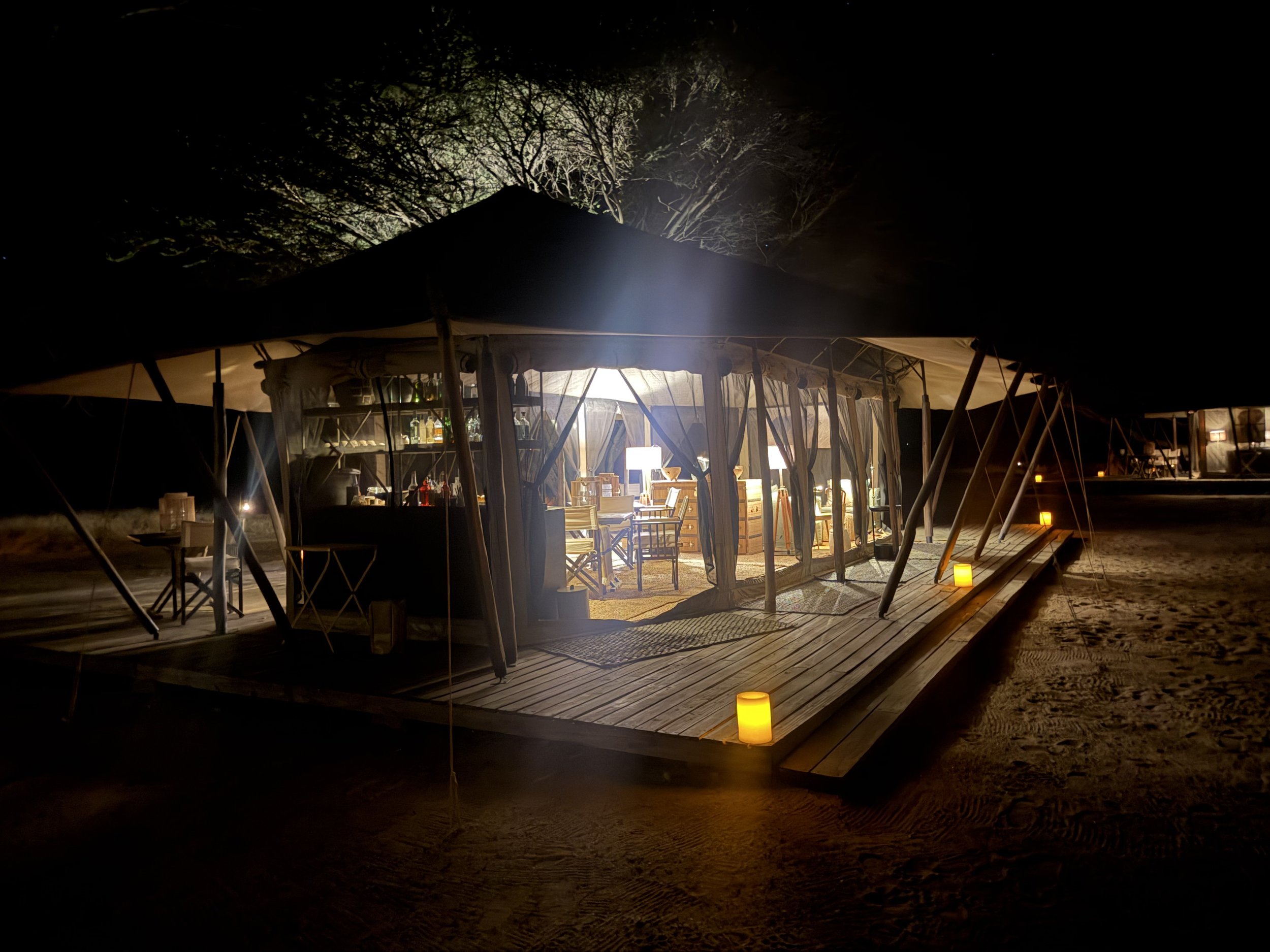
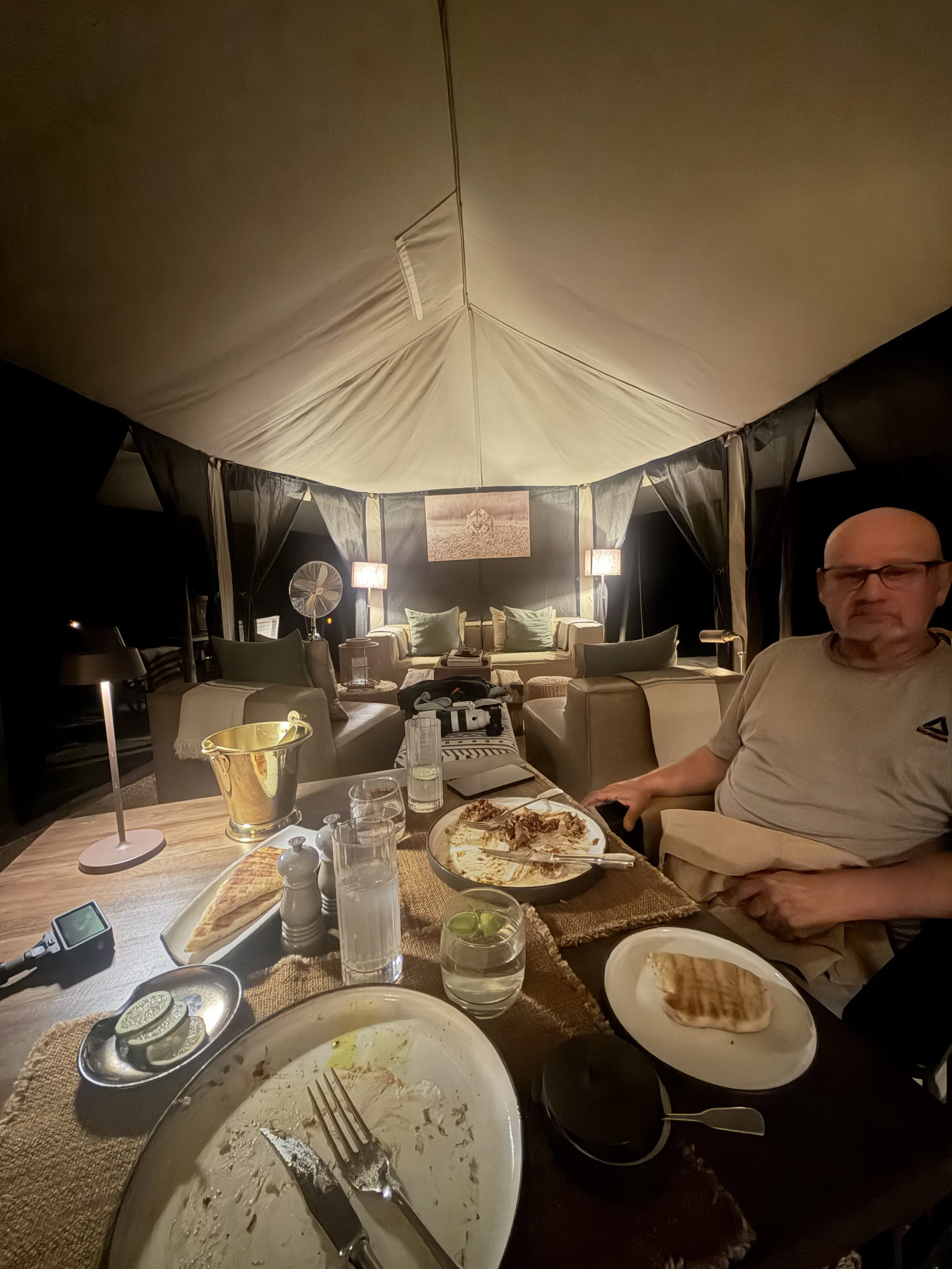
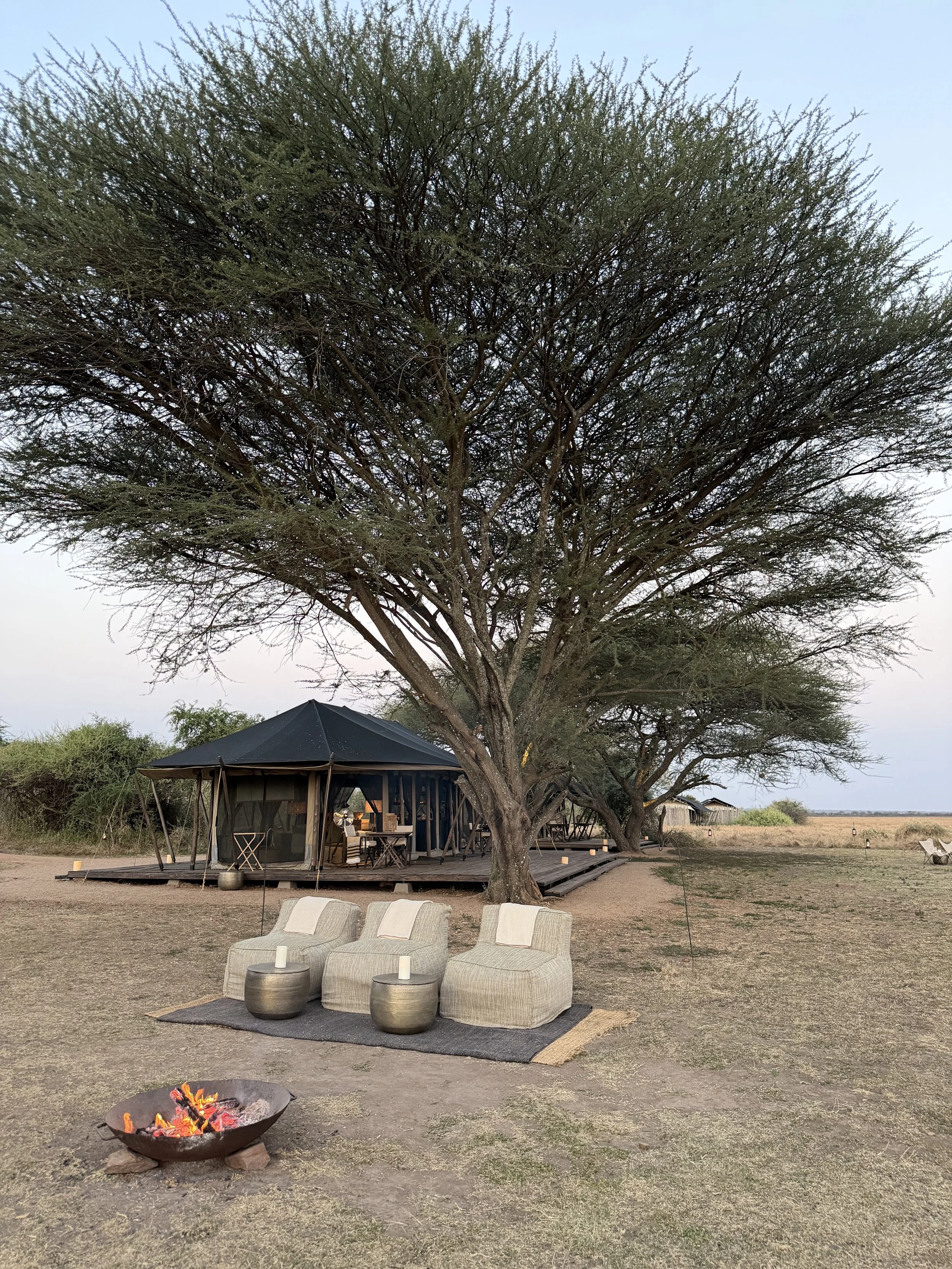
Mila is small: six tents, five standard tents and one family suite. That scale sets the tone for everything else.
The main area is laid out unusually well. Rather than one large mess tent, it is three separate tents. Two are identical, each with a sofa lounge and two tables for two. The third has the same plus a bar, and it is about a third bigger. Each tent has its own boma, or fire pit, in front of it.
That design is clever. A family or small group can have its own tent and its own fire, and the camp feels private even when it is full. It also means there is plenty of room to spread out. Around the main area and in front of each tent there is comfortable outdoor furniture facing the plains, and I found more good places to sit and watch than I had time to use.
There is no pool, spa or gym, and I didn't miss any of them. Each tent has a "Gym in a Basket" kit for anyone who wants to work out, which is a nice touch.
Wi-Fi worked perfectly, both in the main area and in the tents. Power never gave us any trouble.
The paths between the tents and the main area are ground-level dirt tracks. The tents are spread out, a five-to-seven-minute walk from the main area, and guests are escorted after dark. Each tent has a phone for reaching the team.
The kitchen: on our second afternoon I took a back-of-house tour and met Chef James. It was exceptionally clean and well organized, and it shows how much work goes into running a camp this remote. Given what comes out of it, I shouldn't have been surprised.
The family suite has two bedrooms, each with its own bathroom, connected by a central lounge. It has the same sweeping view across the plains. Children aged four and older are welcome at Mila.
The Room
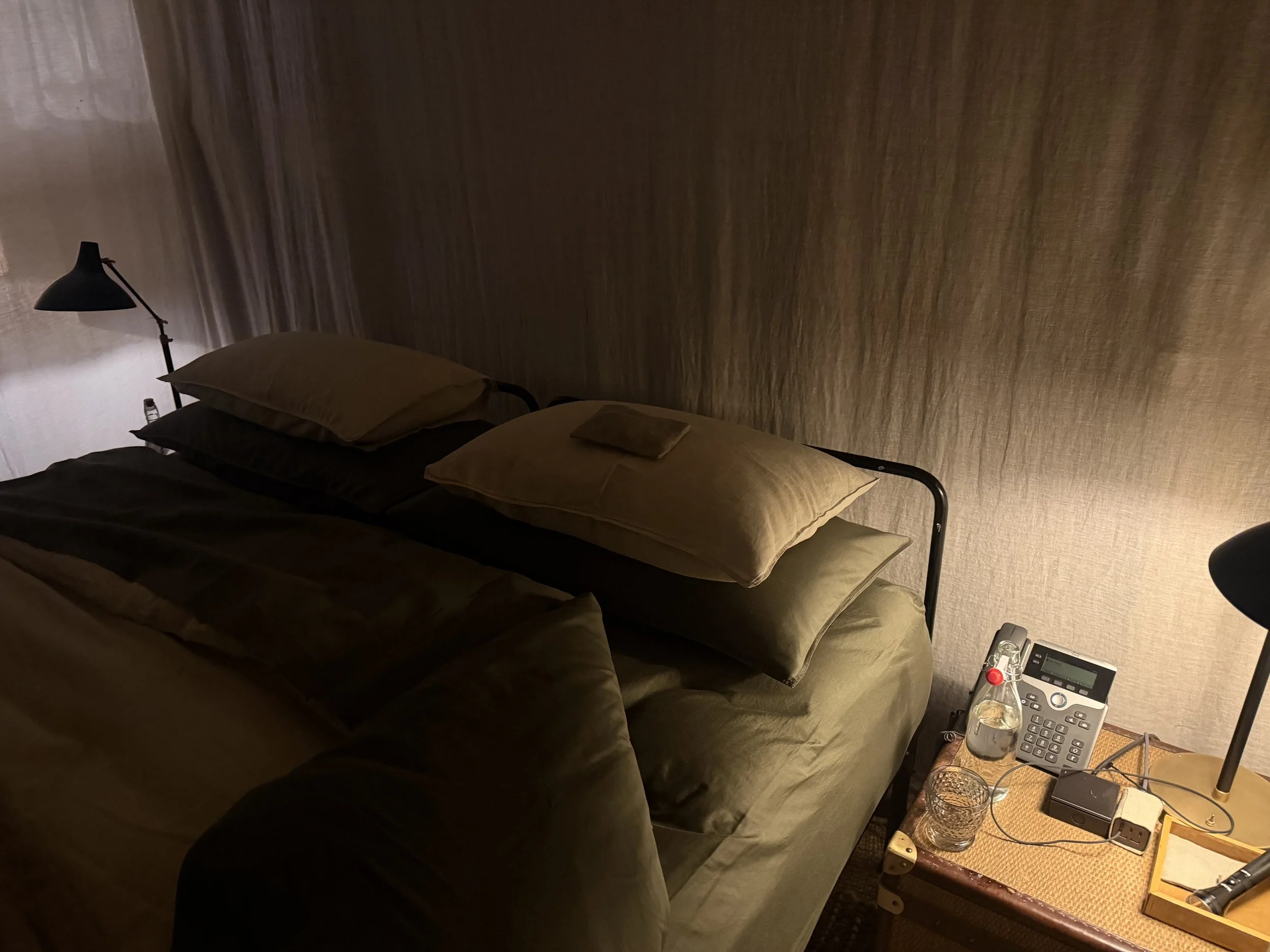
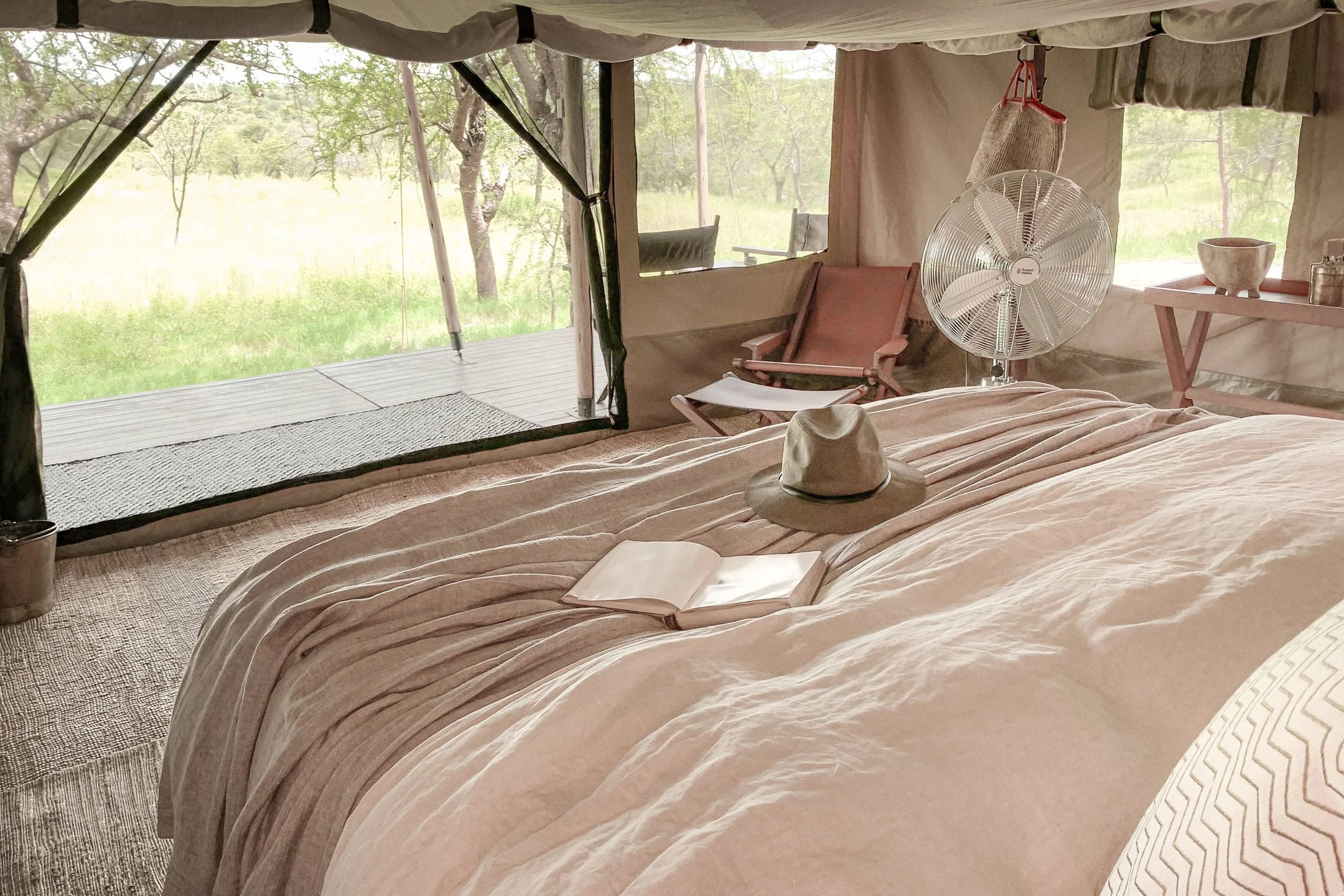
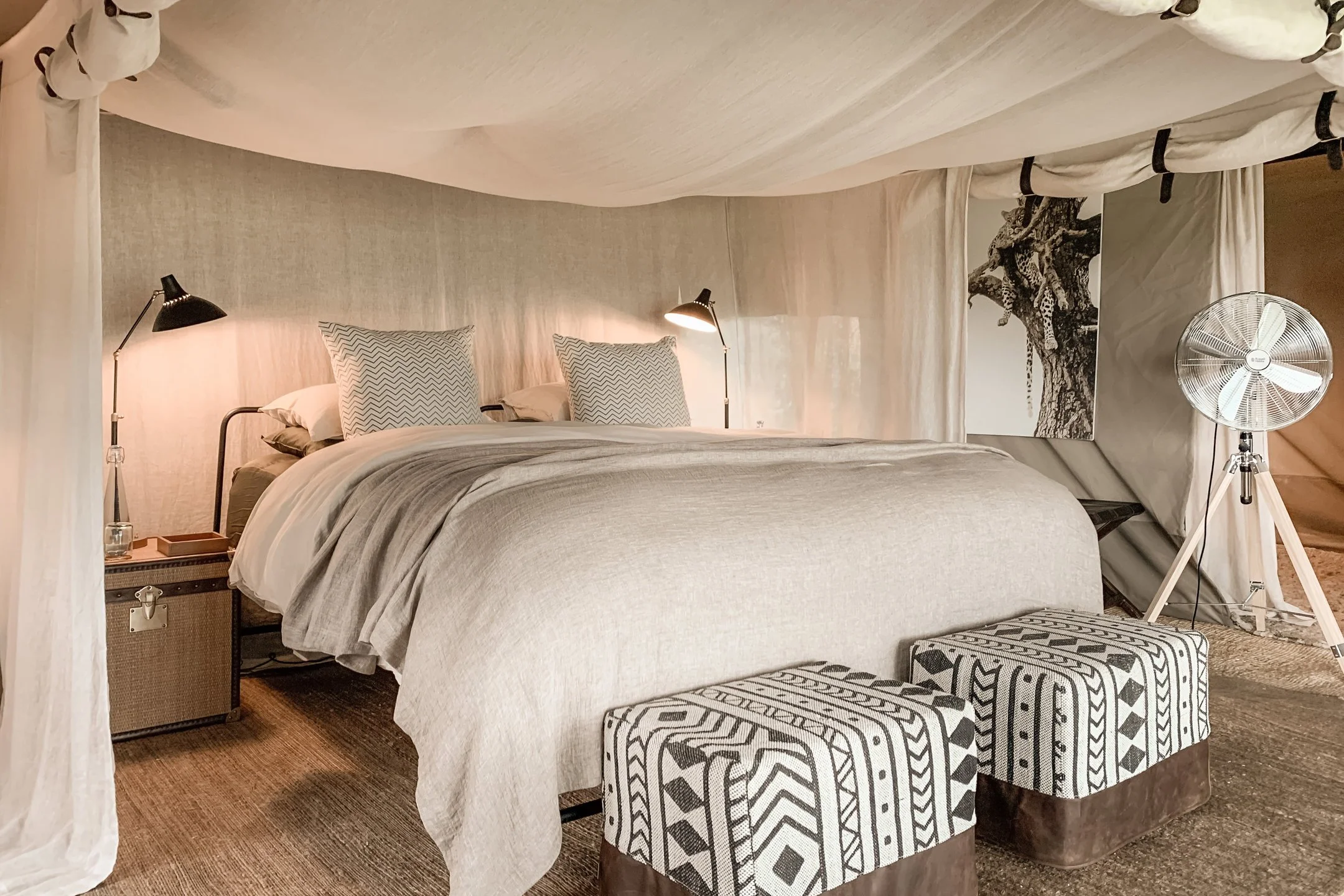
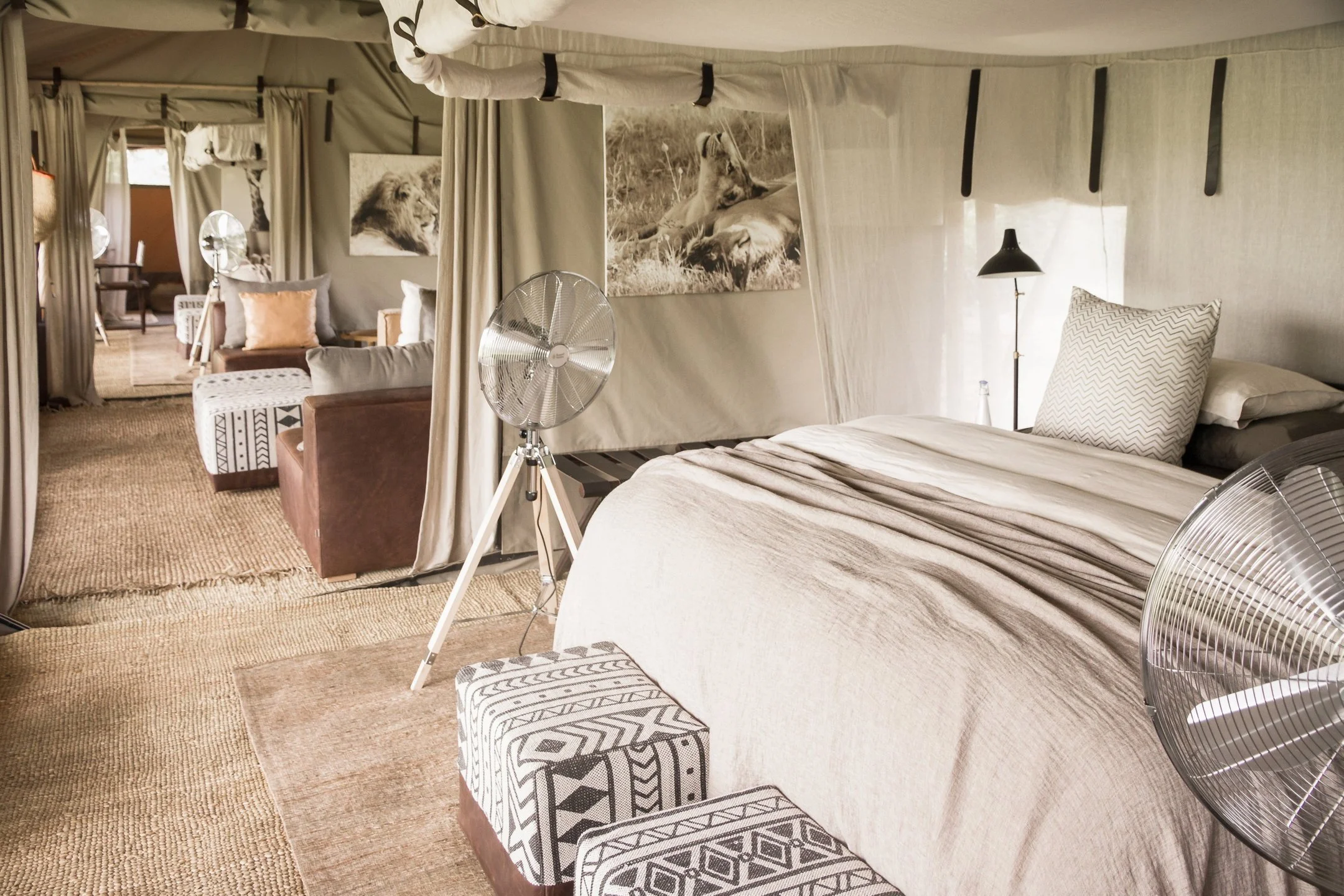
The tents feel very Out of Africa, but chic. They are canvas, and you know you are in a tent, yet they have everything you want. For me that is the ideal balance.
They are medium-sized and laid out front to back. A small leather chair greets you at the entrance. The king bed, which can be split into two twins, sits between two bedside tables, facing the plains. Behind that is a dressing room with the closet, twin sinks and the safe. At the back are the toilet and the shower.
The shower is the best I have had on safari. The water pressure is abundant, and after a dusty day it was a joy.
The bed is very comfortable, and on cold nights the team tucks hot water bottles into it.
What sets these tents apart is the small touches, and they have clearly been thought through:
• USB-C charging ports right beside the bed, so your phone charges within reach.
• Light switches beside the bed, so you never have to get up in the dark.
• Standing fans placed inside the mosquito net, where they actually cool you. They worked very well.
• A hair dryer.
There is no fridge or minibar, just water, and I think that is deliberate and correct. The team will bring you whatever you want, whenever you want it. They offered to deliver coffee to the tent in the morning, though we preferred to walk up to the main area. The money that would have gone into minibars has gone into the shower, the bed and the vehicles instead.
Each tent has a deck with several comfortable chairs looking straight out over the plains. The view from inside is just as good: on our second afternoon I spent about two hours doing nothing but looking out the window, and it was lovely.
Privacy is excellent. The tents are well spread out, and we never heard another tent.
The Vehicle
Mila's vehicles are the most beautiful safari vehicles I have been in, and probably the most comfortable.
They are four-seat Land Cruisers with two rows of two. They are open-sided, and each seat has a door that latches open. With the door open, you can bring your camera down almost to ground level. On our first full morning I spent most of the drive lying on the floor in the space between the front row and Amos, which is wide enough to stretch out in. From there I was shooting at eye level with the animals. It was the most unusual game-drive experience I have had, and photographers will love it.
The rest has been thought through just as carefully. Bean bags, camera mounts and charging are provided at the seats. Camera gear has its own places, there is storage built into the doors, and there is plenty of room for bags. On board you'll find a cooler and a fridge, blankets, ponchos, and hot water bottles ("bush babies") for the cold mornings.
Access is easy, and the team brings a small step stool just in case. Mo had no trouble at all.
Amos guided solo, with no tracker and no radio. He just drove and looked for animals, which is my favorite way to do it.
Every booking at Mila comes with a private vehicle and guide, so you set your own pace. We were the only guests, so we couldn't see how that plays out when the camp is full. But with six tents and a private vehicle per booking, it should hold.
Food
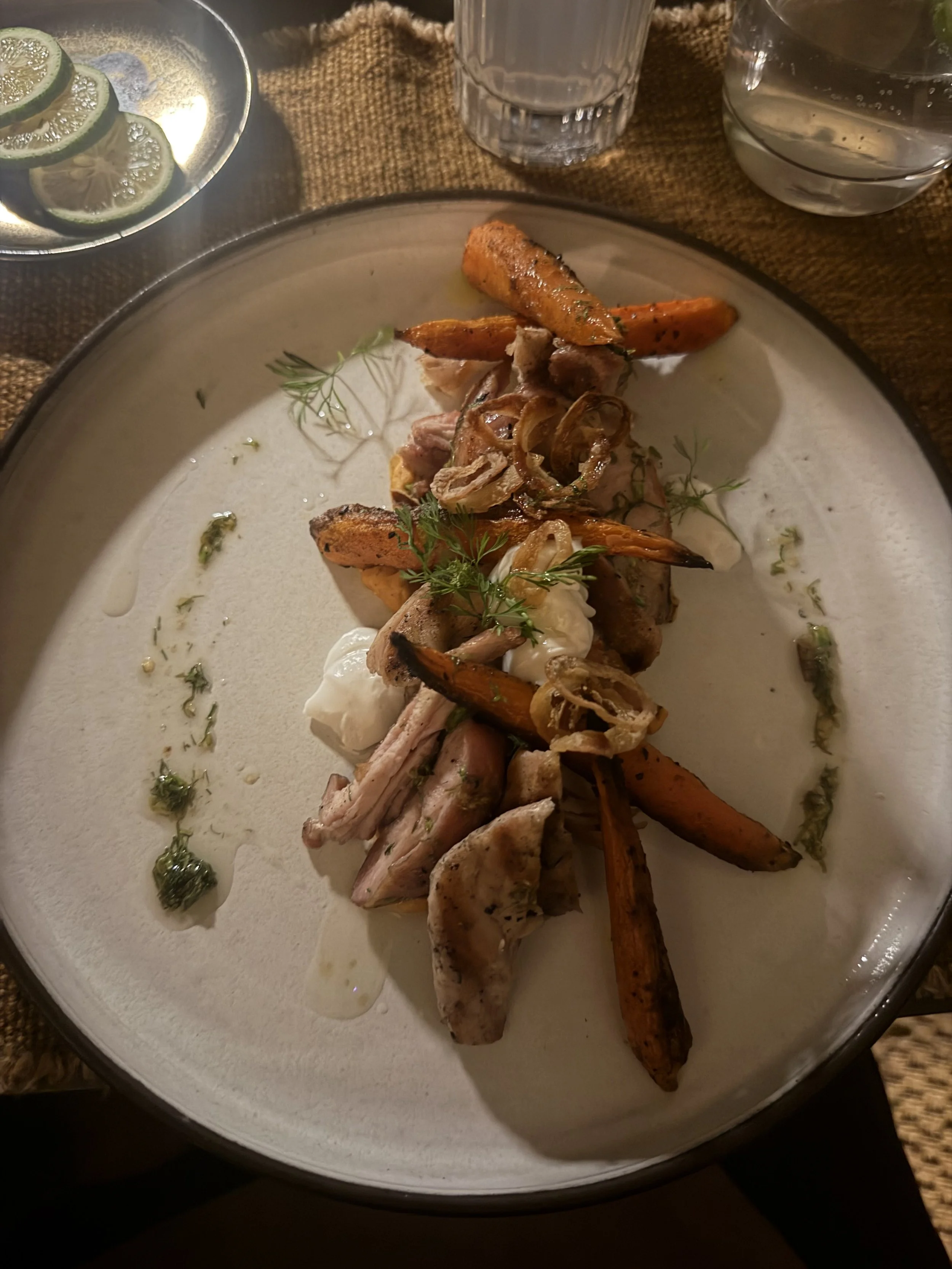
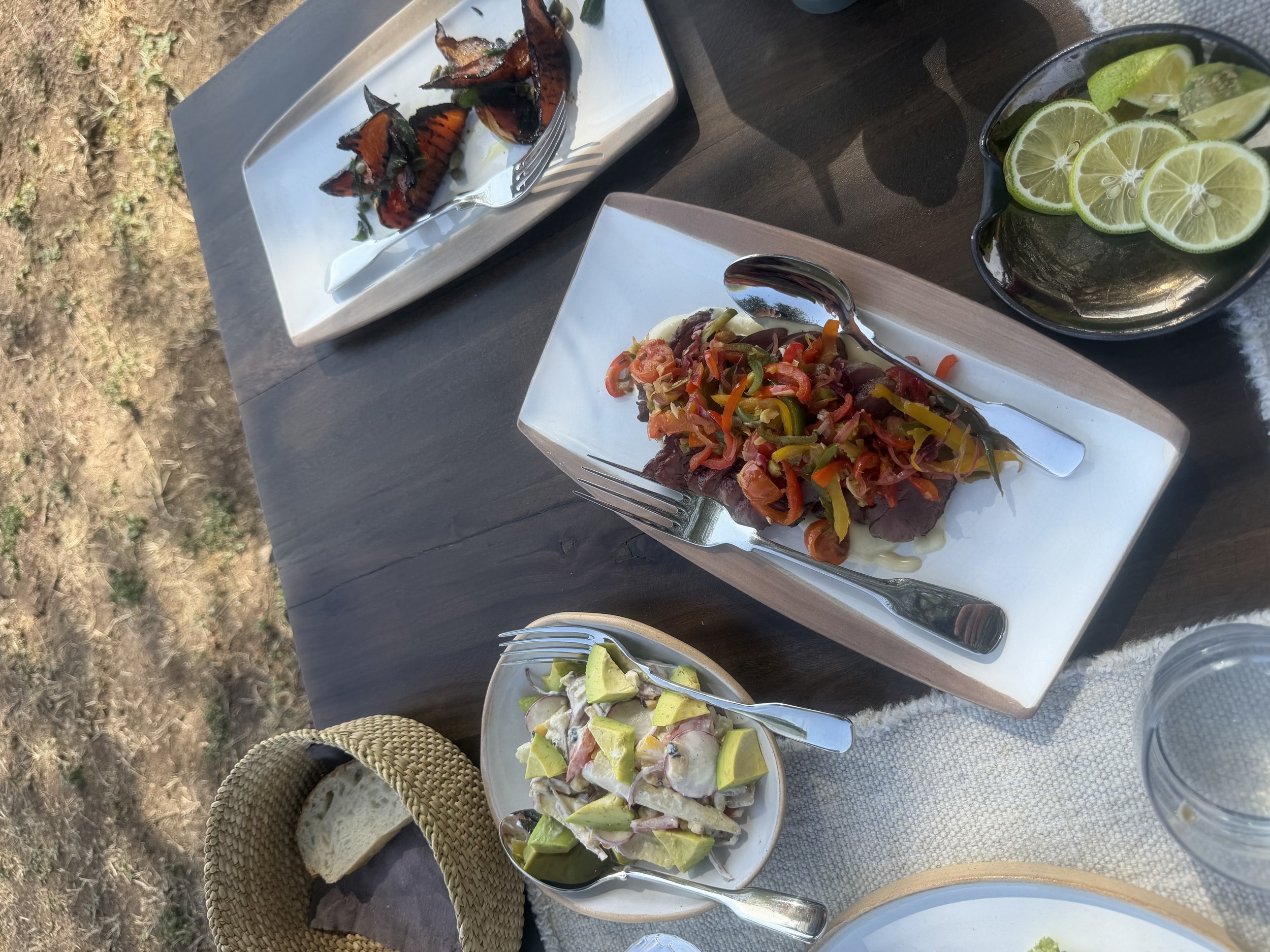
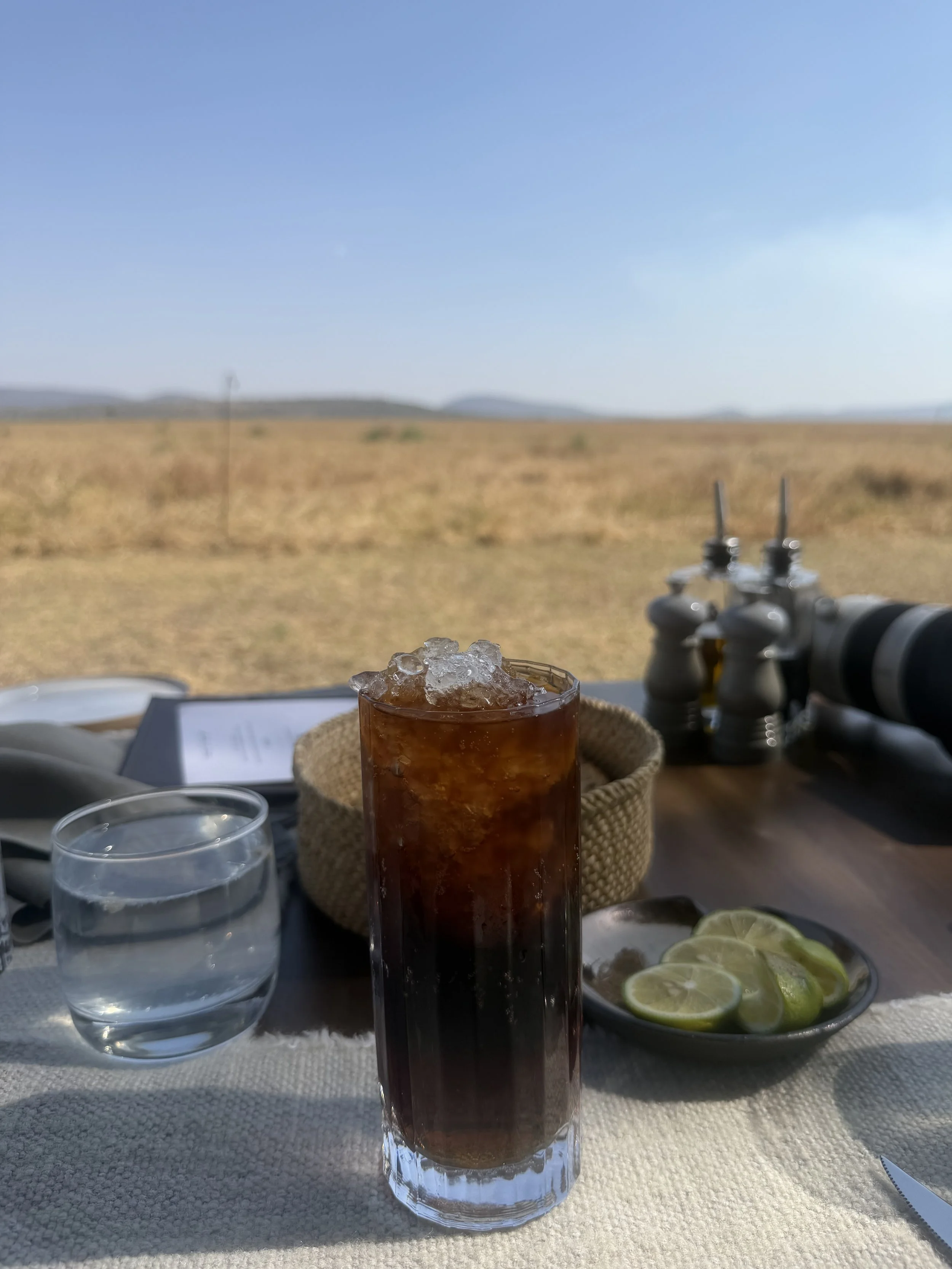
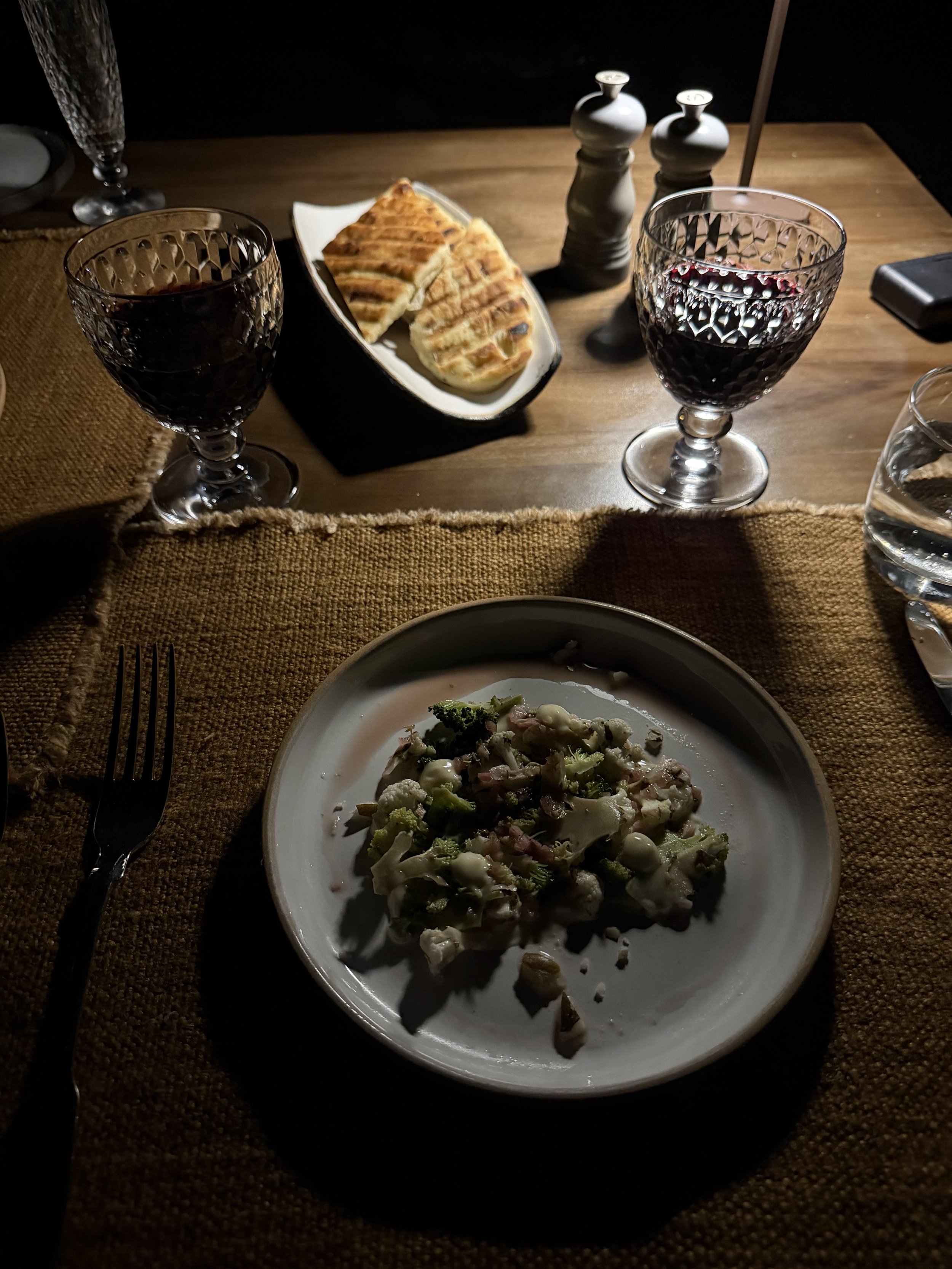
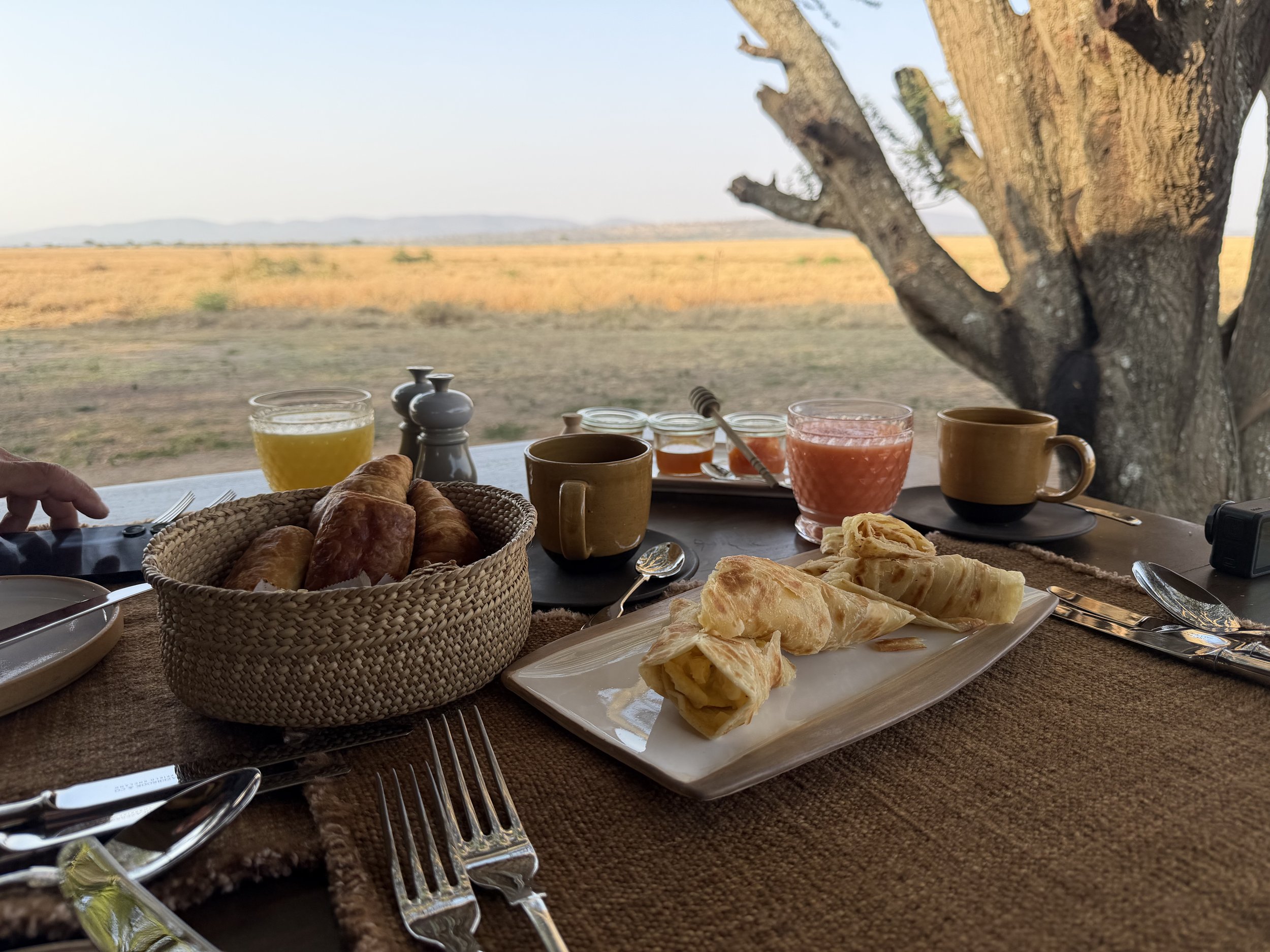
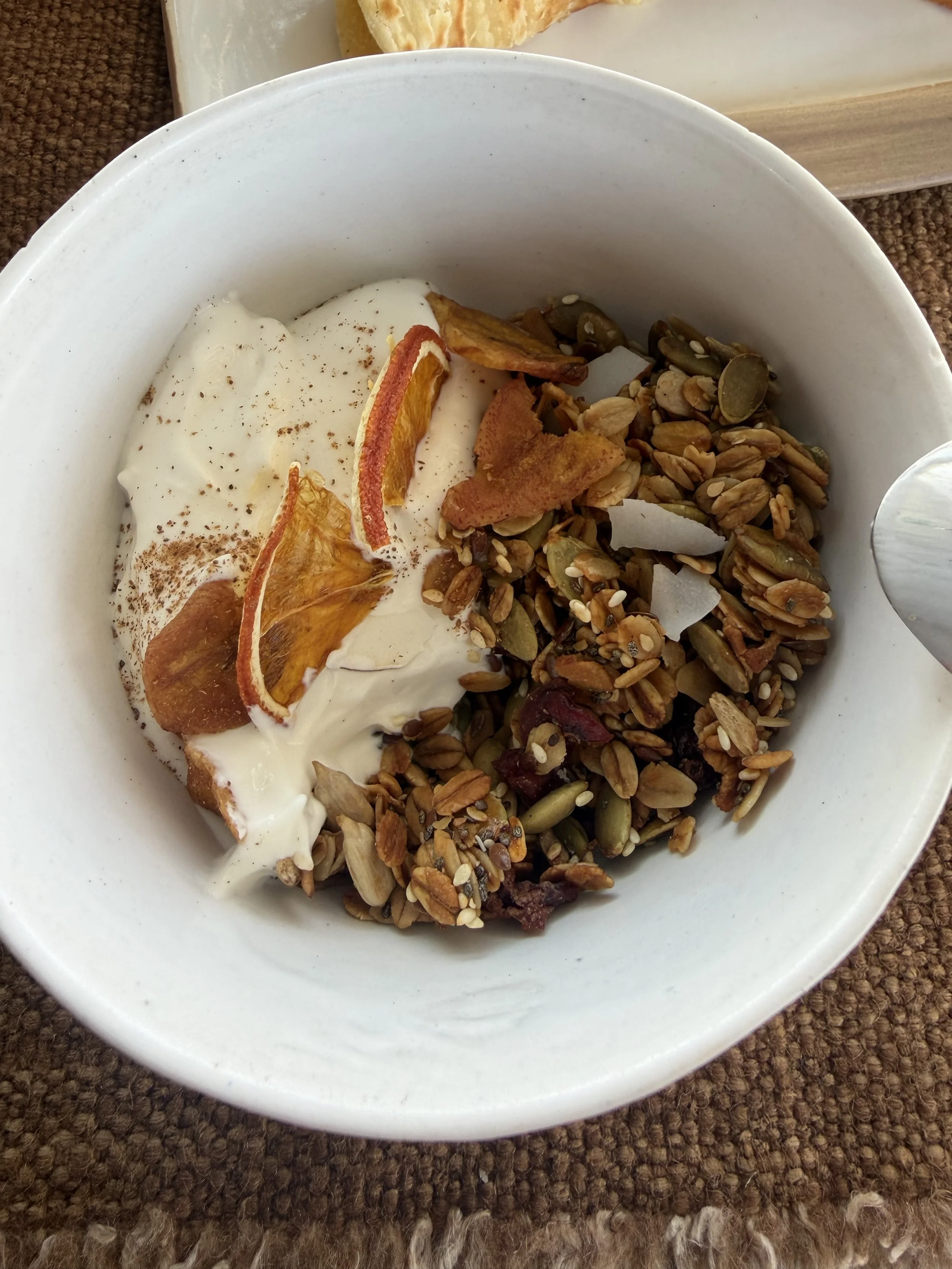
Food was a theme at Mila from the first meal to the last, and there wasn't a single miss. Chef James leads the kitchen.
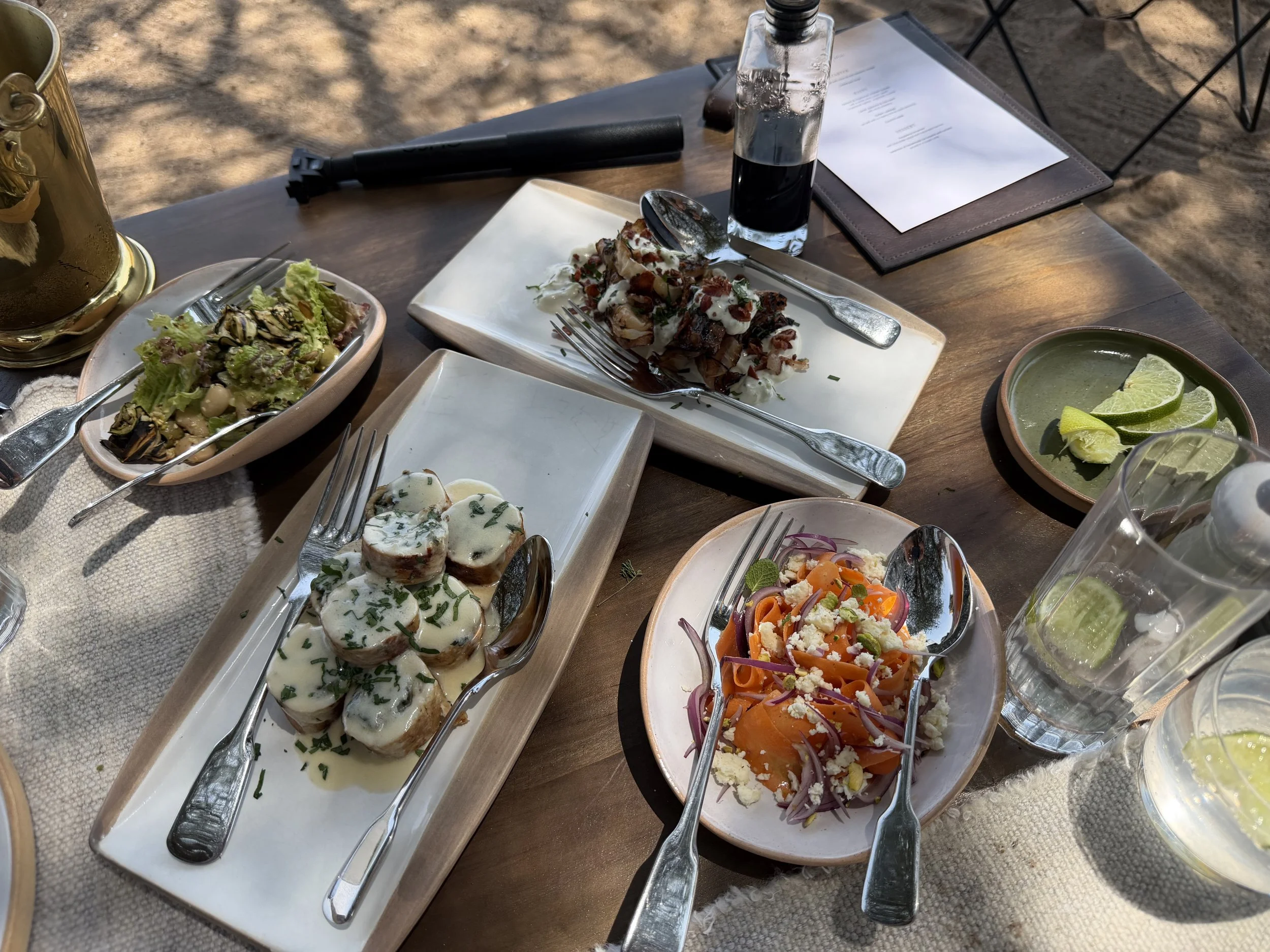
Lunch on arrival was served tapas style: a beautiful soup, then steak, vegetables and salad, then dessert. It was absolutely divine.
Before the afternoon drive, I had an espresso and Mo had his over ice.
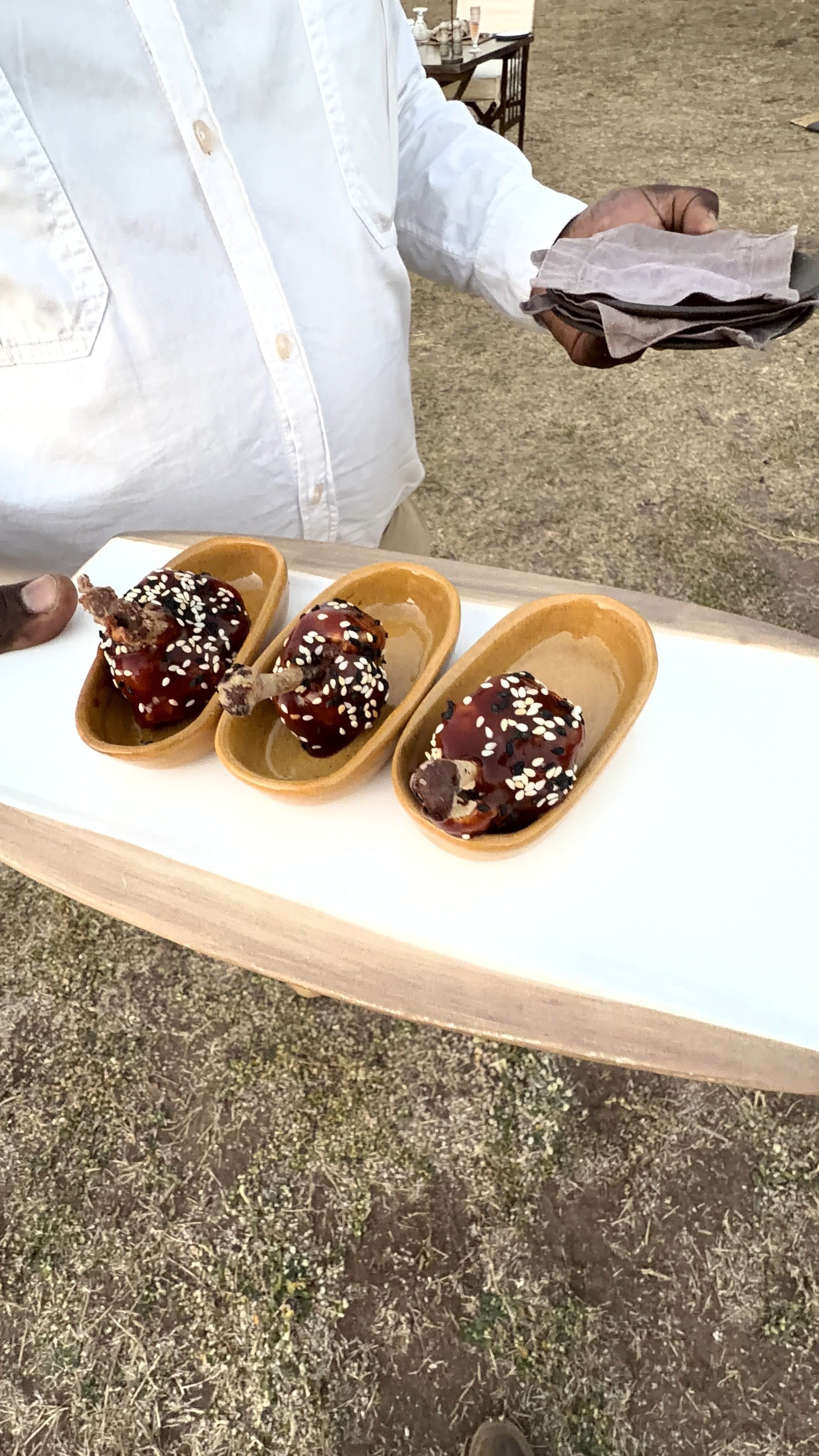
Sundowners on the first evening were set up in the bush, with gin and tonics under the most gorgeous sunset. Back at camp, the team served warm cashews by the fire, and they were delicious.
Dinner is ordered from a menu, with a choice of three mains. On our first night the menu opened with a spiced lentil and coconut cream soup and toasted cumin flatbread. The mains were braised shoulder of lamb with a salad of Magugu brown rice (a Tanzanian rice), charred peppers, pickled onions and a date purée; gnocchi with Napolitana sauce, basil pesto and Parmesan; or coriander-marinated chicken with tandoori-spiced carrots and chickpea and tomato hummus. For dessert there was a coffee mousse with whiskey caramel, chocolate sponge and honeycomb, or seasonal fruit with homemade sorbet. Everything we ate was excellent.
On our second night we asked to eat outside, and the team set it up for us. It was another multi-course dinner, with a great steak.
Morning coffee was waiting for us at 6:15. The team had asked how we take it and remembered.
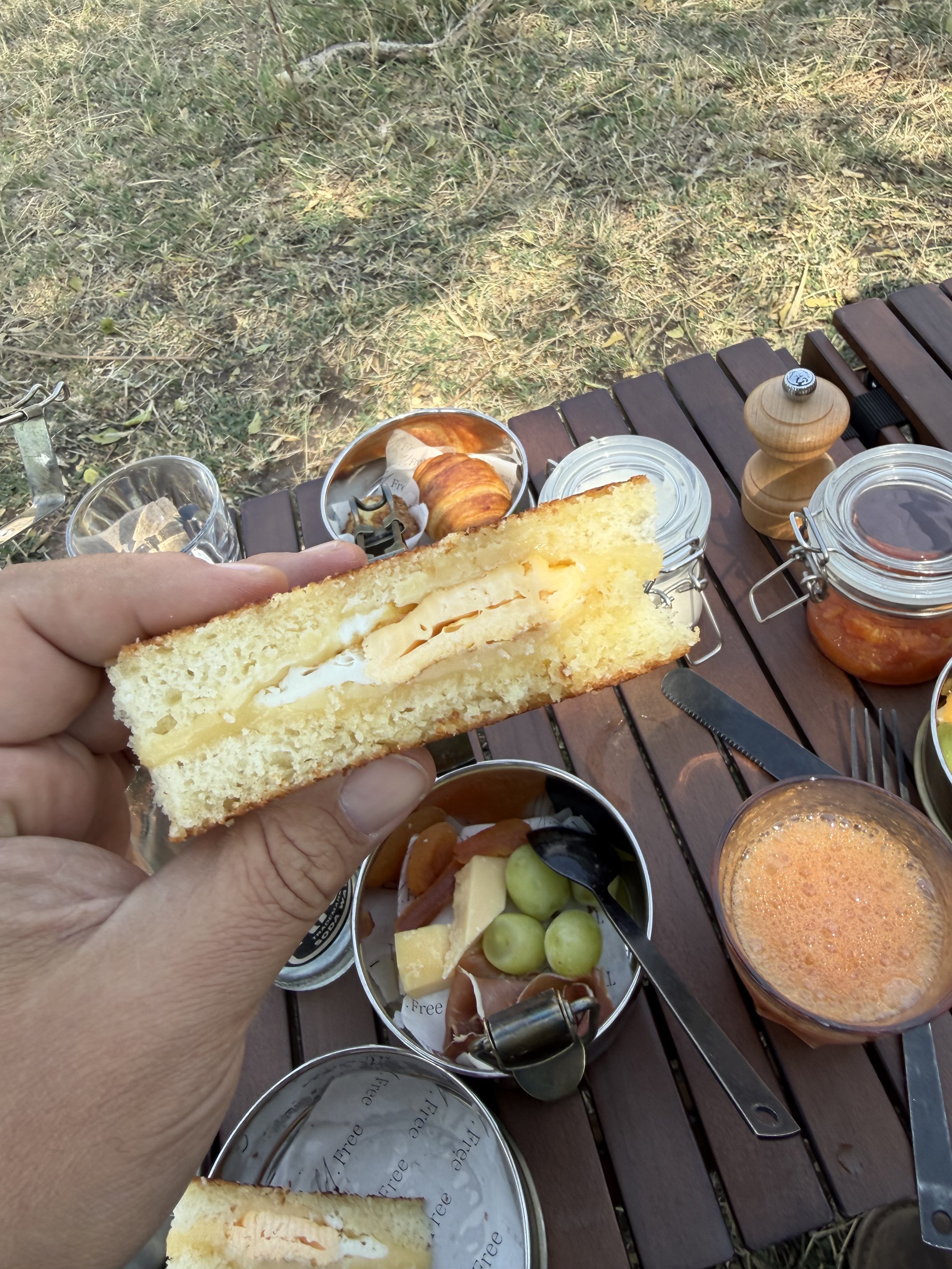
The bush breakfast on our full day was set up at around nine, with comfortable chairs, a proper table, and not a bug in sight. It was almost four courses: a fruit bowl, yogurt, a croissant and a muffin, a delicious egg and cheese sandwich, and a plate of cheese, prosciutto and grapes. I couldn't have asked for anything better.
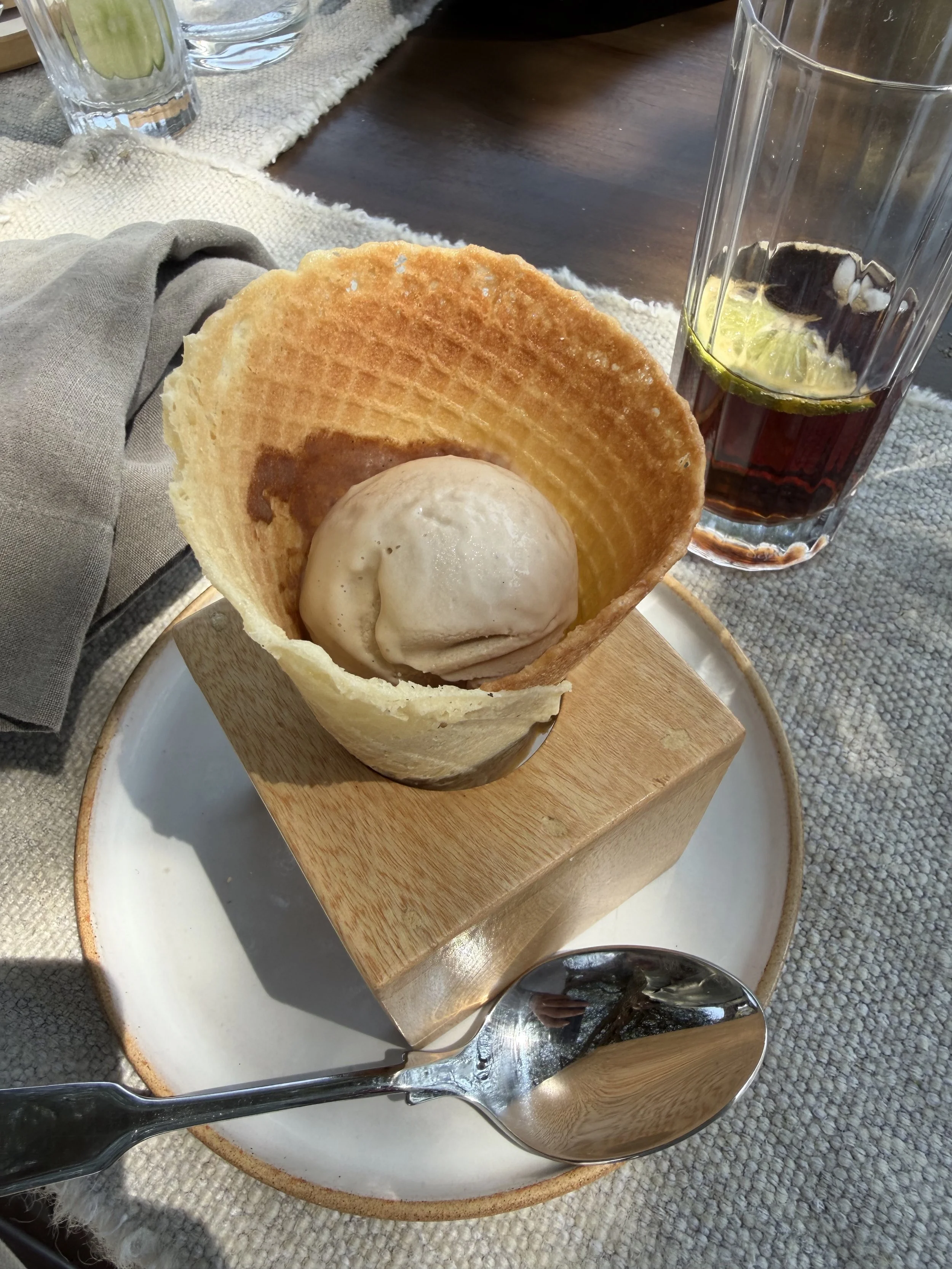
Lunch on day two was a cold pea soup, a grilled cabbage salad, a bean salad and chicken, finished with an ice-cream cone.
Breakfast on our last morning was in camp. It is included, as it is for all our guests.
Two small things stood out. The camp makes its own crushed ice, which was incredible with a soda at lunch. And we were asked about dietary needs on arrival and offered plenty of ways to customize the menu.
Drinks are included, with a good wine selection.
Service
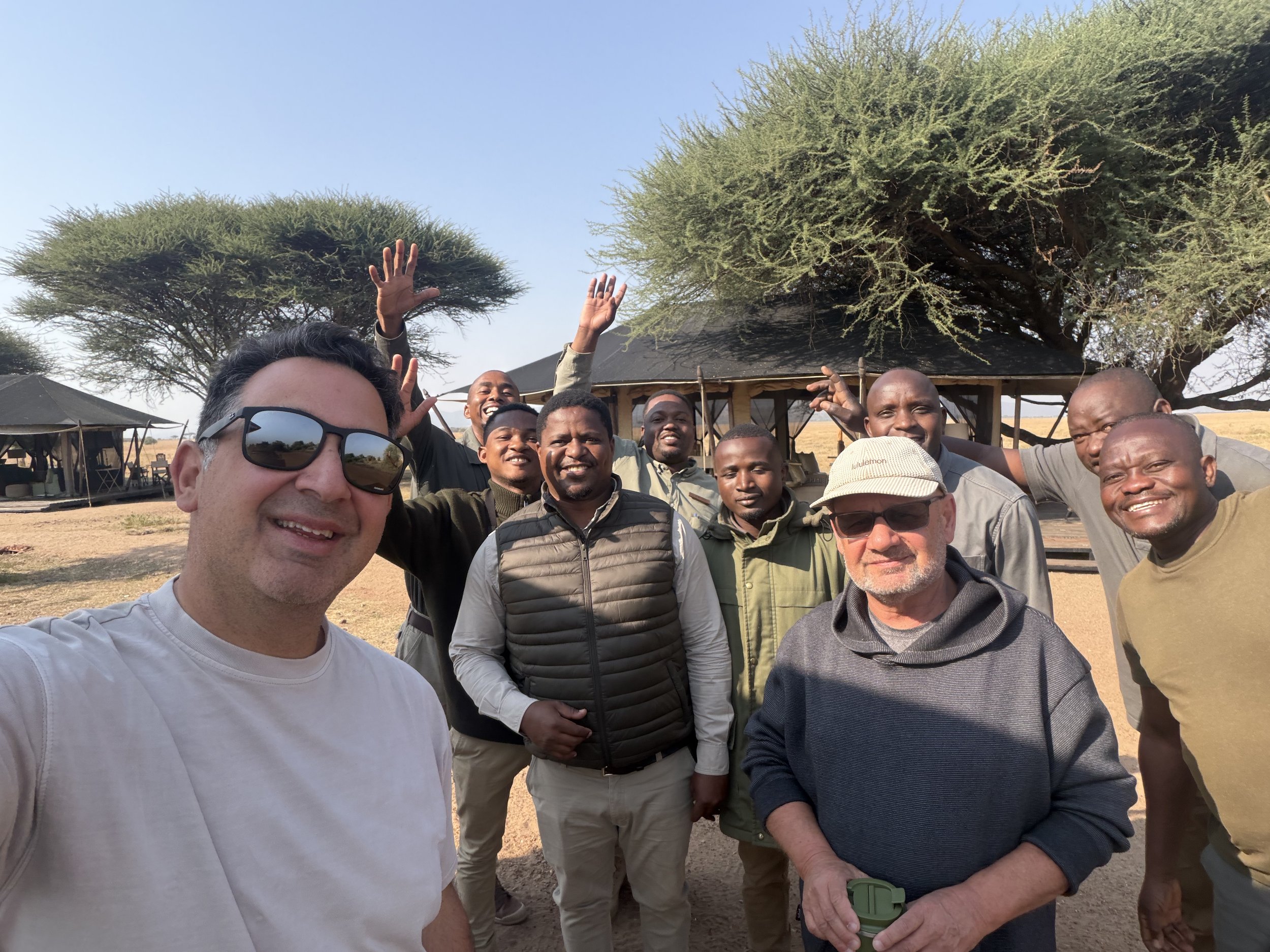
Service at Mila was outstanding, with one caveat: with only two guests in camp, we had the team's full attention. Even allowing for that, this is a team that knows what it is doing.
Jackson, the manager on duty, has been at the camp for some time, and it shows. He was visible throughout the day, he was very good at reading what we wanted, and it was camp management who came to find us on the last morning to tell us about the rhino.
Jafari was our waiter, barman and butler rolled into one.
The team anticipated rather than waited. They remembered how we take our coffee and that I like my soda over crushed ice, and they set up beautiful sundowners without being asked. At 6:15 on our full morning, the whole team was standing outside with coffee ready. They made sure we never needed anything without having to ask.
The evenings are where Mila shines. Amos joined us at the boma on our second night, and so did several of the team. It felt like a camp, with stories around the fire and everyone part of it. I wanted to photograph the night sky but had left my tripod at home, so the team helped me rig up a makeshift stand to do it. That sums up the attitude.
Activities & Guiding
Game drives run morning and afternoon, with picnic meals and sundowners in the bush. The camp also lists walking safaris (for ages 12 and up) and hot-air ballooning among its activities.
Our guide was Amos, and he was a pleasure. He has a deep understanding of nature, he is personable and friendly, and I really enjoyed our conversations. Above all, he was excited to be out looking for animals, and he enjoyed every encounter as much as we did.
The first afternoon we went out at five for a short drive and a sundowner in the bush, with gin and tonics and a gorgeous sunset. On the way back, Venus and the setting moon hung low over the plains, and we stopped to photograph them. Amos told us he loves the stars and promised us a star show the next night. We ended the evening by the fire.
The full day started at 6:15, with the vehicle doors latched open. We had heard hyenas all night, so we went toward the sound and found them, about fifteen in all. Next came two lionesses, which we followed until they settled under a tree. Then we found two young male lions, and they gave us the photographs of the stay, walking straight toward the vehicle in beautiful light. We stopped for the bush breakfast at nine. Afterward we spent far too long at a watering hole, watching zebra and wildebeest playing in the water. A big bull elephant then walked down to drink. We meandered back and reached camp at around half past twelve.
The second afternoon was quieter. We drove down to the Grumeti River, where we found black-and-white colobus monkeys, a first for me. Then we spent time with a group of giraffes just outside camp. The hyenas were still where we had left them, and the lions had moved on. We were back by 6:15 for sundowners by the fire in camp, which the team had lit for us. We watched the sun set and Venus come out, and we ate dinner outside. Later, at the boma, Amos gave us the star show he had promised: the Southern Cross, the planets, and a sky with almost no moon. It was epic.
The last morning delivered twice. While we were getting ready to leave, camp management came to tell us a black rhino was just outside camp. We watched it from the main area, then took a vehicle out to photograph it. On the drive to the airstrip we found three lions on a fresh wildebeest kill, and watched a male chase off the animals waiting for their share.
Across the stay we saw lion, black rhino, elephant, hyena, giraffe, zebra, wildebeest and colobus monkey, with almost nobody else around.
| The Good | |
|---|---|
| The remoteness. | We saw one other vehicle on our first day, and the Serengeti felt exactly like you imagine it should. |
| A private vehicle and guide. | Every booking includes a private vehicle and guide, giving you the freedom to set your own pace and follow what interests you. |
| The vehicles. | Four-seat Land Cruisers with doors that latch open, room to lie on the floor, bean bags, camera mounts, and charging. The most comfortable vehicles we have ridden in. |
| Amos. | Knowledgeable, warm, and genuinely excited by every sighting. He promised us a star show, and he delivered. |
| The scale and layout. | Six tents, with the main area split into three tents and three fires, giving each group plenty of space and privacy. |
| The small touches. | USB-C by the bed, bedside light switches, fans inside the mosquito net, a hair dryer, and hot water bottles waiting in the bed. |
| The shower. | The best shower we have had on safari. |
| The food. | Chef James's kitchen had no misses across two days, from the warm cashews to the bush breakfast. And the crushed ice. |
| The service. | Jackson was visible and on top of everything, Jafari seemed to be everywhere at once, and the team joined us around the fire. |
| Wildlife in camp. | A black rhino 30 meters away, a tower of giraffe, and hyenas calling throughout the night. |
| Wi-Fi that works. | Reliable Wi-Fi throughout camp, including in the tents. |
| The Bad | |
|---|---|
| No pool. | We didn't miss it in August, but on hot afternoons some guests may want one. |
| A national park, not a private concession. | Anyone can drive here, and from roughly May to July, when the migration moves through the Western Corridor, the crowds can come too. Plan around the season. |
| Limited off-road driving. | National park rules mean you mostly stay on the tracks, especially when the area is busy. |
| No night drives. | They aren't permitted in the park. Pair Mila with a private concession or conservancy if nocturnal game is a priority. |
Conclusion
Mila is an amazing camp. What sets it apart isn't any single feature. It's that the camp has put its effort exactly where it counts: the bed, the shower, the charging point by your pillow, the vehicle you spend your days in, the food, and the people. And it hasn't wasted effort on extras that add little, like a stocked minibar in every tent. The result is a camp that feels authentic and tented, with none of the discomfort that usually comes with it.
Who should book it? Anyone who wants an authentic tented camp experience but likes their luxury. Photographers, for the vehicles alone. Couples and families, with the family suite and children welcome from age four. And any guest who wants to see the Serengeti the way it looks in the documentaries, without a ring of vehicles around every sighting.
Who should look elsewhere? Guests who need a pool, or who want the freedom of a private concession (off-road driving, night drives, and exclusivity in every season). For them, Singita Grumeti next door is the better fit.
How should it be paired? It depends on the season, and Mila works across the year. In January, pair it with Ndutu for the calving season in the southern Serengeti. In August, pair it with the northern Serengeti for the Mara River crossings, spending the busy days in the north and coming to Mila to have the Serengeti to yourself.
Would we return, and would we send guests? Yes, and yes.
If you're planning a Tanzania safari and would like to include Mila, get in touch and we'll build the rest of the trip around what you want to see.
“A tented camp that gets the details right.”