
The Great Wildebeest Migration is one of the most extraordinary wildlife spectacles on Earth. Each year, more than two million wildebeest, zebra, and gazelle move in a continuous cycle across Tanzania’s Serengeti and Kenya’s Maasai Mara in search of fresh grazing and water.
Often described as “Africa’s greatest show,” the migration is not a single event or a one-time crossing. It is a year-round movement driven by rainfall, instinct, and survival. Understanding how it works, and when and where to see it, is key to planning a safari that truly matches your expectations.
What Is the Great Migration?
The Great Migration is a natural, circular movement of animals across the Serengeti Mara ecosystem. Wildebeest lead the journey, followed closely by zebra and antelope, with predators such as lions, cheetahs, hyenas, and crocodiles never far behind.
Unlike many wildlife events, the migration does not have a fixed start or end date. It is guided by seasonal rains that cause grasslands to grow and dry out at different times of the year. The animals move continuously, following the fresh grass and water sources.
This makes the Great Migration one of the most dynamic and unpredictable wildlife phenomena in the world.
How the Great Migration Works Throughout the Year
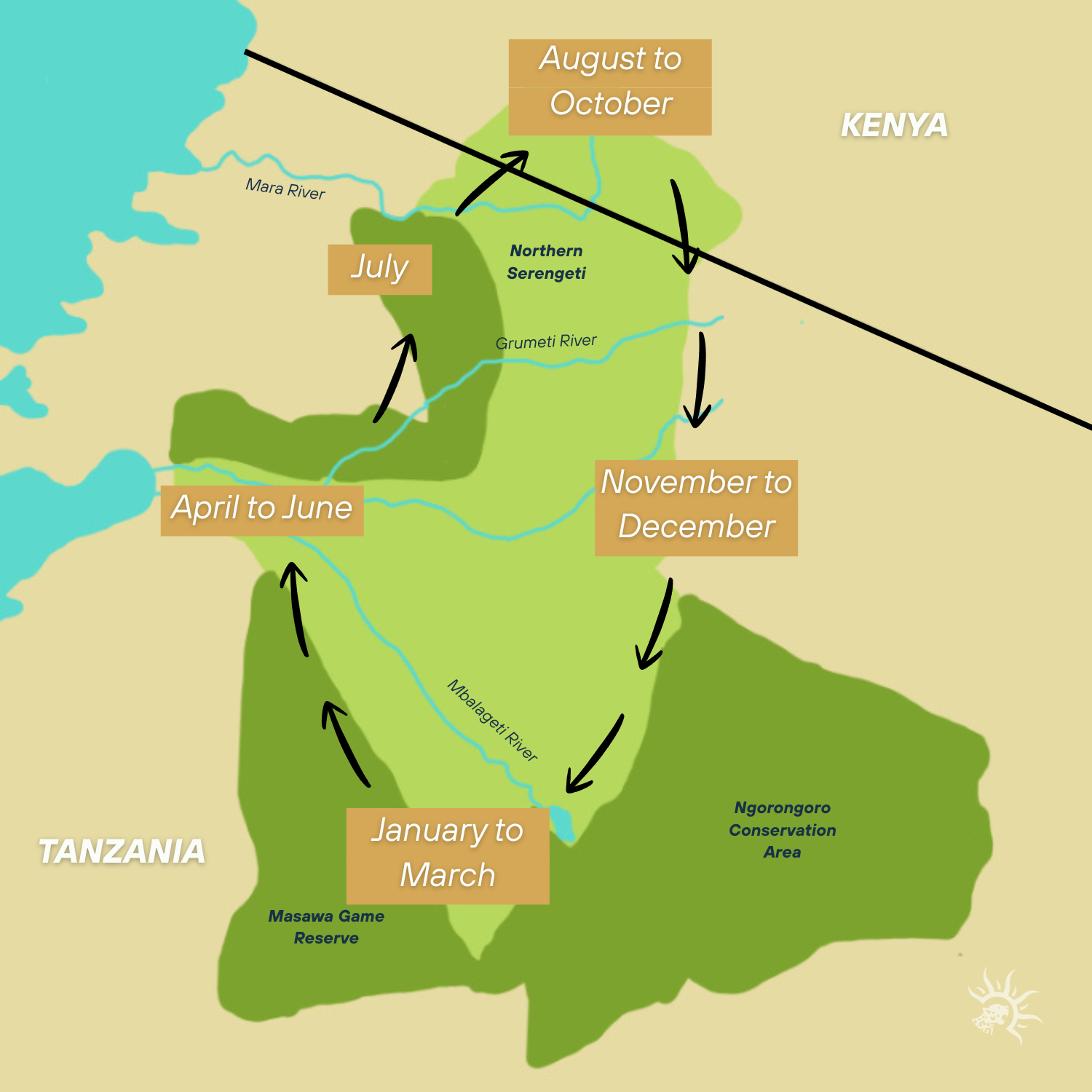
One of the biggest misconceptions is that the migration only happens during river crossings. In reality, each phase of the year offers a completely different and equally compelling experience.
January to March: Calving Season in the Southern Serengeti
This is when hundreds of thousands of wildebeest calves are born in a short window of time. The open plains provide safety through visibility, while predators take advantage of the abundance of vulnerable prey. This period offers dramatic wildlife interactions and is an incredible time for photography.
April to June: The Journey North Begins
As the southern plains dry out, the herds begin moving northwest through the Serengeti. This phase is defined by long columns of animals on the move, river crossings in the western corridor, and fewer crowds than during peak season.
July to October: River Crossings in the Northern Serengeti and Maasai Mara
This is the most famous phase of the migration. Wildebeest gather at major rivers and attempt dangerous crossings while crocodiles wait below. The drama is intense, but sightings are unpredictable and often attract large numbers of safari vehicles.
November to December: The Return South
With the arrival of short rains, the herds move back toward the southern Serengeti, completing the cycle and preparing for the next calving season.
The key takeaway is this: the migration is always happening somewhere.
Pros and Cons of Seeing the Great Migration
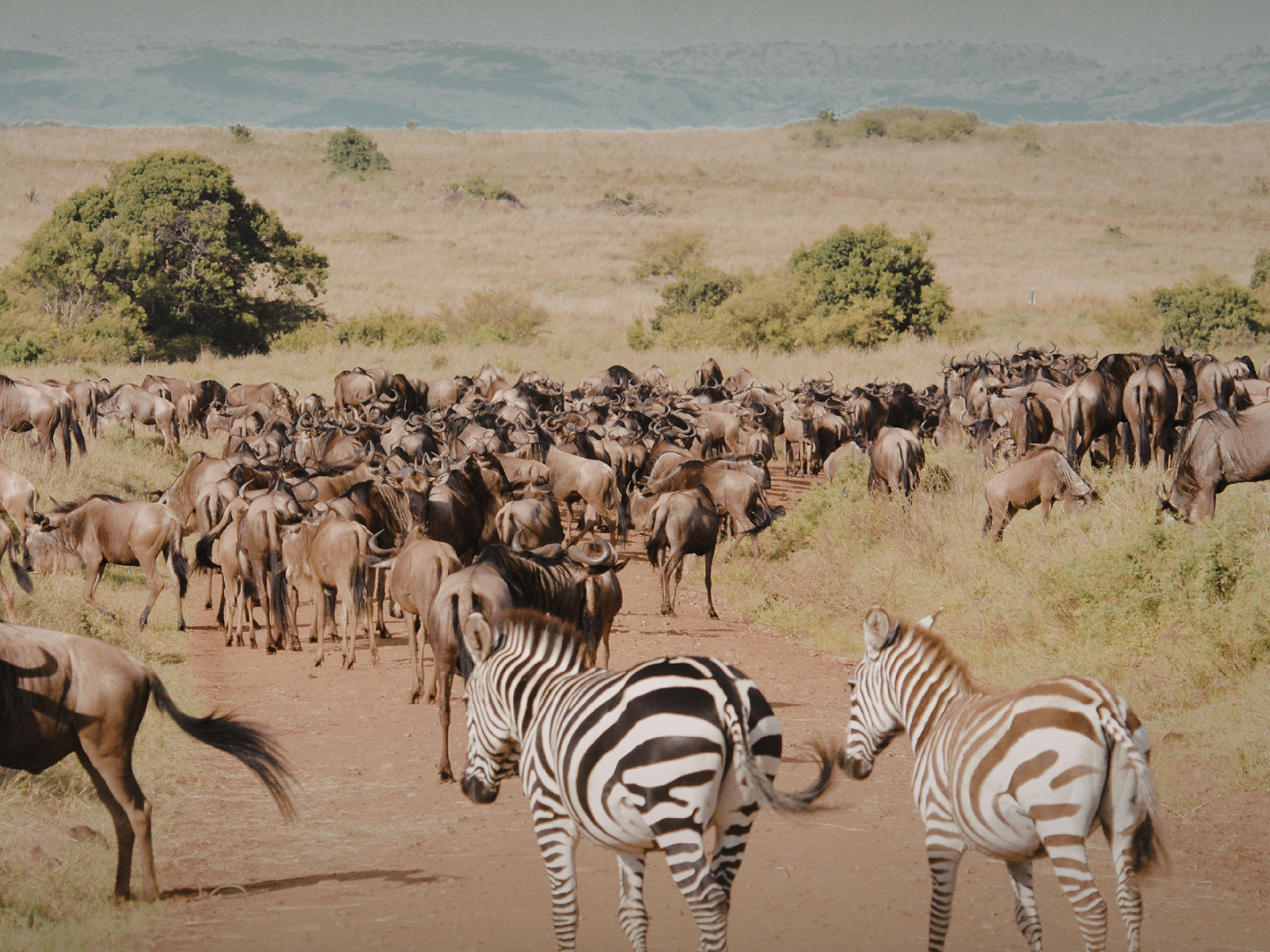
Like any iconic safari experience, the Great Migration has both advantages and considerations depending on how and when you choose to see it.
Pros: The sheer scale of wildlife is unmatched. Seeing thousands of animals stretching to the horizon is unforgettable. Predator action is frequent, especially during calving season and river crossings. The migration offers variety throughout the year, with each phase delivering a different type of experience.
Cons: Peak river crossing months can be busy, particularly in well known areas of the Maasai Mara. Sightings during this time can involve multiple vehicles at popular crossing points. River crossings are not guaranteed on any specific day, even in peak season, which can lead to unmet expectations if timing is too rigid.
This is why thoughtful planning is essential.
Is the Great Migration Only Worth Seeing at Certain Times?
This is one of the most common questions we hear, and the answer is no.
While river crossings are dramatic, they represent only a small part of the migration story. Many seasoned safari travelers prefer calving season or the quieter movement months because they offer space, exceptional wildlife encounters, and fewer vehicles.
In fact, some of the most intimate migration moments happen outside peak season, when the focus shifts from spectacle to immersion.
How We Plan Migration Safaris at Sundowner Safaris
At Sundowner Safaris, we design migration journeys based on how you want to experience it, not just what you have seen on social media.
We consider:
Your travel style and tolerance for crowds.
Which phase of the migration excites you most.
Whether private conservancies or mobile camps are the best fit.
Seasonal movement patterns rather than fixed dates.
By pairing expert guiding with the right locations at the right time, we ensure the experience feels authentic, rewarding, and unhurried.
Final Thoughts
The Great Wildebeest Migration is not a single moment in time. It is a living, breathing cycle that unfolds across landscapes and seasons, offering extraordinary wildlife encounters all year long.
When planned thoughtfully, it can be one of the most powerful safari experiences in Africa.
If you are dreaming of witnessing the Great Migration in a way that feels personal, meaningful, and true to the wild, we would love to help you plan it.
📩 Contact us today to start designing your migration safari.
