Review: Wilderness Chitabe Camp
Chitabe Concession, Okavango Delta, BotswanaTwo nights • August 2–4, 2026At a glance
- Location
- Chitabe Concession, Okavango Delta, Botswana
- Operator
- Wilderness
- Type and size
- Classic-tier tented camp rebuilt in 2025; eight tented suites of about 1,216 sq ft each
- We stayed
- 2 nights, August 2–4, 2026
- Our rating
- 4.7 / 5 · Room 4.8 · Service 4.8 · Food 4.5 · Guiding 4.9 · Location 4.8
- Best for
- Guests wanting serious predator viewing in a warm, unpretentious camp; photographers (book the private vehicle); couples, small groups and multigenerational travelers
- Not ideal for
- Families with children under 6 (try Chitabe Lediba); guests wanting mokoro and boating, as Chitabe is a land camp
- Getting there
- Wilderness Air light-aircraft flight from Maun, about 30 minutes, with a quick stop at Qorokwe
Chitabe has spent about three decades building its reputation as one of the Okavango's great predator camps. What's changed is the hardware. Wilderness rebuilt the camp in 2025, and the eight tented suites are now roughly twice their former size, raised on steel frames that touch the ground lightly and use no concrete at all. The result is a camp with a genuinely new room in a genuinely proven location.
I stayed two nights in early August 2026. Samar wasn't on this trip — I was traveling with my father-in-law, Mo, and with Benson, my business partner and one of the most experienced private guides working in southern Africa today. That combination matters to how this review reads, and I'll be explicit about it throughout: several of the best moments of this stay happened because Benson knows the Botswana camps and the people in them. A guest arriving on a shared vehicle with a camp guide will have a very good time at Chitabe. They will not have exactly the stay I had.
The short version: the rooms are among my favorites of the entire trip, the guiding is top notch, and the game is extraordinary even by Delta standards. This is a classic-tier camp doing classic-tier things exceptionally well, and it should be read on those terms.
Getting There
Chitabe is a thirty-minute light-aircraft flight from Maun on the Wilderness Air circuit, with a quick stop at Qorokwe on the way in. We landed at the airstrip at 2:30 in the afternoon. Benson and Mo had come in on a separate Mack Air flight about half an hour ahead of us and were waiting at the strip.
Our guide, Ant — short for Anthony, and he goes by Ant — met us at the airstrip. Here's where the first of those private-guide moments comes in: rather than transferring straight to camp, Benson had asked camp management in advance to let us game drive directly from the airstrip. Chitabe said yes without friction. That is not the standard arrival, and it's worth understanding what it bought us. Instead of a thirty- to forty-minute transfer road, we had a full afternoon in the concession, and we didn't reach our tents until after six.
It also meant check-in and paperwork happened at the end of the day rather than the beginning, which is the correct order of operations if you ask me. Guests who want this should arrange it through their travel designer rather than assuming it is on offer.
Setting & Location
📸 Photo provided by Chitabe
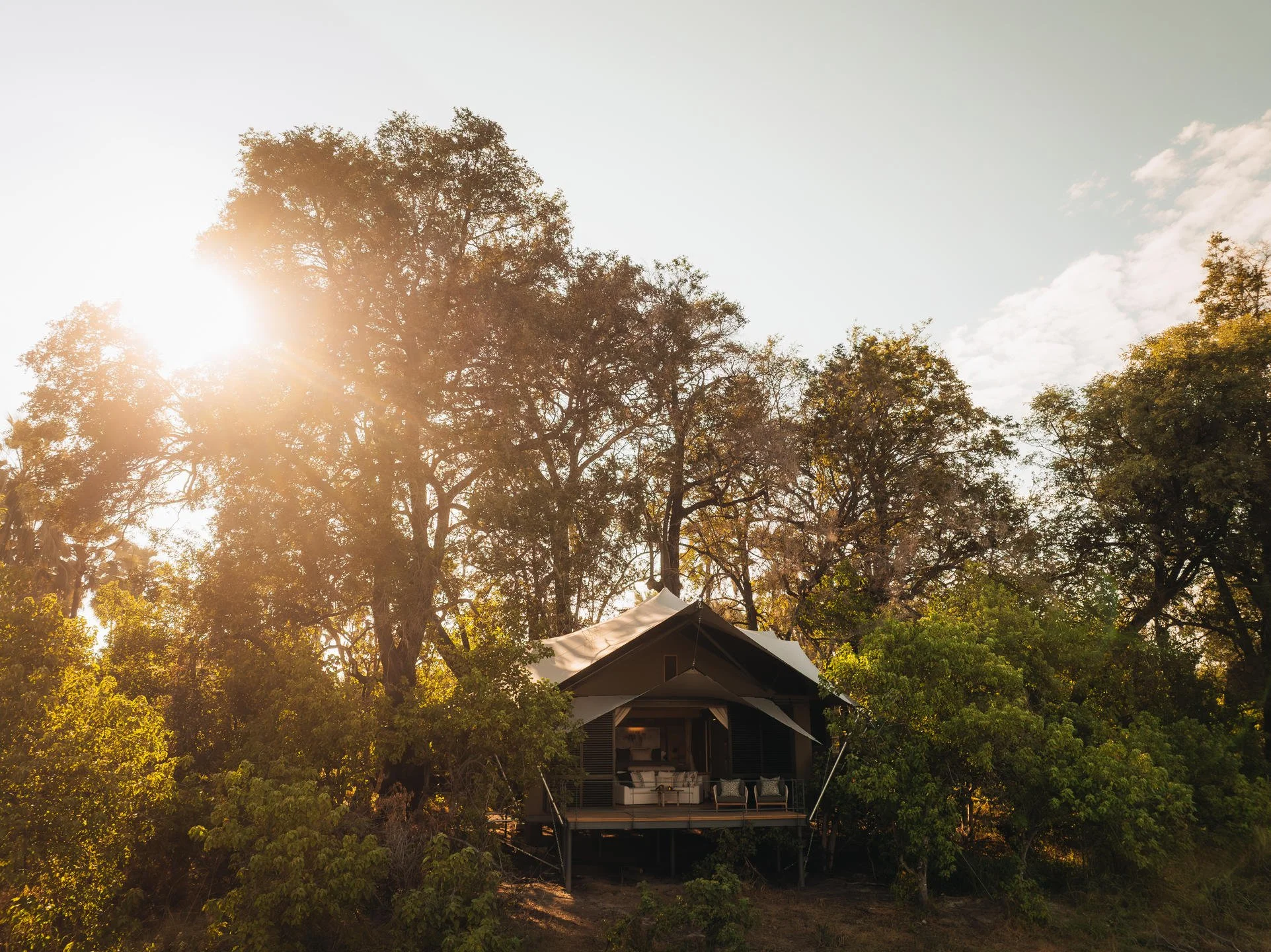
Chitabe sits on a tree island in the southeastern Okavango, across the Gomoti Channel from Moremi Game Reserve, with the Santantadibe River on the other flank. It occupies its own private concession — around 22,000 hectares of floodplain, riverine forest, mopane, and open grassland. The permanent water in those channels is what makes the place work: it concentrates prey year-round, and the prey concentrates predators.
That mosaic of habitats is the single most important thing to understand about Chitabe. Camps that rely on one landscape have good seasons and thin ones. Chitabe has several landscapes within a short drive of each other, which is why its cat viewing holds up across the calendar rather than peaking for a few months. Lion, leopard, and cheetah are all resident and all seen regularly, and the concession has recorded no fewer than fifty individual leopards.
The concession also permits night drives, which Moremi across the channel does not. That access meaningfully improves the odds on leopard and on the smaller nocturnal species — as our own two days demonstrated.
Weather in early August was classic Delta winter — cold enough on the vehicle before sunrise to want the blankets, warm and open by midday, and cooling quickly once the light went.
Facilities
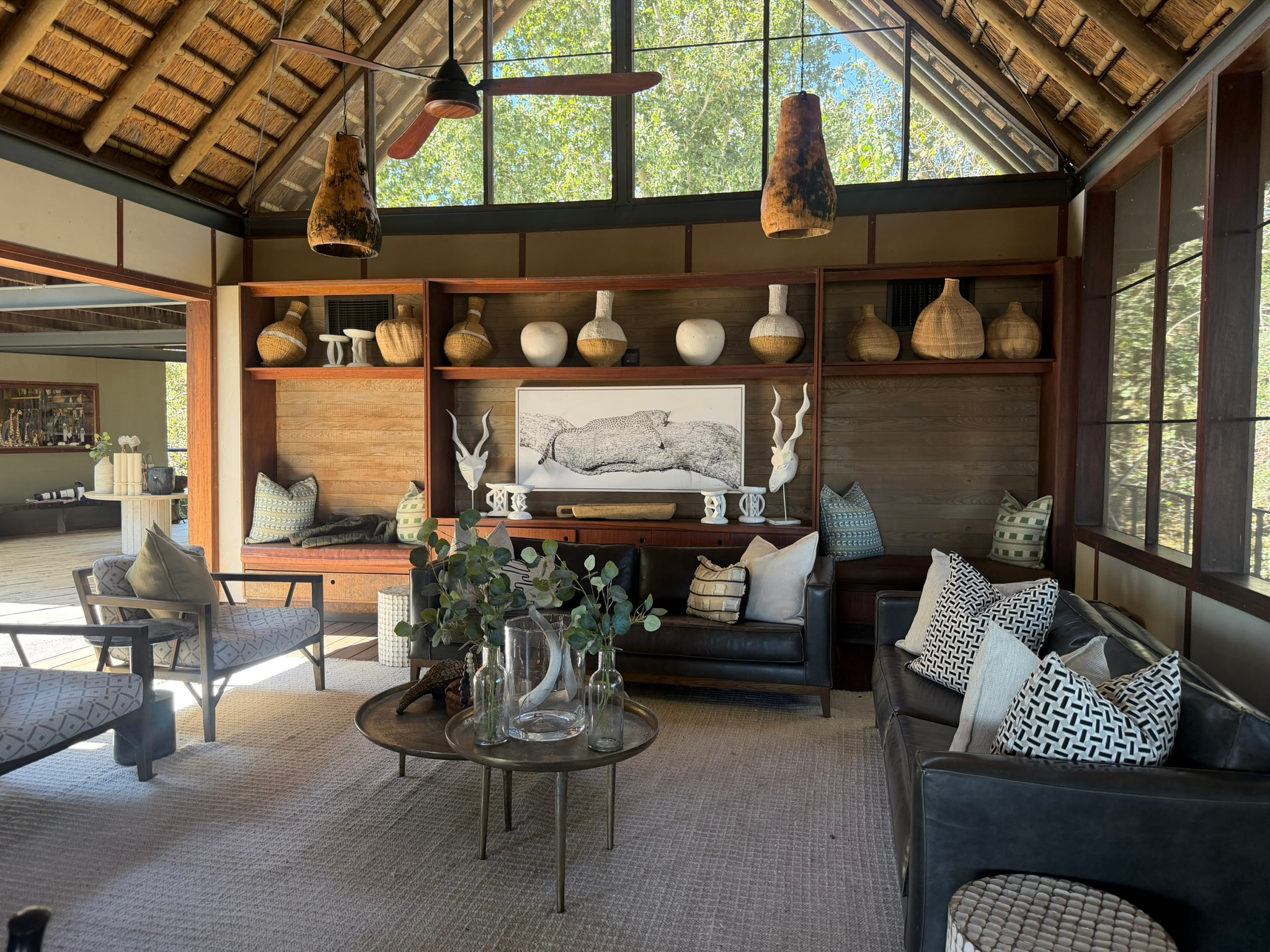
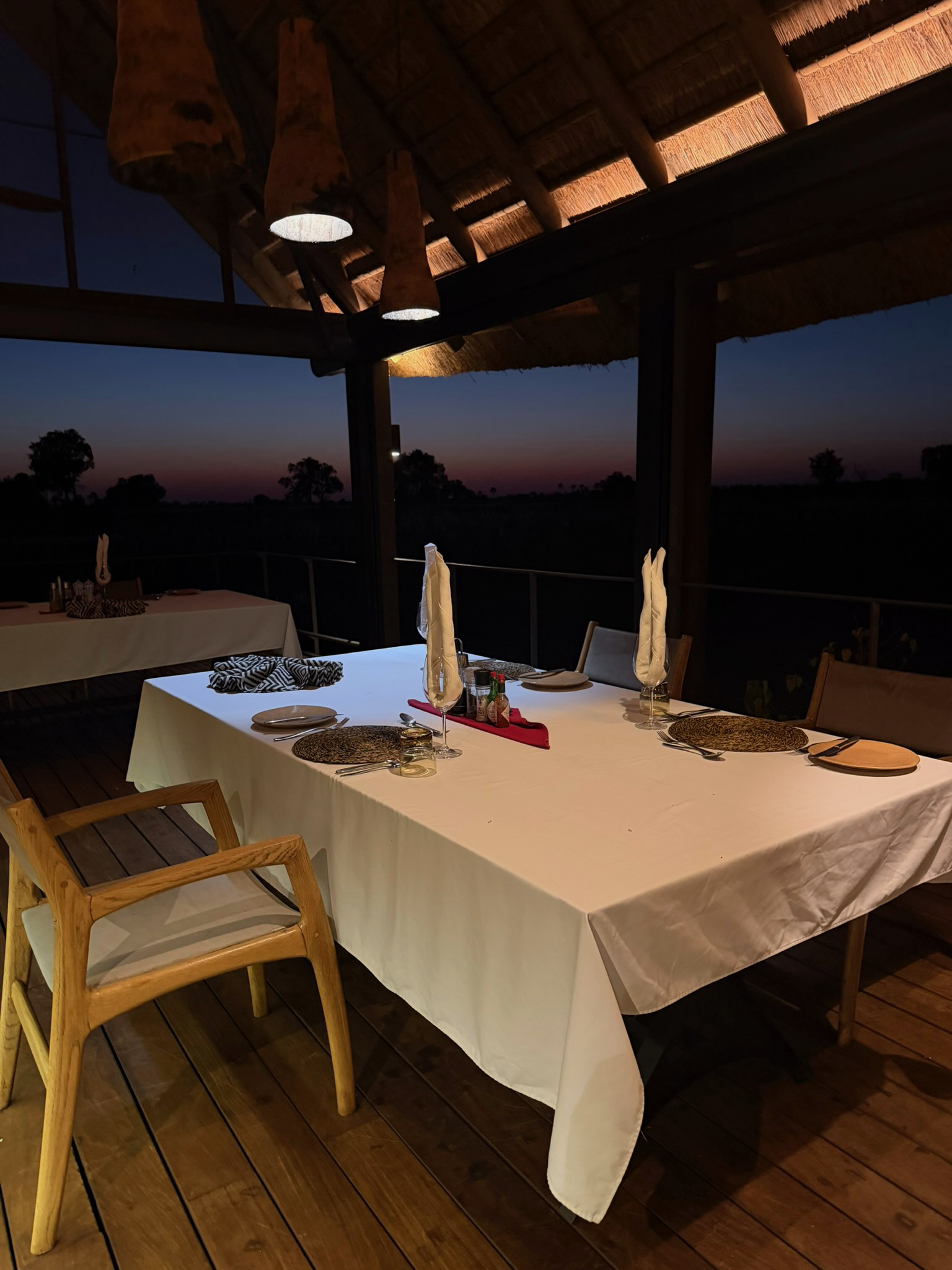
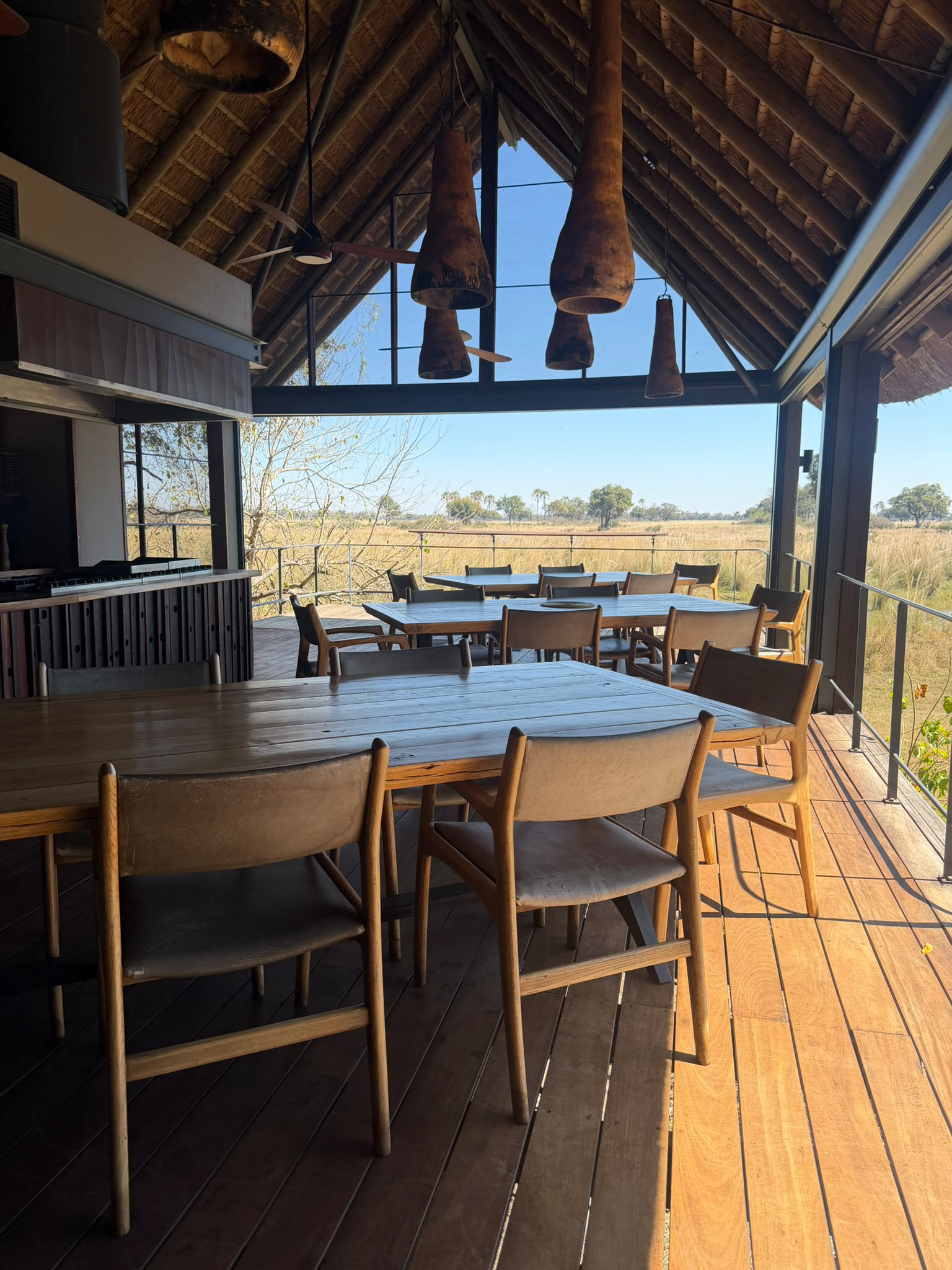
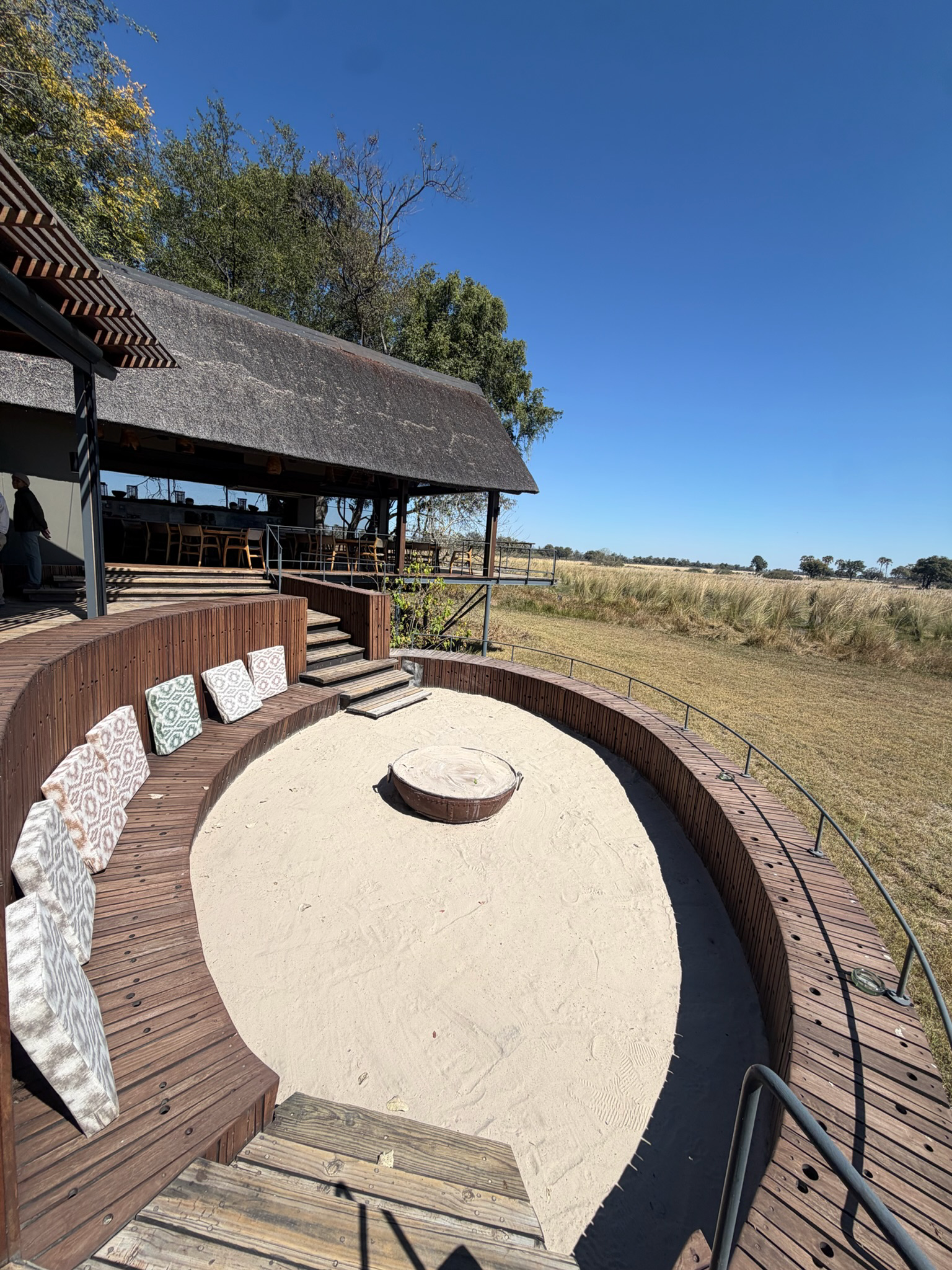
The main area is a thatched, open-sided structure on raised decks, with dining, lounge, and bar flowing into one another and long views out across the floodplain. It's comfortable rather than showy, and the atmosphere in the evenings — a fire out front, the whole camp gathered — is a large part of what people mean when they say Chitabe feels like a home rather than a hotel.
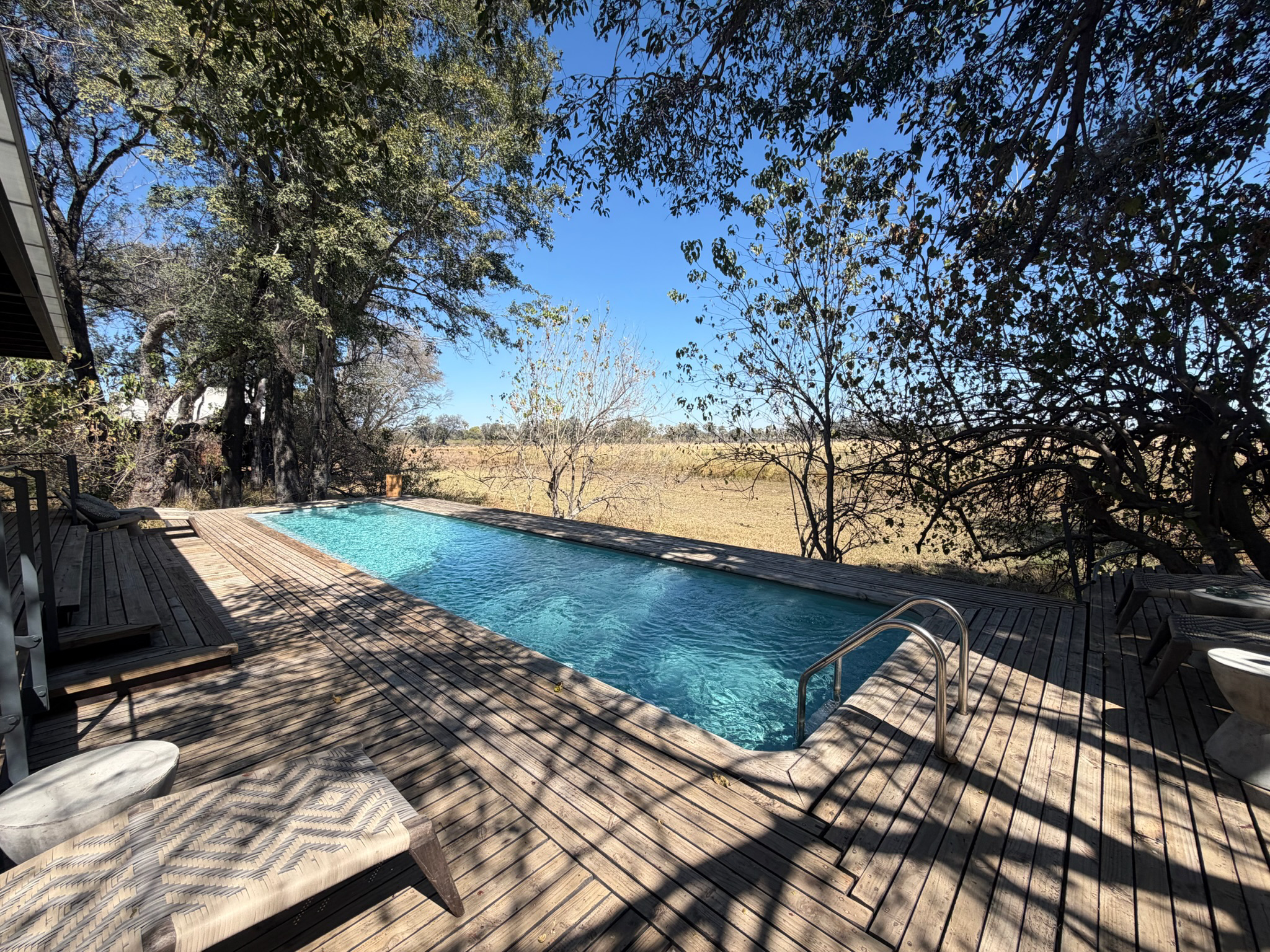
The pool is large and beautiful, set on its own deck at twelve meters — genuinely long enough to swim rather than just cool off in, which is rare at a camp this size.
The shop is well stocked with locally made pieces and worth a browse.
Fitness is handled in the room rather than in a building: yoga mats and a gym-in-a-bag setup in each tent, which suits a camp of this size far better than a dedicated facility would.
Wi-Fi deserves a proper explanation, because guests routinely misread it. Connectivity at Chitabe is fast and reliable in the tents, and deliberately absent from the main area. This is a Wilderness-wide design decision rather than a technical limitation: you can work, upload photographs, or call home from the privacy of your room, but the dinner table and the fire stay screen-free. Once you understand it's a choice, it reads as a good one.
The eight tents connect to the main area along raised walkways. They are flat, well built, and easy — Mo, traveling with us, found them entirely comfortable, and that's a meaningful data point for anyone considering Chitabe for a multigenerational trip. The camp is solar-powered, with a back-of-house tour available for guests who want to see how it works.
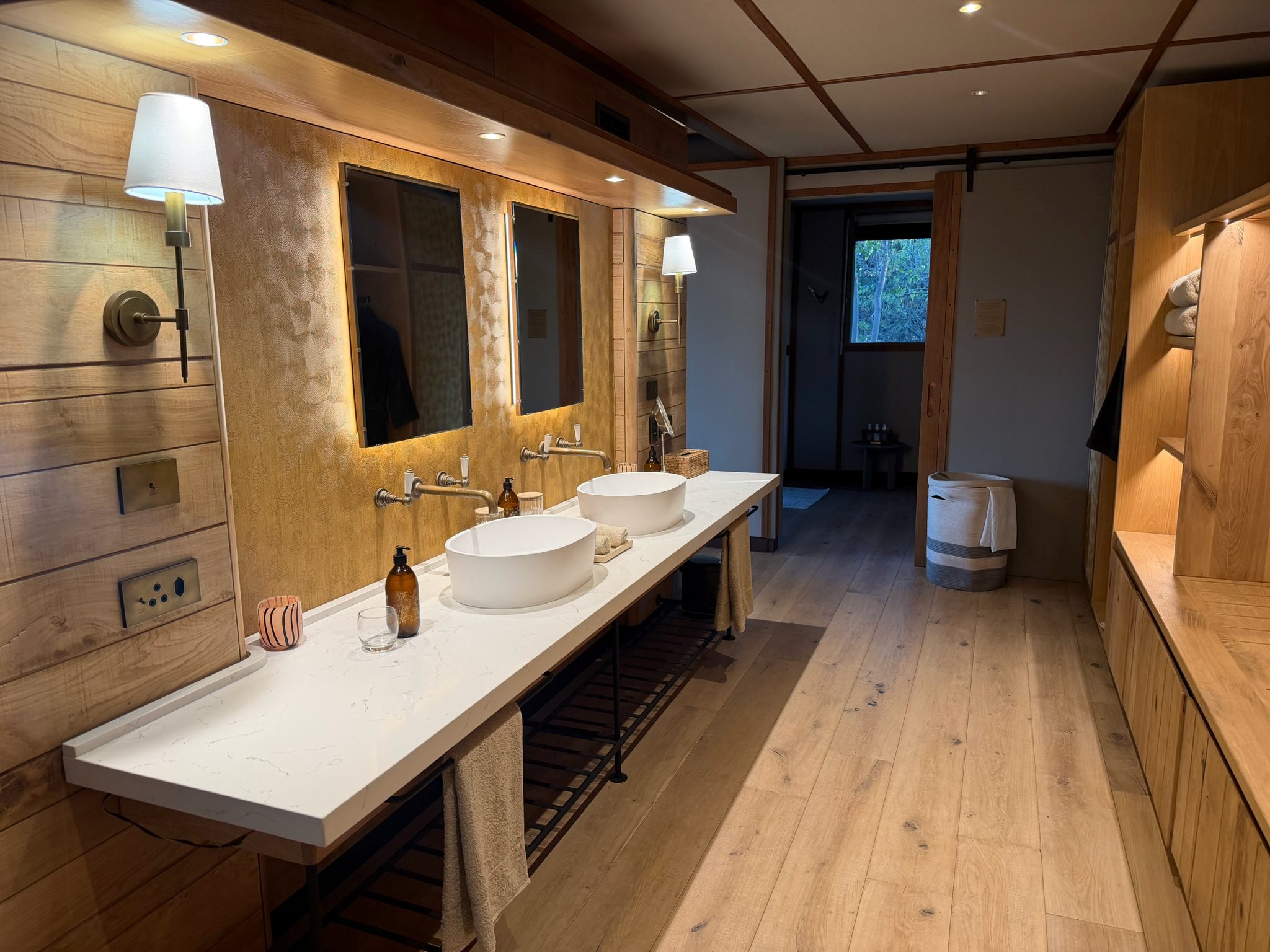
The Room
This is the headline. The rebuilt suites at Chitabe are among my favorite rooms of the entire trip, and that is saying something given where else we stayed.
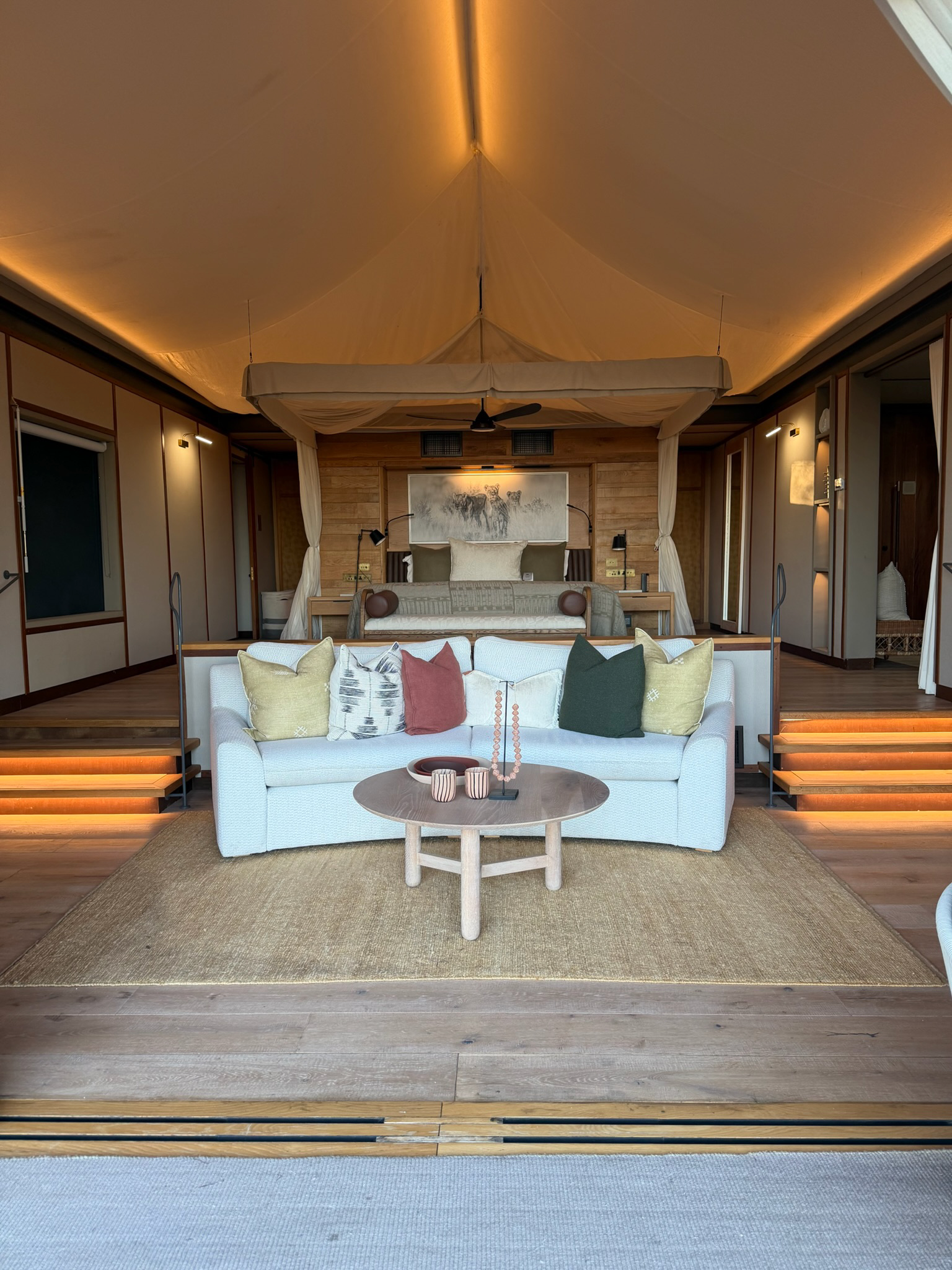
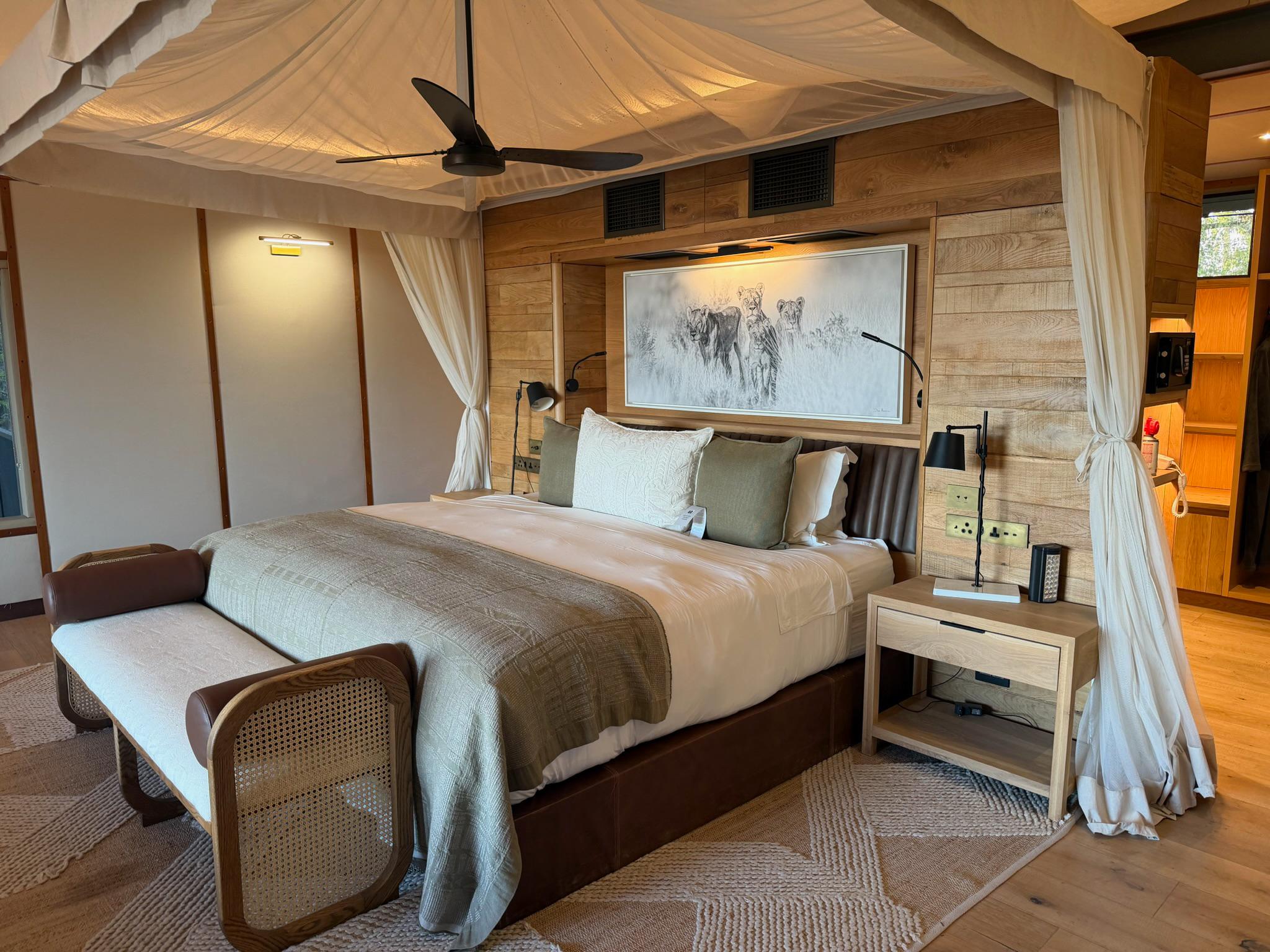
Each of the eight tented suites runs approximately 1,216 square feet — about 113 square meters — which sounds enormous on paper. In practice, the proportion is the achievement rather than the scale. The room is comfortable, unquestionably more than you need, and never feels cavernous or hotel-like. It's the rare safari suite that got bigger without losing intimacy.
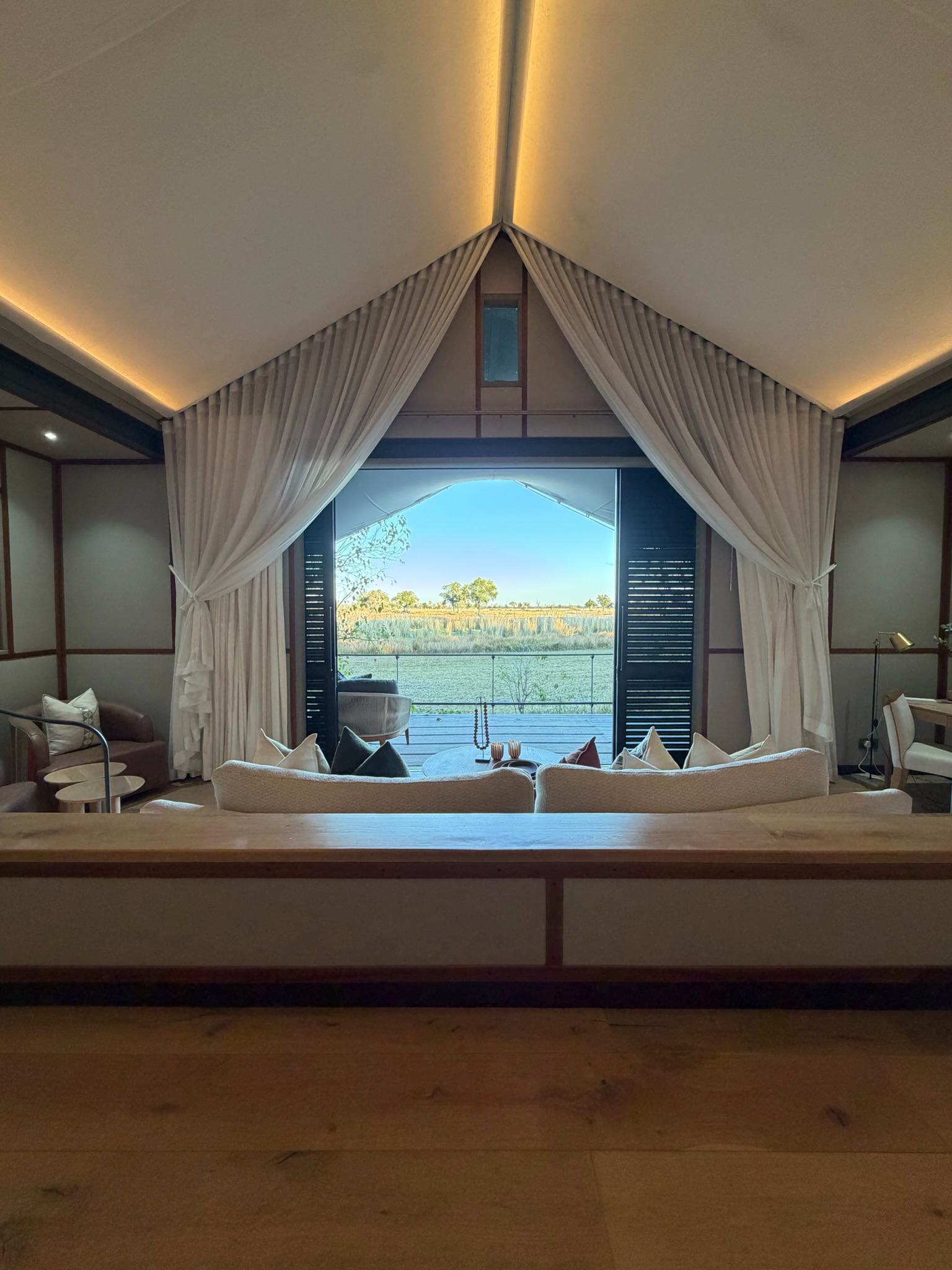
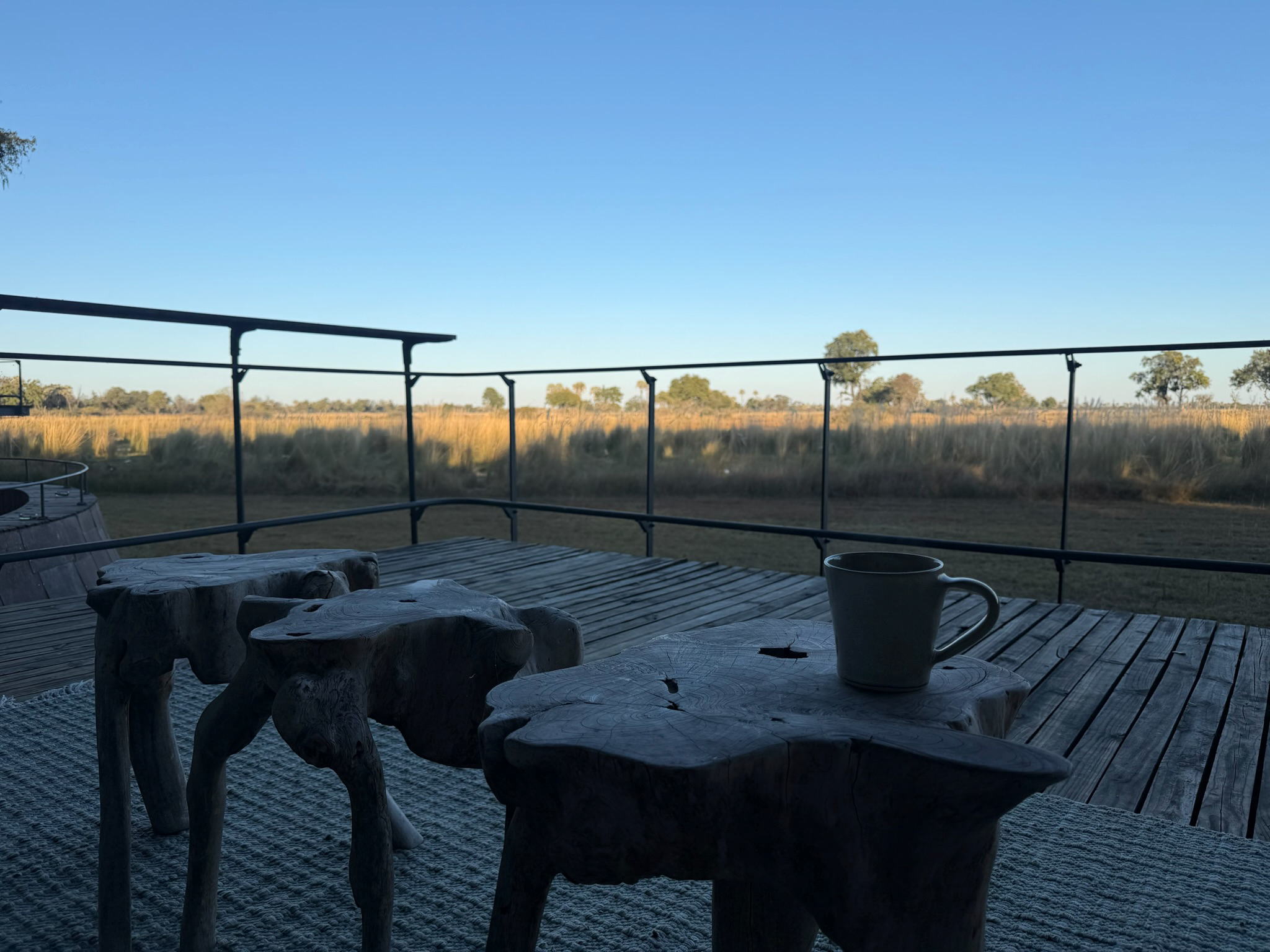
The layout is open plan under a high pitched canvas ceiling, with hardwood floors and layered woven rugs. A king bed under mosquito netting sits at one end, with a long low console dividing the sleeping area from a lounge. Full-height sliding glass doors with louvered shutters and sheer curtains open onto a private deck with two comfortable chairs, looking straight out over the floodplain. A second large window on the opposite wall frames the trees the camp is built among, and a writing desk sits between them — a good spot to work through photographs between drives.
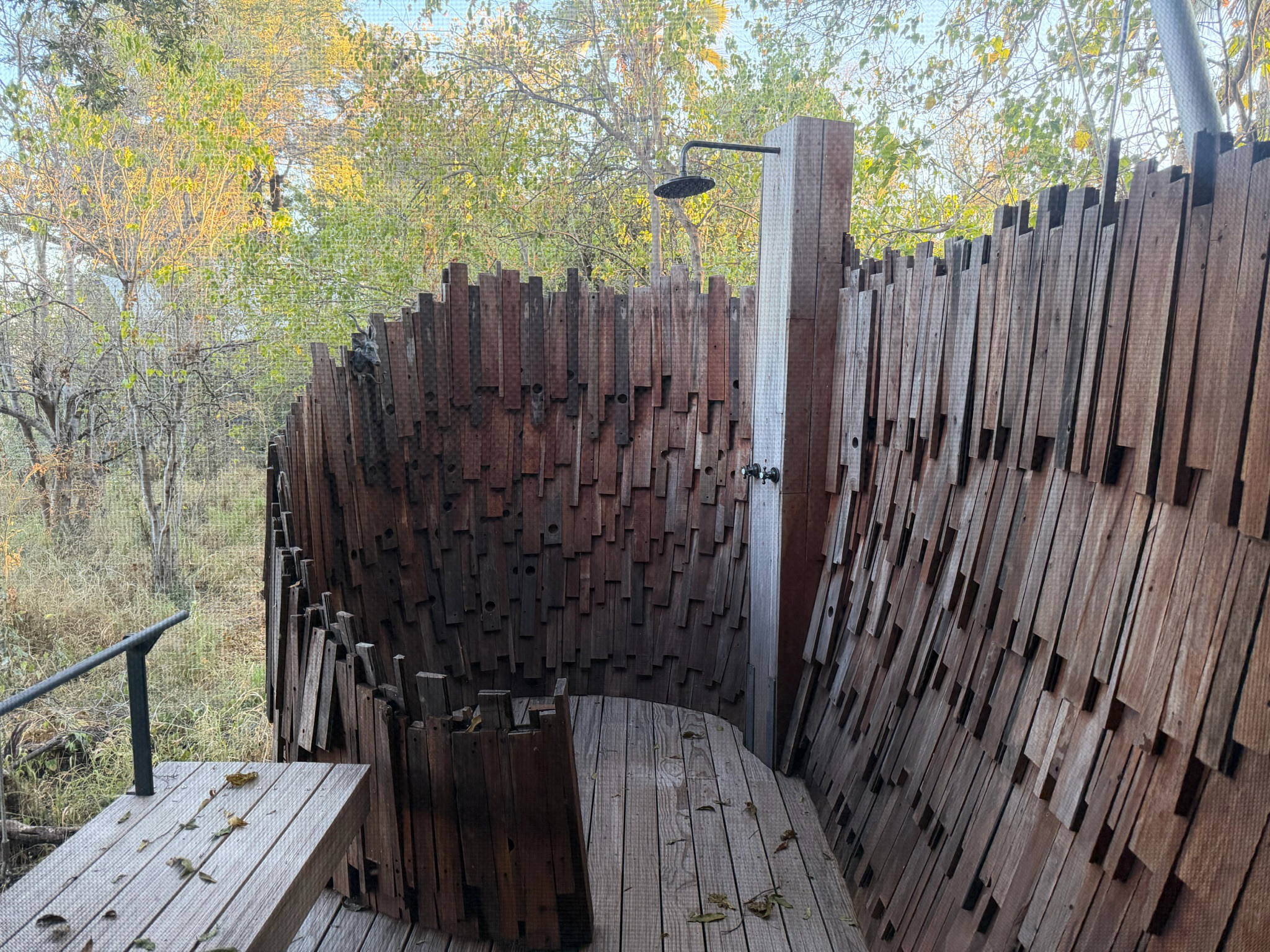
The bathroom has both an indoor and an outdoor shower and a double vanity. The palette throughout is restrained and contemporary — neutrals, natural timber, soft lighting — a departure from the heavier thatch-and-canvas idiom, and beautifully done.
On cooling: the rebuild introduced evaporative air coolers, combined with insulated canvas walls, ceilings, and floors. In August we never needed them — the nights were cold enough that the question never arose — and the insulation alone made a noticeable difference to comfort. This is the one thing standing between the room and a perfect score: air conditioning would make it flawless. Guests traveling in the hot months should know the distinction and plan their season accordingly.
The tents have a minibar and a coffee setup. Privacy is excellent — we neither saw nor heard a neighbor across two nights.
The Vehicle
📸 Photo provided by Chitabe
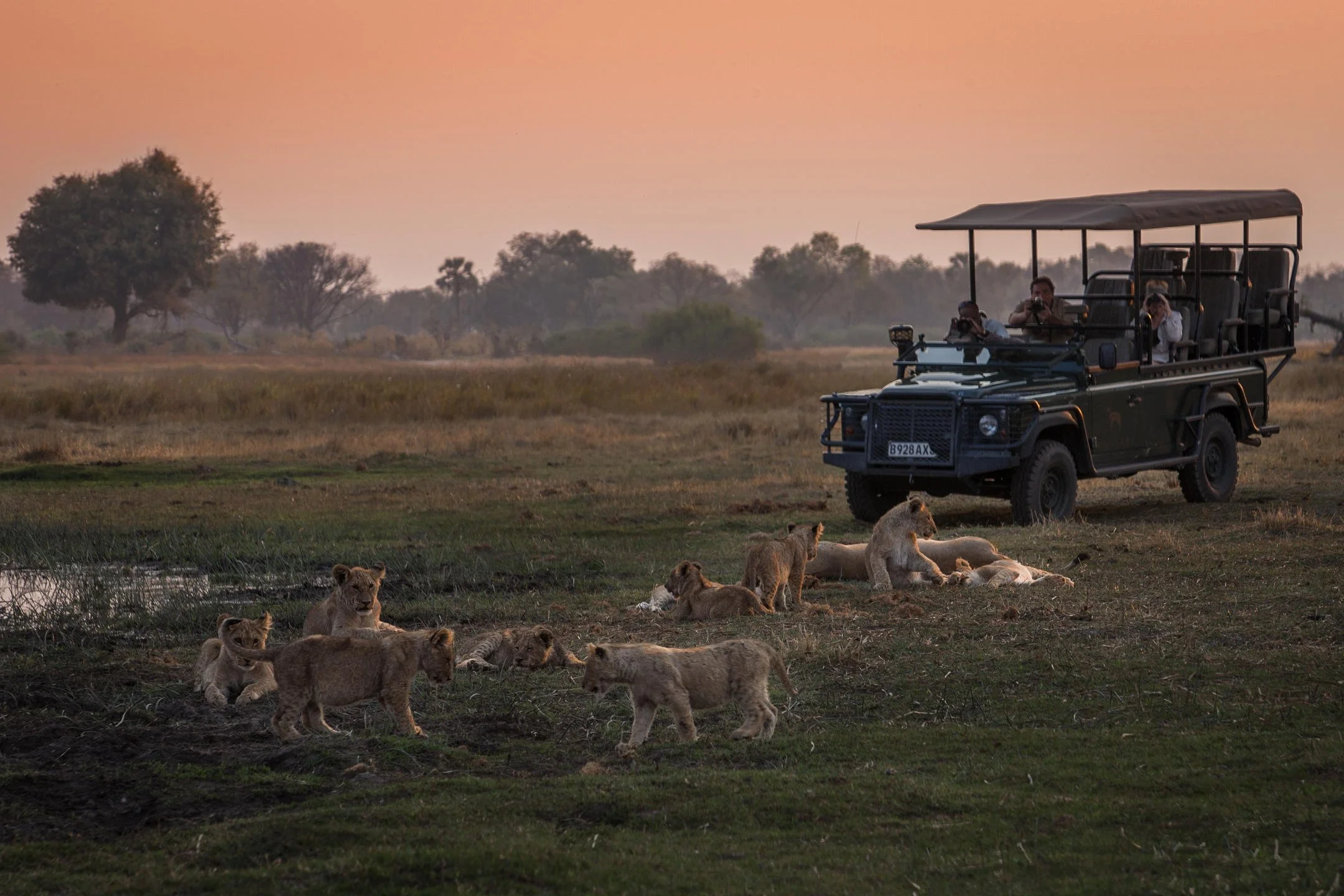
Chitabe runs open-sided Land Rovers configured in three rows of two, seating six. They're a little older, and they are wonderful cars — the kind that have clearly done a lot of good work and been looked after properly. A storage box sits between the seats in each row, which takes a camera body, a lens, a jacket, and a pair of binoculars easily enough.
There's a cooler on board, and blankets and ponchos are provided — both of which earn their place on a cold Delta morning before sunrise.
Access is easy. The step height is manageable, and Mo had no trouble getting in and out across four drives. The front seat next to the guide is usable and worth asking for. Ant guides solo, so there is no tracker seat on these vehicles.
On how sightings are found, which is worth its own paragraph. Chitabe's guides largely don't work the radio. Rather than converging on whatever another vehicle has called in, they go out and find their own animals. Over two days, essentially everything we saw came from Ant and Benson working the concession themselves — reading tracks, watching alarm behavior, and being willing to sit and wait. The difference this makes to the feel of a drive is hard to overstate: it turns a game drive into something closer to a search than a delivery, and it means you arrive at a sighting having earned it rather than having queued for it.
One practical note, and it is a small thing that would make a real difference: the tops of the storage boxes are slippery. Anything you set down there — a phone, a lens cap, a camera body — slides around as the vehicle moves, and mine ended up on the floor more than once. A textured mat or a lip on the box tops would fix it entirely. For photographers, there are also no bean bags or camera supports on the vehicles, so bring your own beanbag; it would do double duty as somewhere to rest your gear between sightings.
A private vehicle is bookable in advance, subject to availability — worth reaching out early to check pricing and confirm. Given how much of what follows depended on setting our own pace, I would recommend it to anyone with photography priorities or a group traveling together.
Food
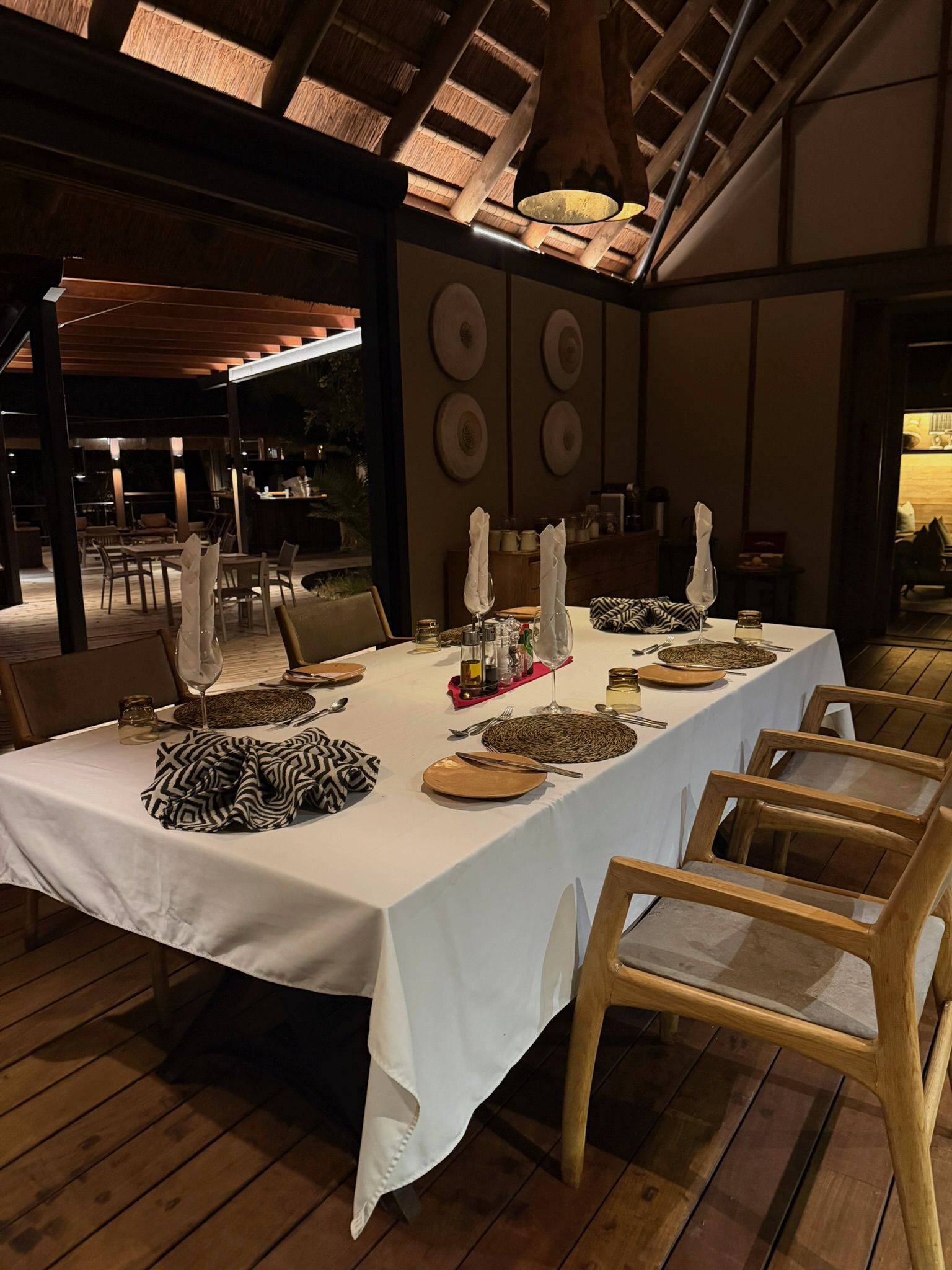
Food at Chitabe is good, with one genuine high point and one meal that simply wasn't for me.
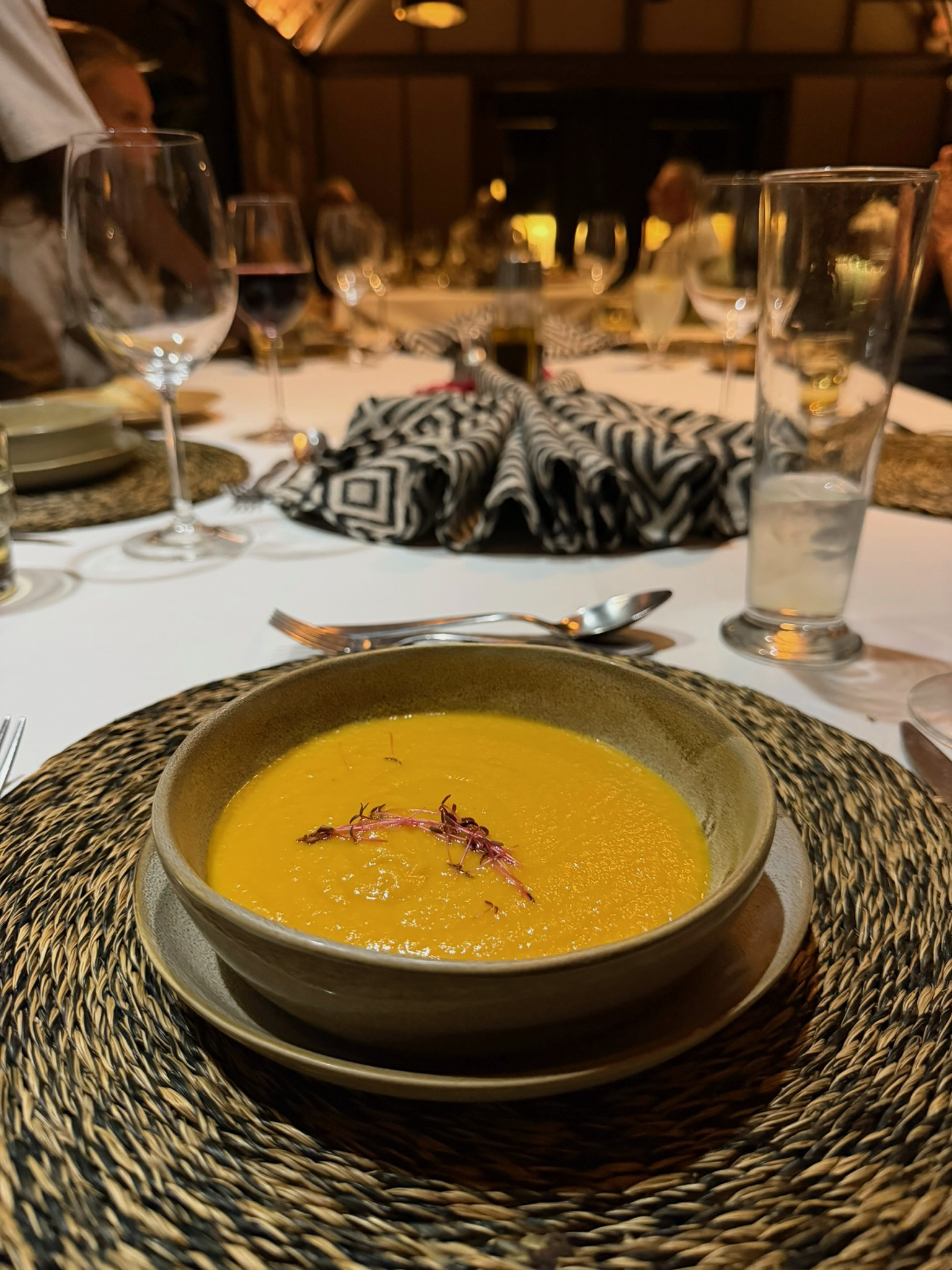
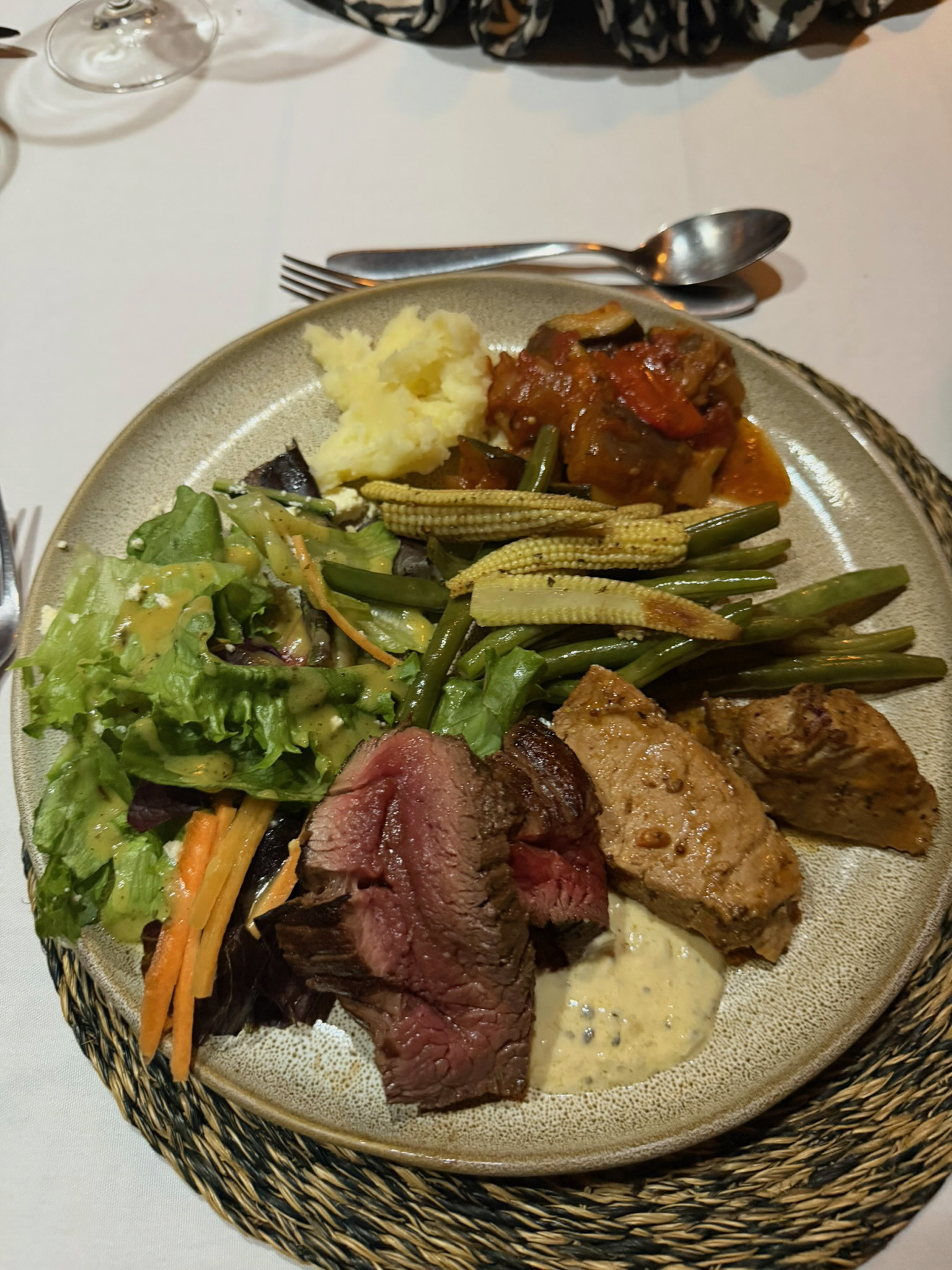
Dinner on our first night was served family style — a plated soup and bread to start, then tables invited up one at a time to a cooking station where the kitchen team talked us through each dish. There was salad, green beans, mashed potato, a vegetable medley with tomato, pork, and a beef served at two different temperatures so guests could take it as they liked it. It finished with a crème caramel — richer than a flan, and excellent. The soup was the standout and I never did find out what was in it. I ate a great deal.
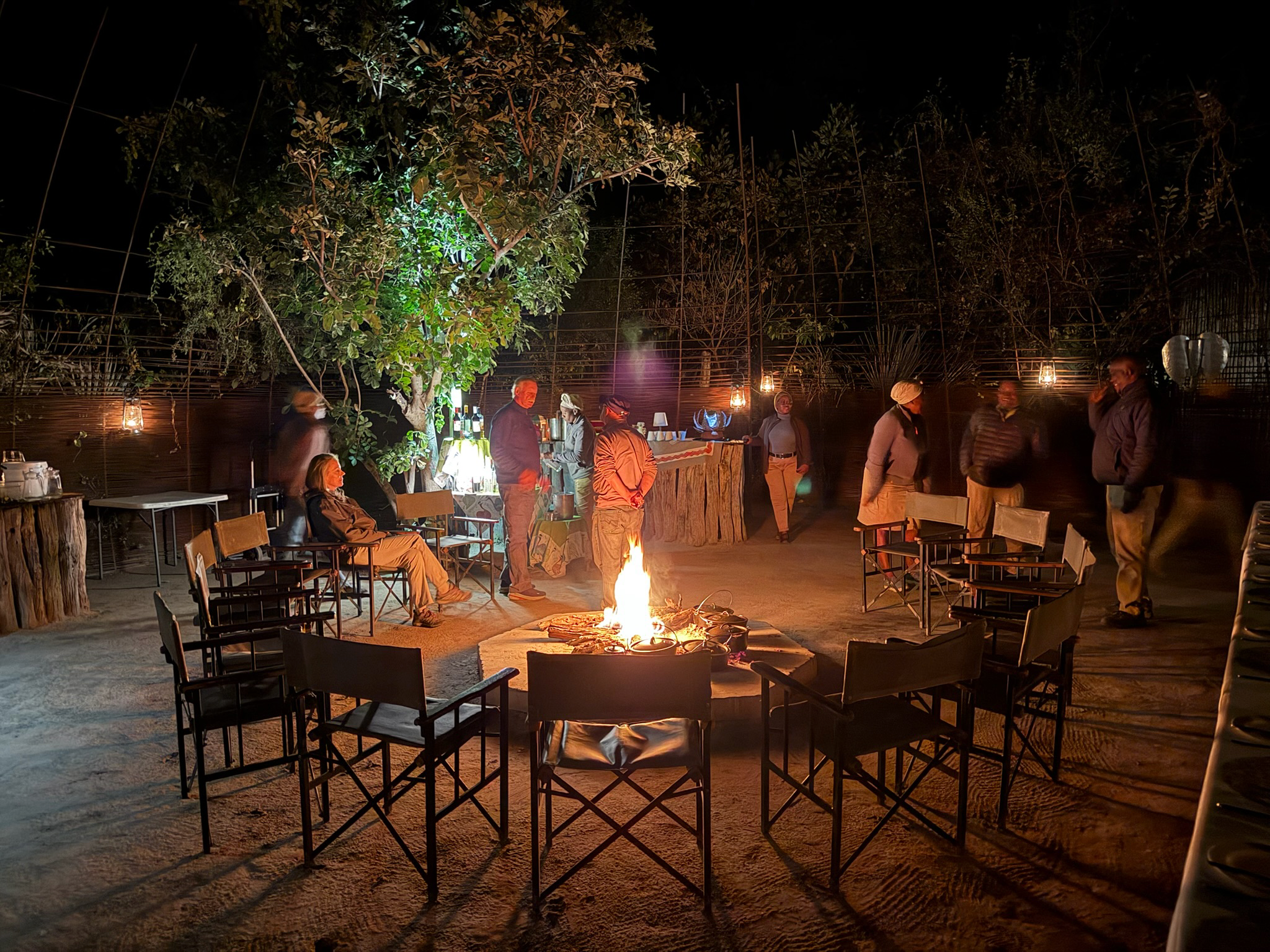
The boma night was the best meal of the stay and one of the better boma evenings I've had anywhere. Dinner around the fire, the whole camp present, live music, and a multi-course spread built around Botswana cooking — soup to start, then lamb, bread, pap, a goat stew, and an abundance of vegetables. It's the meal where the camp's identity comes through most clearly, and it's the one I'd tell guests to make sure they're in camp for.
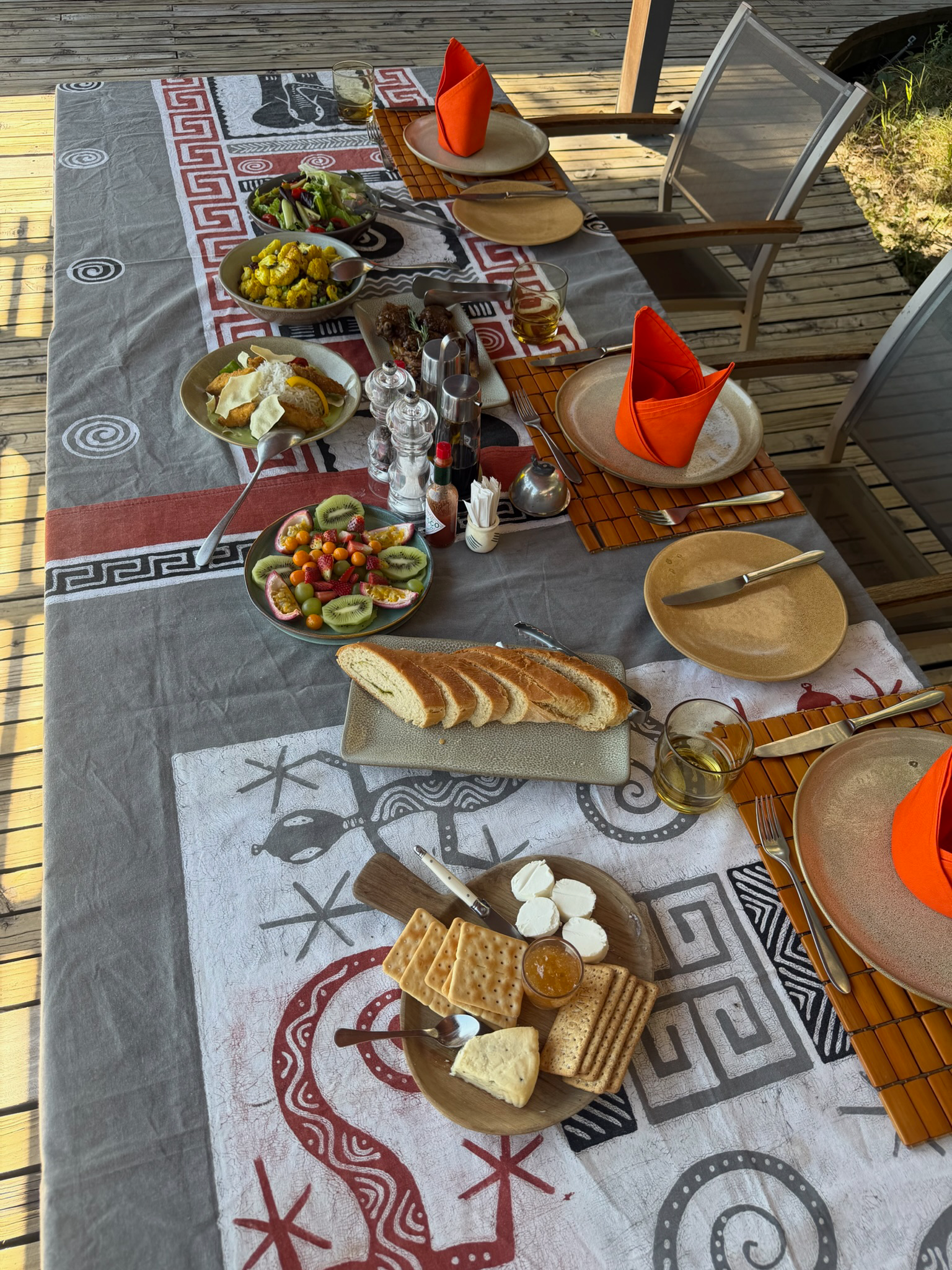
Lunch on our second day was the miss, and I want to be fair about it. Salad, rice with fried eggplant, a bell pepper salad, duck, cauliflower and vegetables, then fruit, cheese, and bread. The duck didn't work for me and I thought the protein was light for a meal after a long morning out. Others at the table enjoyed it. That's a preference rather than a failure, and I record it as mine.
Breakfast is included and served in camp before the morning drive, but we barely touched it. On our second morning we asked the kitchen to pack breakfast in case we found something worth staying out for — and we did. Ant pulled over and let us eat quickly at the side of the road, and then we went straight back to the cheetah. The camp accommodated the request without hesitation, though it was arranged by Benson and Ant with camp management rather than offered as a matter of course.
Drinks are included in the standard Wilderness fashion, and the range is generous.
Service
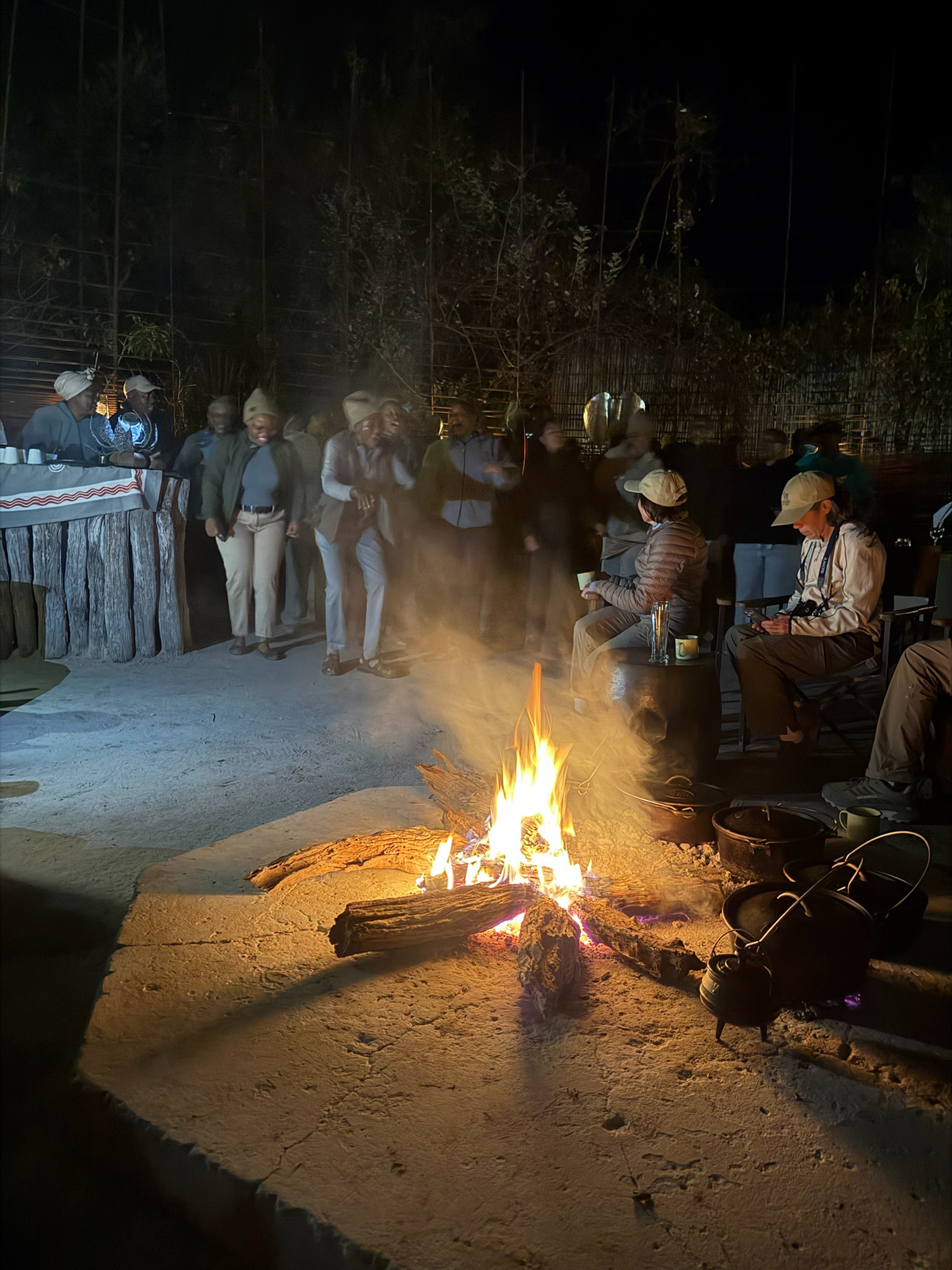
The defining thing about the team at Chitabe is that almost nobody is new. The guides, the managers, and the camp staff are seasoned, and most have been here a long time. It genuinely felt like being with a family that likes each other — not a service culture assembled from a manual, but people who have worked alongside one another for years and enjoy it.
That tenure shows up in practical ways. A team that knows its camp inside out anticipates rather than follows procedure, and says yes to unusual requests because it already knows what is possible. Almost everything that made this stay distinctive traces back to that.
We were hosted for most of our stay by Aukie, alongside Mamajo, who has been part of Chitabe for years and turns up by name in guest accounts going back a long way. She is one of the reasons the camp has its reputation for feeling like a family operation rather than a branded property. At no point was it unclear who was in charge: every request we made was absorbed easily and answered quickly, and management was visible in camp rather than administering it from an office.
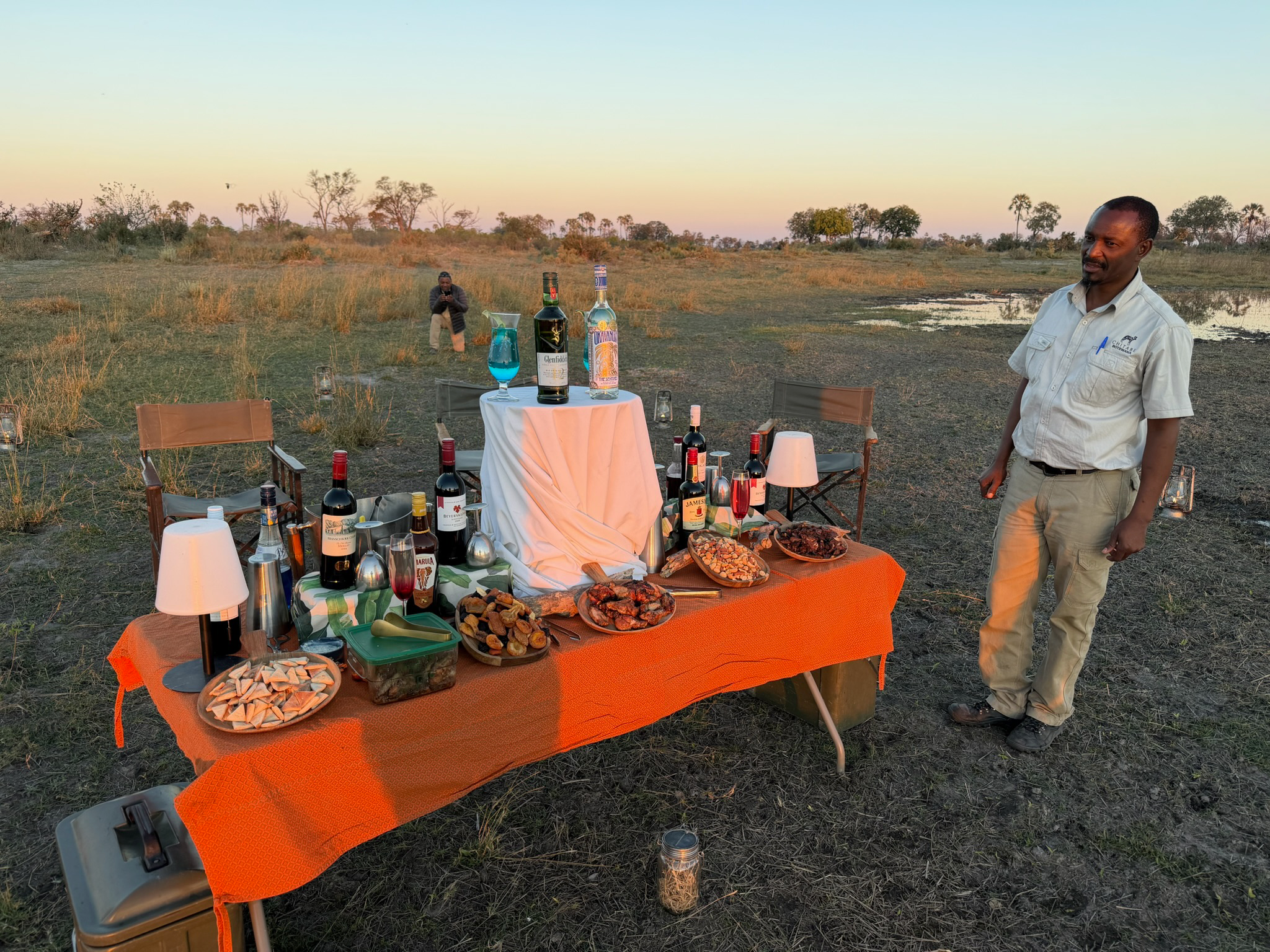
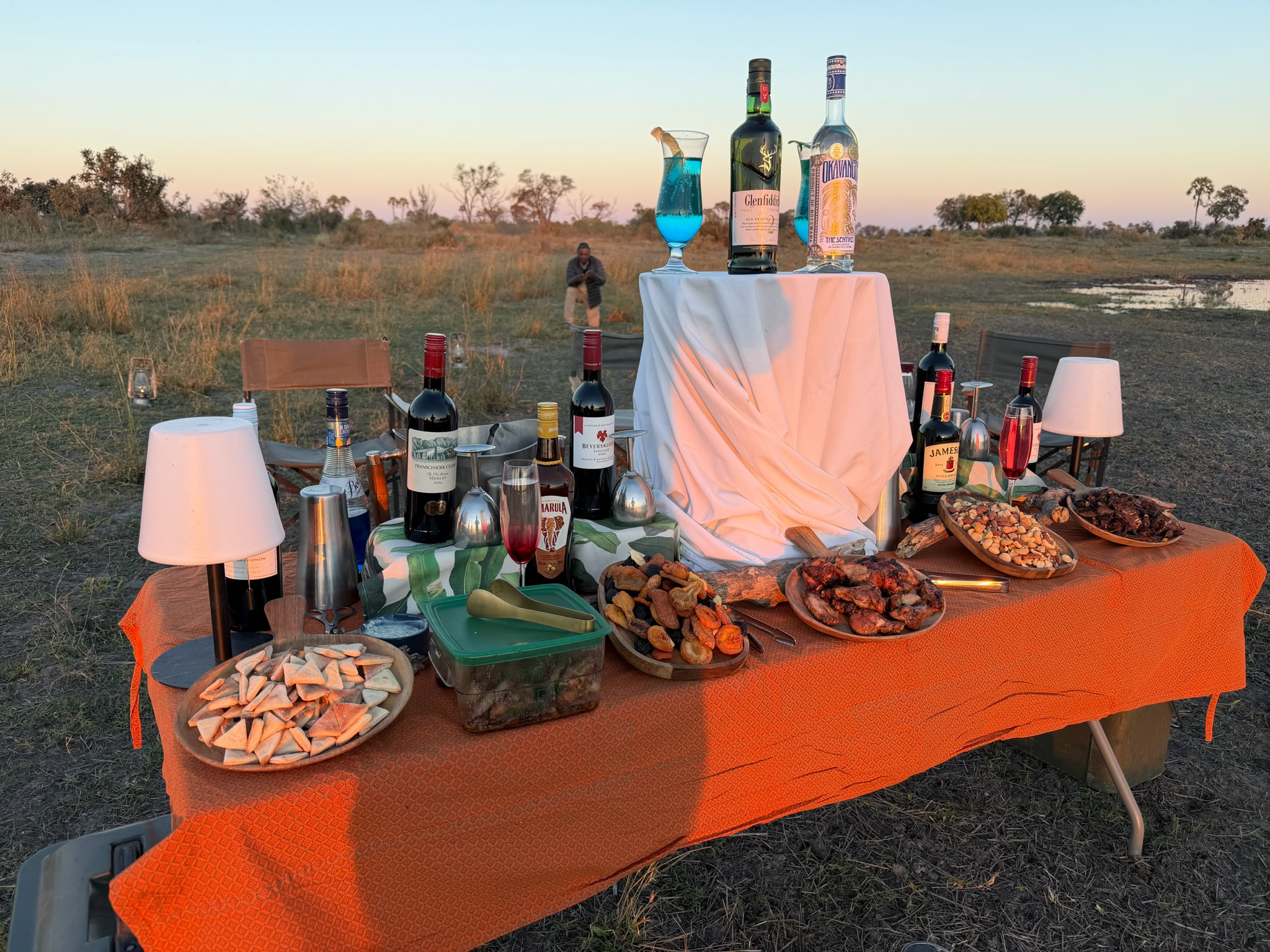
The flexibility was the through-line. Game driving straight from the airstrip, a breakfast packed to go so we could stay with a cheetah, a sundowner set up on a hippo-filled floodplain with a full spread of drinks and food — all of it was handled well, and none of it required negotiation. The sundowner in particular was beautifully staged, and the camp had clearly chosen the site with some care.
An honest caveat: several of these arrangements came via Benson's relationships with camp management rather than as standing offers. That reflects well on Chitabe's willingness to say yes. It also means guests should ask for what they want rather than assume it will be anticipated.
Nothing went wrong during our stay.
Activities & Guiding
Morning and afternoon game drives are the core of the Chitabe experience, and the concession rewards them heavily. Night drives are permitted here, which opens up the nocturnal species and improves the leopard odds considerably. Guided walks run seasonally — they weren't operating at the water levels during our visit — and helicopter flights are available for guests who want the aerial perspective on the Delta.
Our guide was Ant, and he was excellent — patient, calm, unhurried, and completely willing to sit with a sighting for as long as it took. That last quality is rarer than it should be, and it's the reason this review has the story it does.
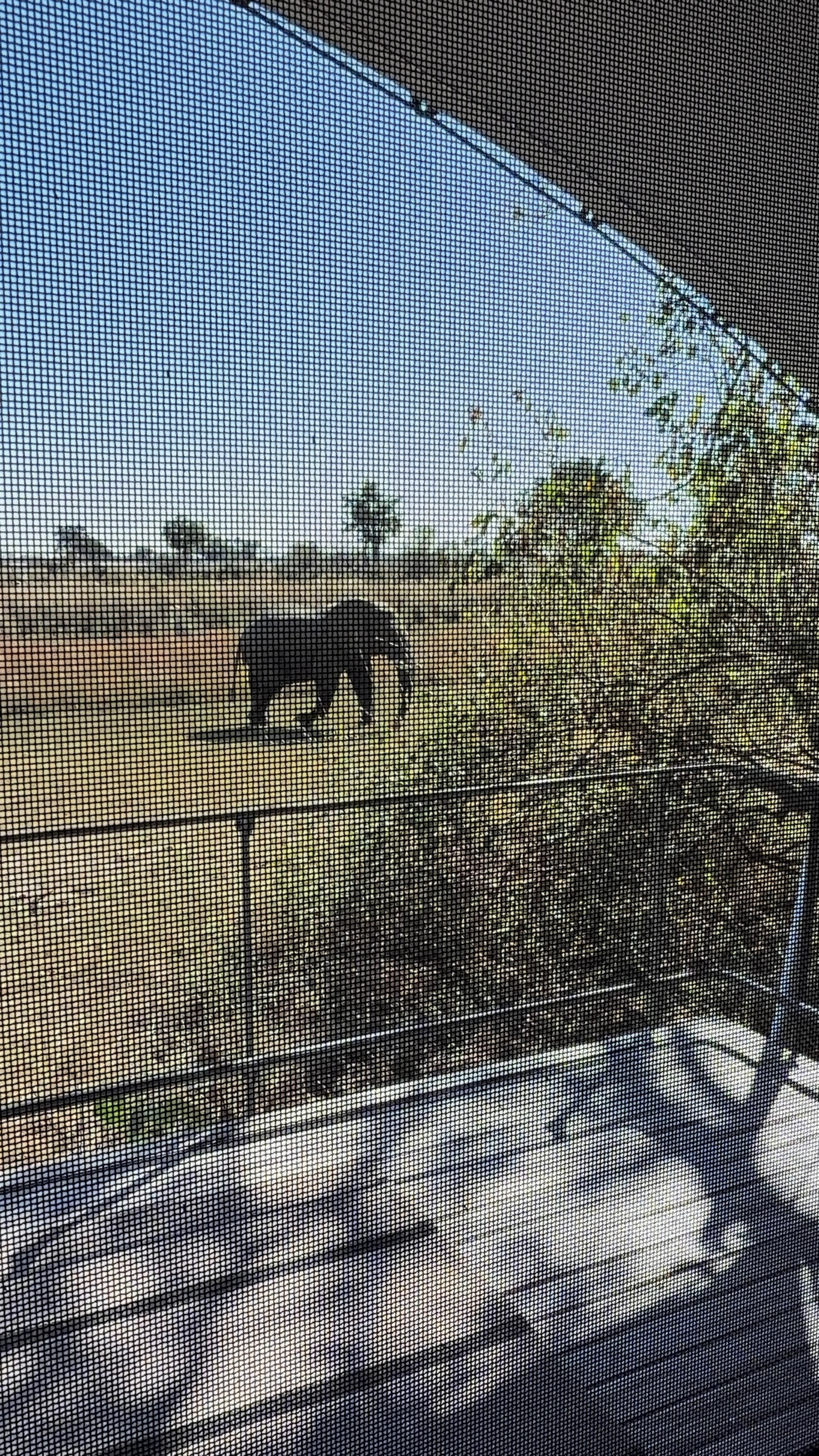
The first afternoon, driving in from the airstrip, we found an African civet — a nocturnal animal and an unusual daytime sighting. Benson spotted movement, told Ant where to look, and we waited until it emerged. Later the same afternoon we found an African wildcat, also usually a night animal, moving through the grass. Both were Benson’s eyes, and I record that honestly: traveling with a guide of his experience changes what you see. We also found twenty-eight lions across two prides — one of fifteen and one of thirteen, heavily weighted toward males, which is remarkable in itself — along with elephants, banded mongoose, abundant plains game, and a beautiful hippo sighting at sundown.
The second morning was the one I'll remember for years. We were out before dawn, found five lions early, and then, around eight, found what we'd come for: Supermom.
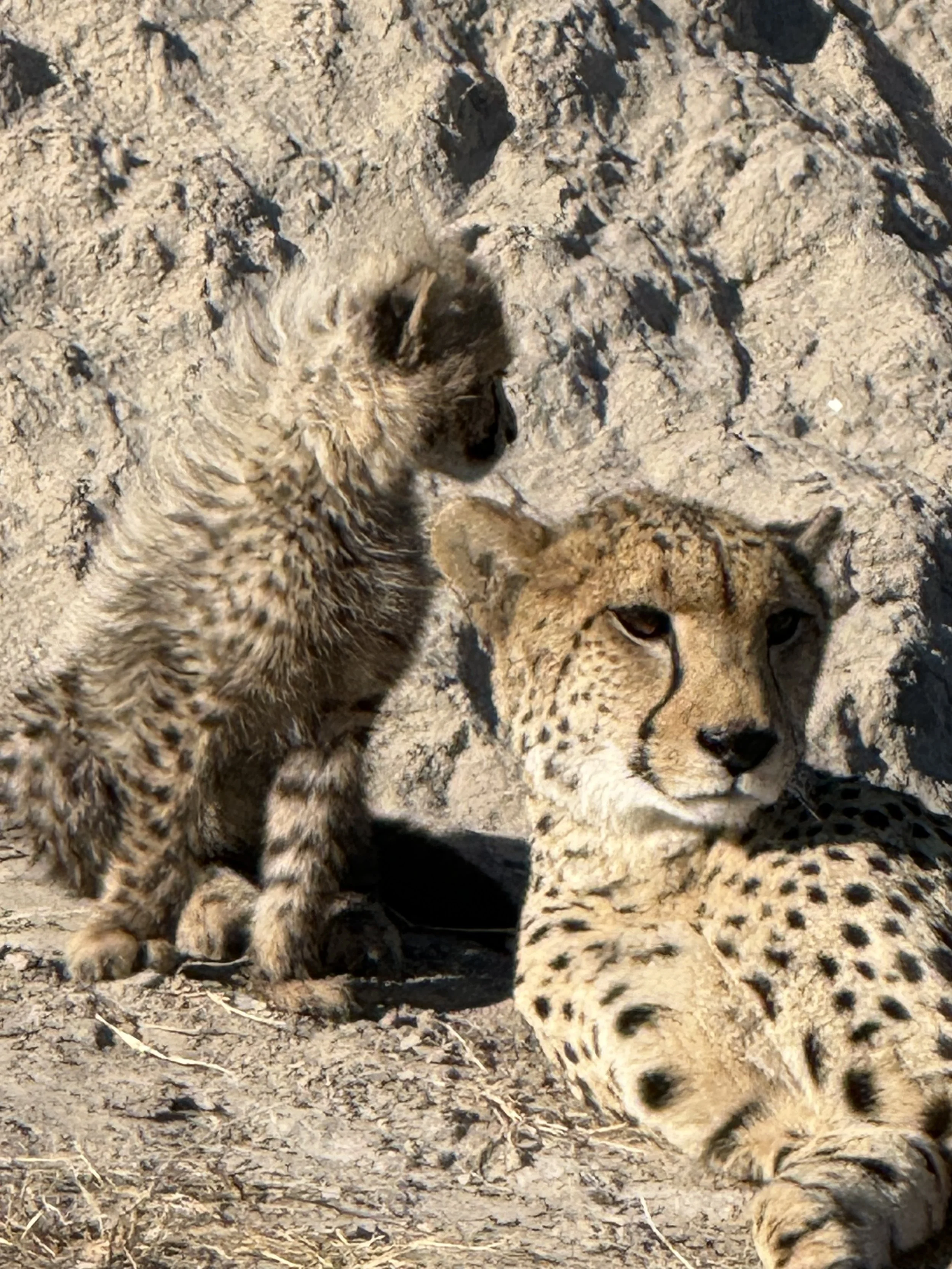
Supermom is Chitabe's celebrity cheetah, and the name is earned — she has raised more than ten cubs to adulthood since 2022, a survival record that borders on statistical impossibility for a Delta cheetah. This season she had five or six in her litter and, over the past two months, has lost all but one. The surviving cub was about two months old when we found them.
She was hungry. Over roughly two hours we watched her attempt an impala herd repeatedly and fail every time — each approach given away by a bird or a squirrel raising the alarm. She tried different lines, different angles, different waits. Then she tucked the cub into a small depression under a tree, left it there, and went again. This time she got one.
What followed was the most complete piece of animal behavior I've witnessed. She held the impala and waited — five, ten minutes — scanning for anything that might take it from her. Then she dragged it under cover so the birds wouldn't mark the spot. Then she waited again. Only when she was satisfied did she call the cub. It didn't come. So she walked back, picked it up in her mouth, carried it over, and the two of them ate together.
We stayed with them until one in the afternoon and got back to camp around two. It's the reason we packed breakfast, and it's the reason I'd tell any guest going to Chitabe to build in the flexibility to abandon the schedule.
That same morning we also found a leucistic African wildcat — a genuinely rare animal, strikingly pale — again spotted by Benson.
The second afternoon brought a spread-out pride of twelve to fourteen lions working on a hunt as the light went, and then that sundowner on the floodplain, hippos everywhere, before the drive back to camp and the boma.
For two nights, that is an exceptional return.
A note on wild dogs. Chitabe is well known for African wild dog, and guests often book with them in mind. During our visit the packs were ranging into neighboring concessions — the concession's lion numbers are currently very high, and dogs move accordingly. This is ordinary predator dynamics rather than anything permanent, and it's worth asking about pack movements at the time of booking so expectations match the season.
Chitabe Camp or Chitabe Lediba?
We visited Chitabe Lediba during our stay, and since the two camps share a concession, guides, and game, the choice between them is a fair question.
Lediba feels more traditional and closer to the ground — a smaller camp with a slightly more rustic, more classically "camping" feel to it. The rooms are a little darker and sit low, which some guests will prefer and others won’t. The view from the main area, though, is something else entirely.
Chitabe Camp has the rebuilt suites and a slightly more social rhythm. Lediba is quieter, more intimate, and it is the one with family units — Chitabe Camp has none, and the minimum age at both is six.
Both are wonderful, and both deliver a top game experience off the same concession. The choice really comes down to style, budget, and availability.
The Good & The Bad
| The Good | |
|---|---|
| A team that has stayed. | Guides, managers, and camp staff who are seasoned and long-tenured — it feels like being with a family that likes each other. |
| The rebuilt suites. | Approximately 1,216 sq ft, beautifully proportioned, indoor and outdoor showers, double vanity, a private deck over the floodplain, and a restrained contemporary palette. |
| The guiding. | Ant is patient, knowledgeable, and completely willing to stay with a sighting — which is what made the Supermom morning possible. |
| Guides who find their own animals. | Chitabe's team works the concession rather than the radio. It changes the entire character of a drive. |
| The game. | Twenty-eight lions on the first afternoon, a civet and two African wildcats including a leucistic individual, and a two-hour cheetah hunt with a two-month-old cub. In two nights. |
| Supermom. | One of the most remarkable individual animals in the Delta, and a genuine reason to come. |
| Habitat diversity | That keeps the cat viewing strong year-round rather than seasonally. |
| Night drives | Permitted in the concession — a real advantage over Moremi across the channel. |
| The boma night. | The best meal of the stay and the clearest expression of the camp's character. |
| The pool | Twelve meters on its own deck, long enough to actually swim. |
| In-room Wi-Fi that’s fast | And none in the common areas. A deliberate and correct decision. |
| Flat, well-built raised walkways | That work easily for older guests. |
| The Bad | |
|---|---|
| Few, and none of them serious: | |
| The second-day lunch didn't land for me. | The duck was odd and the protein felt light after a long morning out. Others at the table enjoyed it, so take it as a personal note rather than a verdict on the kitchen. |
| Cooling is evaporative, not refrigerated. | Combined with the insulated build it works well, and in the cold months it's irrelevant. Guests traveling in October or the height of summer should know the distinction. |
| Sharing a vehicle is the default. | With eight tents that's normal and it works fine — but almost everything distinctive about our two days came from setting our own pace. Guests with photography priorities or a group traveling together should book the private vehicle in advance. |
| No bean bags, and slippery storage box tops. | Bring your own beanbag — there are no camera supports on the vehicles, and anything you rest on the box between the seats tends to slide off. An easy fix, and worth mentioning to the camp. |
| Minimum age six and no family unit at Chitabe Camp. | Families with younger children should look at Lediba, which has two. |
Conclusion
Chitabe is a camp that has spent thirty years earning its reputation and has now given itself the rooms to match it. The rebuild is a genuine success — bigger without being grandiose, contemporary without losing the feel of a tent, and comfortable in a way that made it one of my favorite rooms of the trip.
The game speaks for itself. A concession that produces twenty-eight lions in an afternoon, two African wildcats in two days, and a cheetah kill watched from start to finish over five hours is not a camp that needs much argument made for it. And the way those sightings are found — guides working their own ground rather than following the radio — is a large part of why they feel like yours.
But the thing that stays with you is the people. The team here is seasoned and long-serving, and the camp has the unmistakable warmth of a group that has been together a long time and genuinely enjoys it. That is not something a property can build quickly, and it is the reason Chitabe feels like a home rather than a hotel.
Who should book Chitabe? Guests who want serious predator viewing in a warm, unpretentious camp with a genuinely excellent room. Photographers, provided they book the private vehicle. Couples and small groups who want a social, characterful camp rather than a formal one. And multigenerational travelers with older parents — the walkways, the vehicle access, and the pace all work.
Who should look elsewhere? Families with children under six, who should book Lediba instead. And guests with only a single Delta camp in their itinerary who specifically want mokoro and boating — Chitabe is a land camp, and it does that superbly, but it is not the water experience.
How should it be paired? With a permanent-water camp in the northern Delta. Chitabe gives you the predators and the open country; a water camp gives you the mokoro, the channels, and a completely different Delta. Together they show you the whole place.
Would I return? Yes — anytime, any day.
Would we send guests? Without hesitation.
“Big cats, big family, real bush camp.”
More reviews nearby
- Vumbura Plains, Okavango Delta: Vumbura by the Sea. (4.6/5)
- Tawana, Moremi Game Reserve: Luxury and seclusion, deep in Moremi. (4.6/5)
- North Island Okavango, Okavango Delta: Beautiful water camp with great game. (4.1/5)
Planning a trip? See our Botswana safari guide or all our camp reviews.