Review: Tawana, Moremi Game Reserve, Okavango Delta, Botswana
Moremi Game Reserve, Okavango Delta, BotswanaTwo nights • September 2025A Sundowner Safaris Camp ReviewAt a glance
- Location
- Moremi Game Reserve, Okavango Delta, Botswana
- Operator
- Natural Selection
- Type and size
- Luxury camp opened May 2024 on the Gomoti River; eight suites (five standard, three family units)
- We stayed
- 2 nights, September 2025
- Our rating
- 4.6 / 5 · Room 4.9 · Service 4.5 · Food 4.6 · Guiding 4.4 · Location 4.5
- Best for
- Honeymooners, couples and families who want a luxury, design-forward camp and are open to a national-park experience
- Not ideal for
- Guests who want water activities or walking safaris; far suites are a 1–1.5 km walk
- Getting there
- About 1 hour by light aircraft to Santawani airstrip, then roughly an hour by vehicle to camp
Introduction
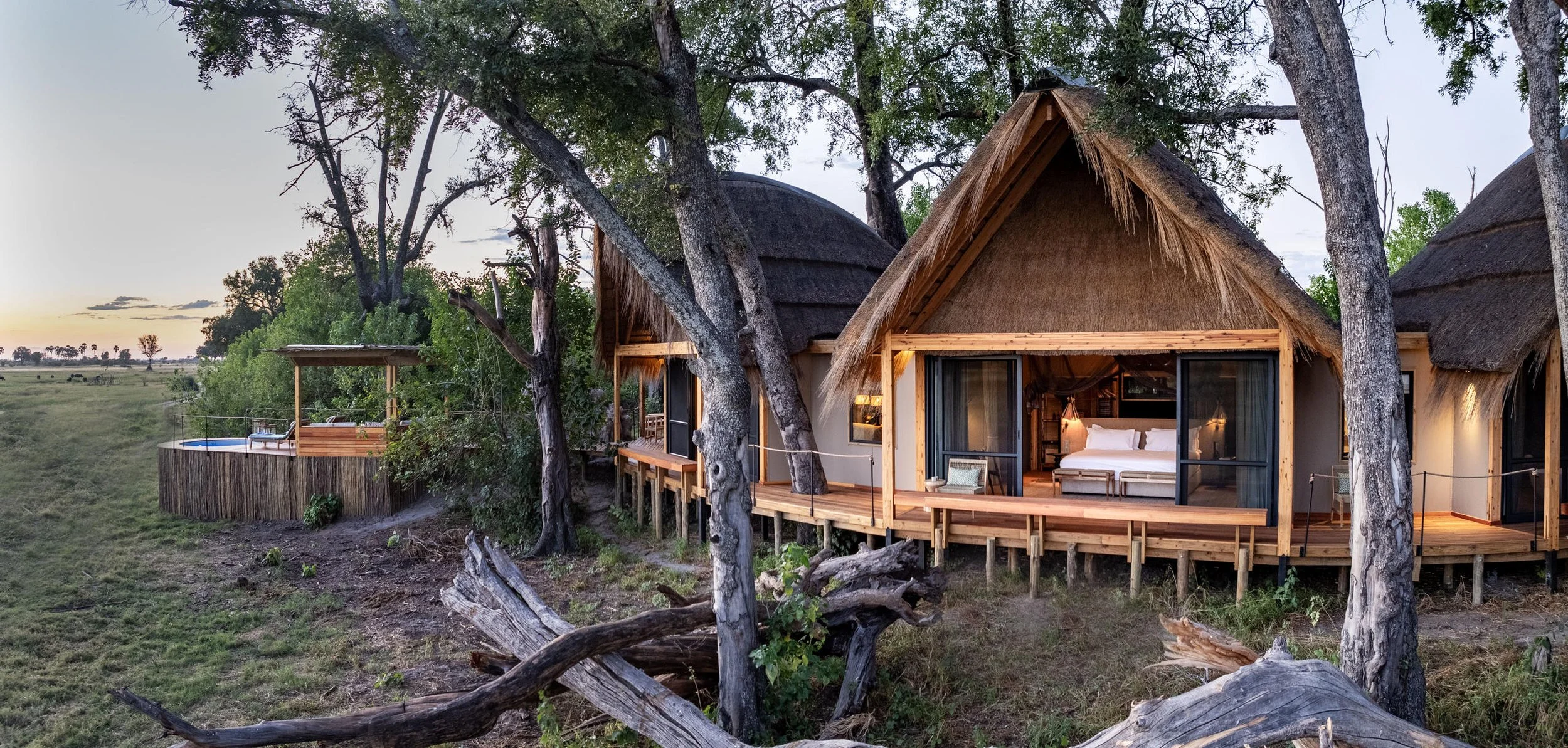
Tawana is one of Natural Selection's premier camps — a recent, high-end addition to a portfolio that also includes North Island Okavango, Jack's Camp, and Tuludi. It opened in May 2024 on the banks of the year-round Gomoti River in the south-eastern sector of Botswana's Moremi Game Reserve, which means that when I visited in September 2025 the camp was barely sixteen months old. Unlike many of Natural Selection's properties, which are built through partnerships with existing camp owners, Tawana is a partnership of a different kind: it was created together with Chief Tawana Moremi, paramount chief of the local Batawana tribe, whose forebears were instrumental in establishing the Moremi Game Reserve. The community and heritage story is woven through the whole property.
This review is built around a two-night solo stay in September 2025 as part of a Botswana circuit that also took in North Island Okavango — the two camps make a natural pairing, and I'll return to that comparison throughout. The short version: Tawana is a genuinely gorgeous camp with premier-level rooms, excellent food, warm and polished service, and fantastic game. It sits inside Moremi Game Reserve — Botswana's iconic public national park — and the experience is shaped by that. We'll come back to what that means in practice, but the headline is that Tawana's remote location and operational privileges deliver most of the exclusivity feel you'd hope for at this level.
Getting There
I flew in from North Island Okavango, with a stop at the Khwai airstrip to drop and collect passengers before continuing on to the Santawani airstrip. The whole journey was about an hour of flying — quick and scenic over the Delta. Two of us were heading to Tawana on the same flight and shared a vehicle for the transfer in.
The airstrip welcome was deliberately low-key: our guide was waiting with his vehicle, cold waters on hand, and beverages on offer — no fanfare at the strip, with the warmer welcome saved for camp. The transfer to camp ran roughly an hour and doubled as a soft start to the safari, with a stop to look at plains game while the guide talked us through the concession and how it connects to the wider Moremi Game Reserve. By the time we reached the lodge we'd already eased into the rhythm of the place.
The departure was a highlight in its own right. Continuing on to Feline Fields in eastern Botswana, I took a 60-minute helicopter transfer that lifted off directly from the front of camp — a spectacular and memorable way to see the Delta from above, and a reminder that Tawana can arrange genuinely premium logistics. (The camp also offers scenic helicopter flights as an activity; this was the real thing, doubling as a transfer.)
Setting & Location
Arrival at camp was a real contrast to the low-key airstrip pickup. I was met by management and several staff with cold towels and cold beverages, given a thorough and genuinely good tour, and then sat down to lunch in the beautiful main area. After the slightly rushed arrival I'd experienced at North Island, Tawana's welcome felt assured and unhurried — a camp that has its choreography figured out.
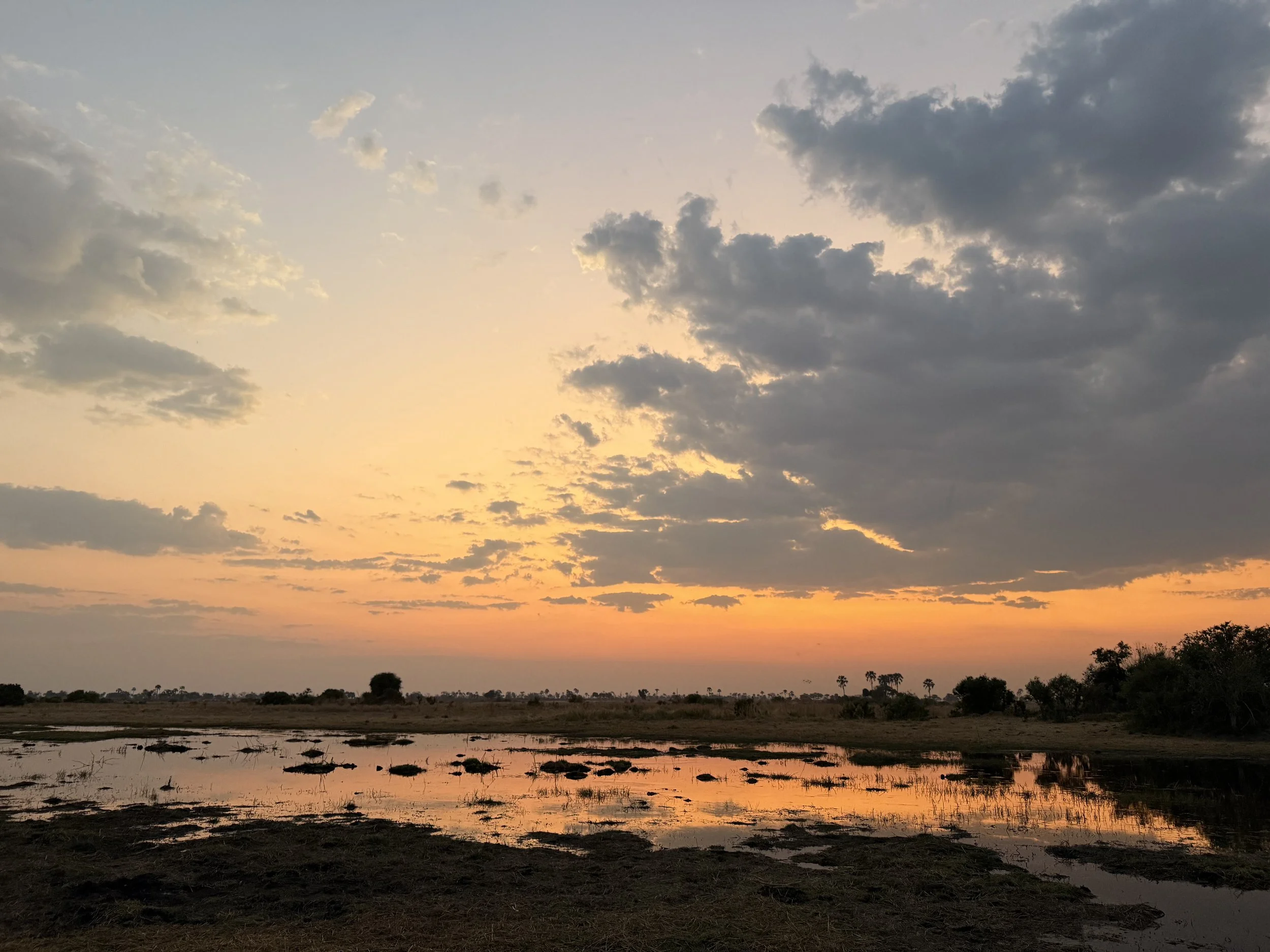
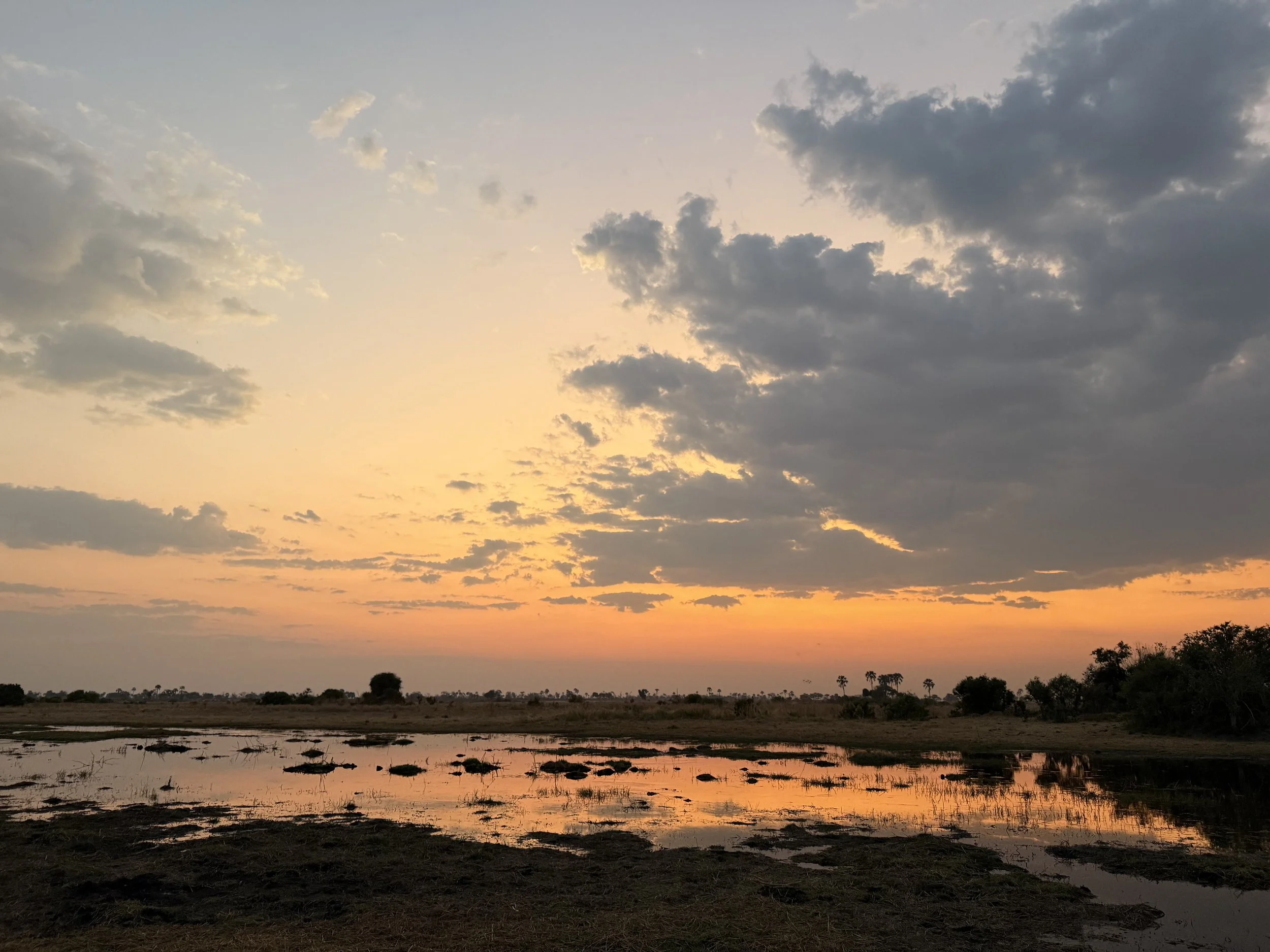
The setting is the Gomoti River and its floodplain, and the view from the main area and from every room looks out onto that floodplain. In September there was still a good amount of water in it, and over my two nights I could actually watch the water evaporating as the days heated up and the season turned — a small, vivid reminder of how dynamic this landscape is. The suites sit beneath stately ebony and sausage trees in the riverine forest.
The design is contemporary and design-forward, and it shows. The main area is beautiful and bohemian, with hanging birdcage-style pieces, a striking bar built by local artisans, and decor drawn from the organic tones of the Delta and the cultural heritage of the Batawana. This is a camp that has, unapologetically, an Instagram effect — and at this level, that's a feature. The right comparison set is premier camps such as Great Plains' Duba Plains and Wilderness's premier properties like DumaTau.
Inside Moremi
Tawana sits within Moremi Game Reserve, Botswana's iconic public national park, in the south-eastern sector along the year-round Gomoti River. This shapes the safari experience in a few practical ways worth understanding upfront. You'll share the reserve with other operators and the occasional self-driver, and the park's rules apply — which, among other things, means no off-vehicle activities such as walking safaris or water-based activities like mokoro and boating.
But the on-the-ground reality is far better than "public park" might suggest. This corner of Moremi is a long way from the main gates, so you see very few self-drivers or vehicles in general. The ones you do encounter are mostly guests from the nearby tent camps, which are very rustic and essentially self-catering. It is nothing like the traffic you'd find in a busier park such as Chobe. And crucially, because Tawana maintains the road network in the area, they are permitted to drive off-road — while the other operators and camping vehicles are not. The practical effect is that Tawana gets the close-up, off-road sightings largely to itself even within the shared reserve. The result is a stay that feels meaningfully more exclusive than the "national park" label would suggest.
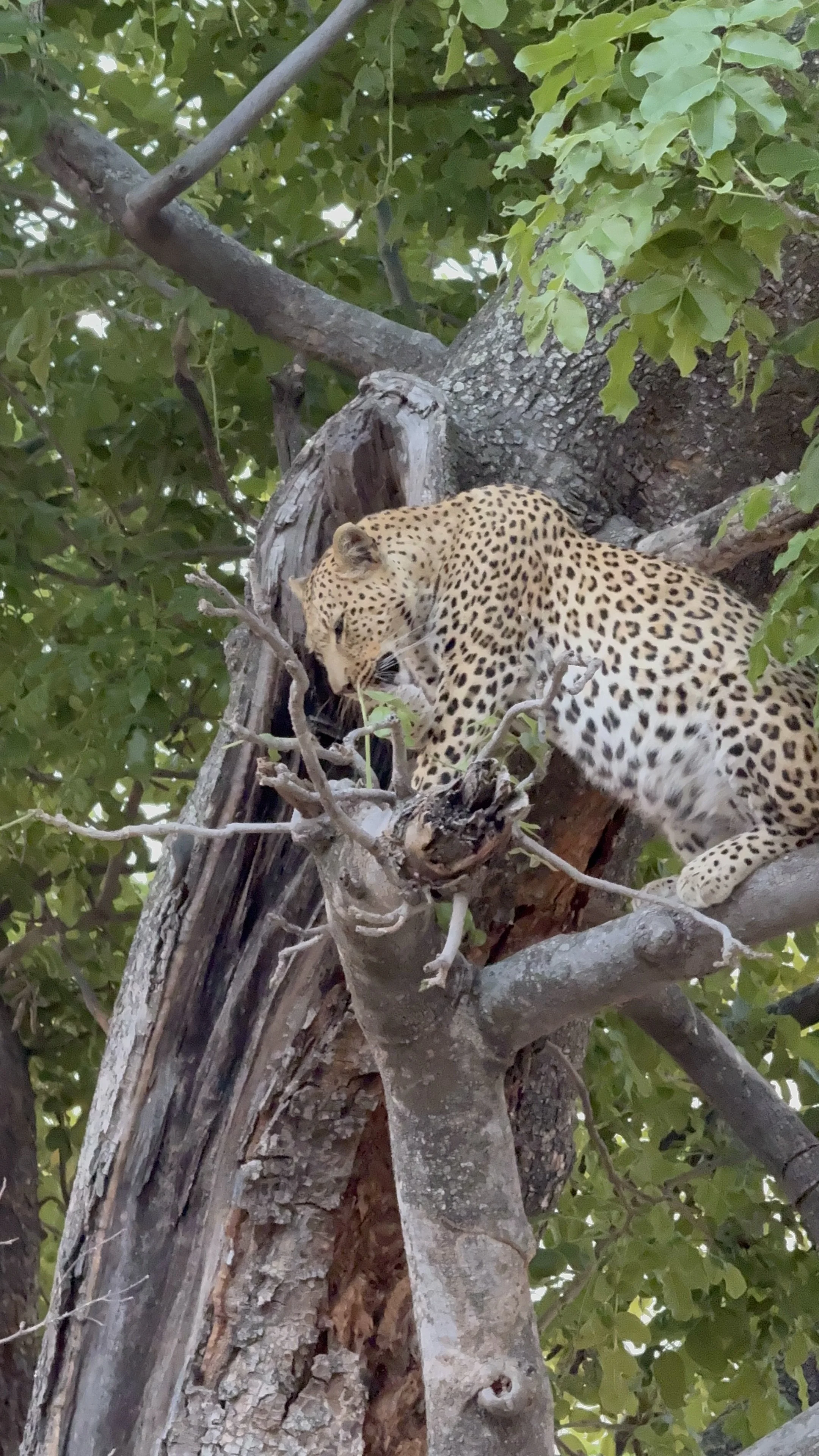
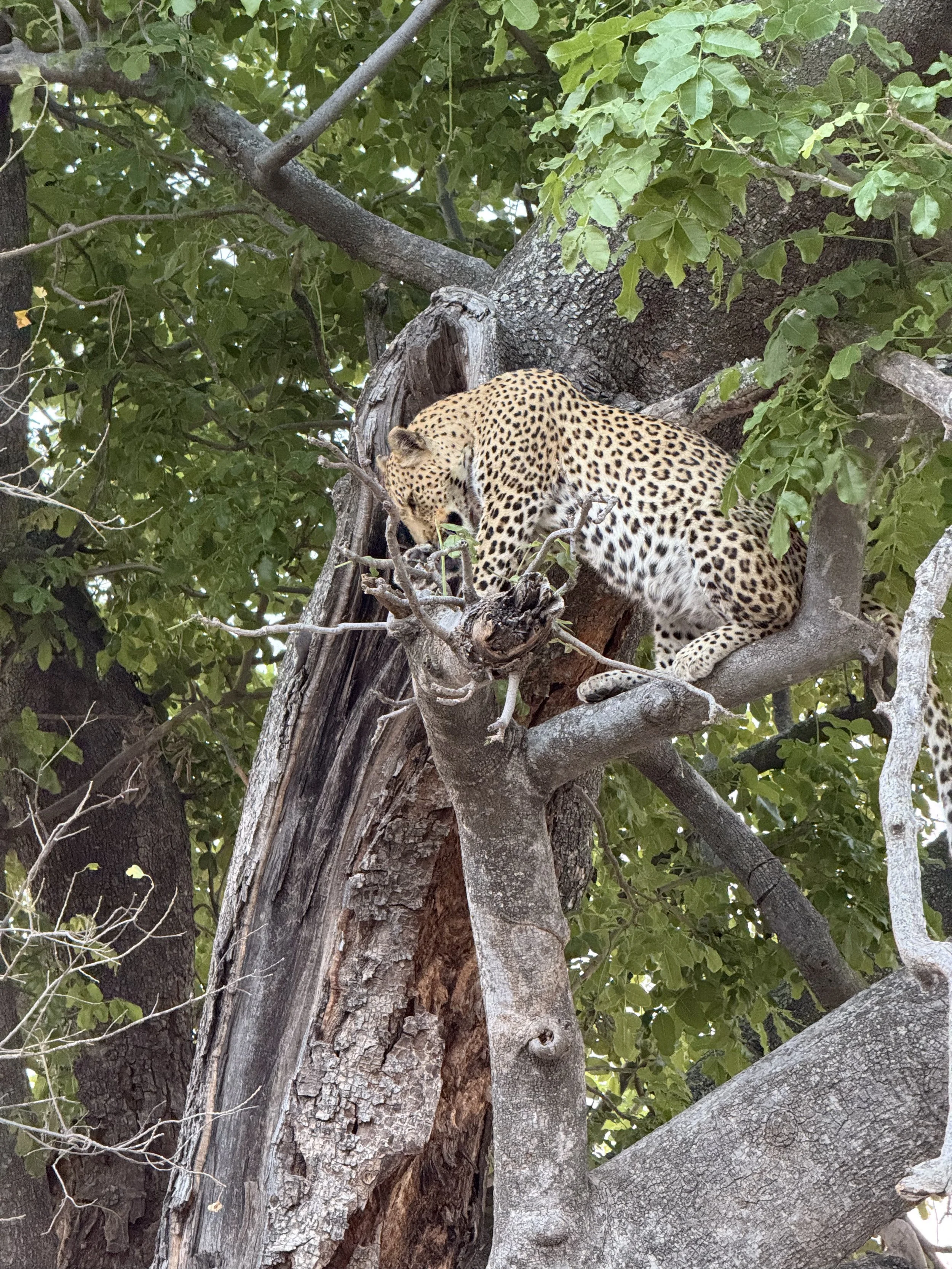
The wildlife backed up the billing completely. About ten minutes into my very first drive we found three cheetahs hunting a herd of zebra — unsuccessful, but riveting to watch — with only two vehicles present, both of which had just come out of camp. Over the stay I saw tons of lions (including a pride against a wonderful sunset), multiple leopards resting in trees with beautiful clear views, hyenas playing in the water, a honey badger causing its usual trouble, large herds of buffalo, and an abundance of plains game. Birdlife is everywhere — the floodplain and the river system support an exceptional variety of species, and even a casual observer is constantly noticing something new overhead. For a two-night stay, that is a remarkable hit rate, and it makes a convincing case for Moremi's reputation as some of the best land-based game viewing in Botswana.
Weather in mid-to-late September was warm but pleasant — daytime highs in the upper 80s to low 90s Fahrenheit (around 30 to 33 Celsius), cooling off nicely in the evenings, which made time by the fire a pleasure.
Facilities
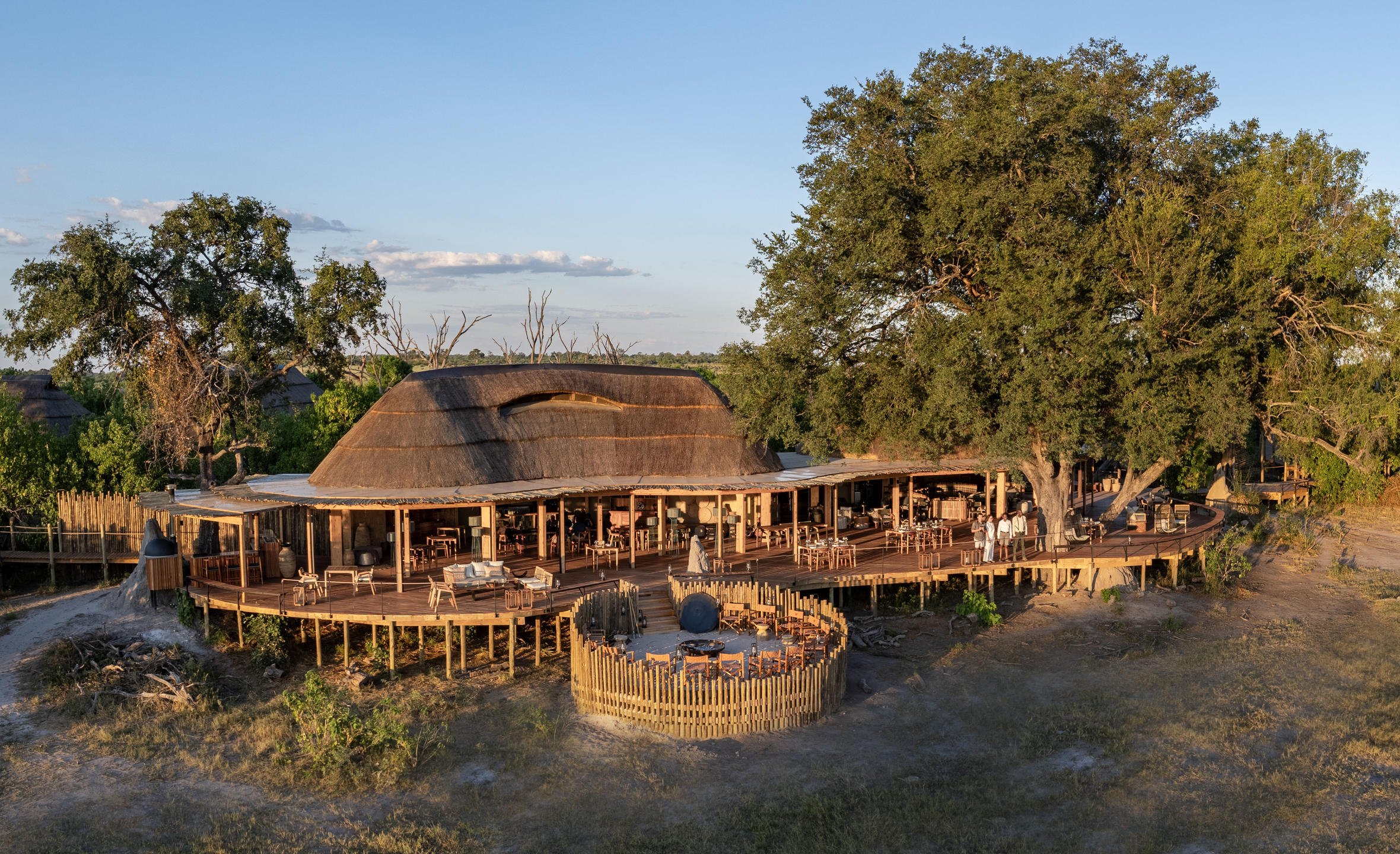
Tawana's main area is large and built as an open indoor-outdoor space, with the sections flowing freely into one another. There's a sizable indoor dining area of around ten tables, an attached outdoor dining area where tables are moved around to suit the weather, and a more open middle zone between them. A dedicated table near the dining area handles breakfast setups and evening snacks.
Just behind that sits a walk-in wine room, where you can browse both the included wines and the finer, premium bottles available for an extra charge. The bar area has a communal feel, and a map of the area is incorporated into its design — a nice touch. Multiple large seating areas, including couches, are spread across the indoor and outdoor spaces, and the library is folded into the lounge rather than being a separate room. It's all very nicely done.
The main pool is large and beautiful, with plenty of loungers and full waiter service if you're spending a pool afternoon. There's also a wood-fired pizza oven in the main area, which came into play on one of my lunches (more on that under Food). A dedicated outdoor boma area steps down off the deck into sand, with a proper fire — a lovely spot, though it's worth noting I did not have a traditional boma-style dinner; the camp appears to keep to its multicourse plated format throughout, likely a function of its premier positioning.
The gym is beautiful and well-equipped for a safari camp — a few cardio machines, weights, and full air-conditioning. In-room spa treatments are available, though I did not do any. The camp is also 100% solar-powered with 24-hour electricity, a genuine sustainability credential worth noting at this level.
The suites are spread out along the floodplain on both sides of the main area, connected by raised walkways. Some are close to the main area and some are quite far — mine was a solid one to one-and-a-half kilometer walk away. During the day guests are free to walk it themselves; after dark, staff offer to drive or escort you. The distance is worth flagging for less mobile guests, but it's the price of the privacy and the uninterrupted views.
The Room
The suites at Tawana are large — approximately 1,075 square feet (100 square meters) for a standard suite, and around 1,400 square feet (130 square meters) for the family units. The camp has eight suites in total: five standard and three family units, the latter accommodating up to five guests each.
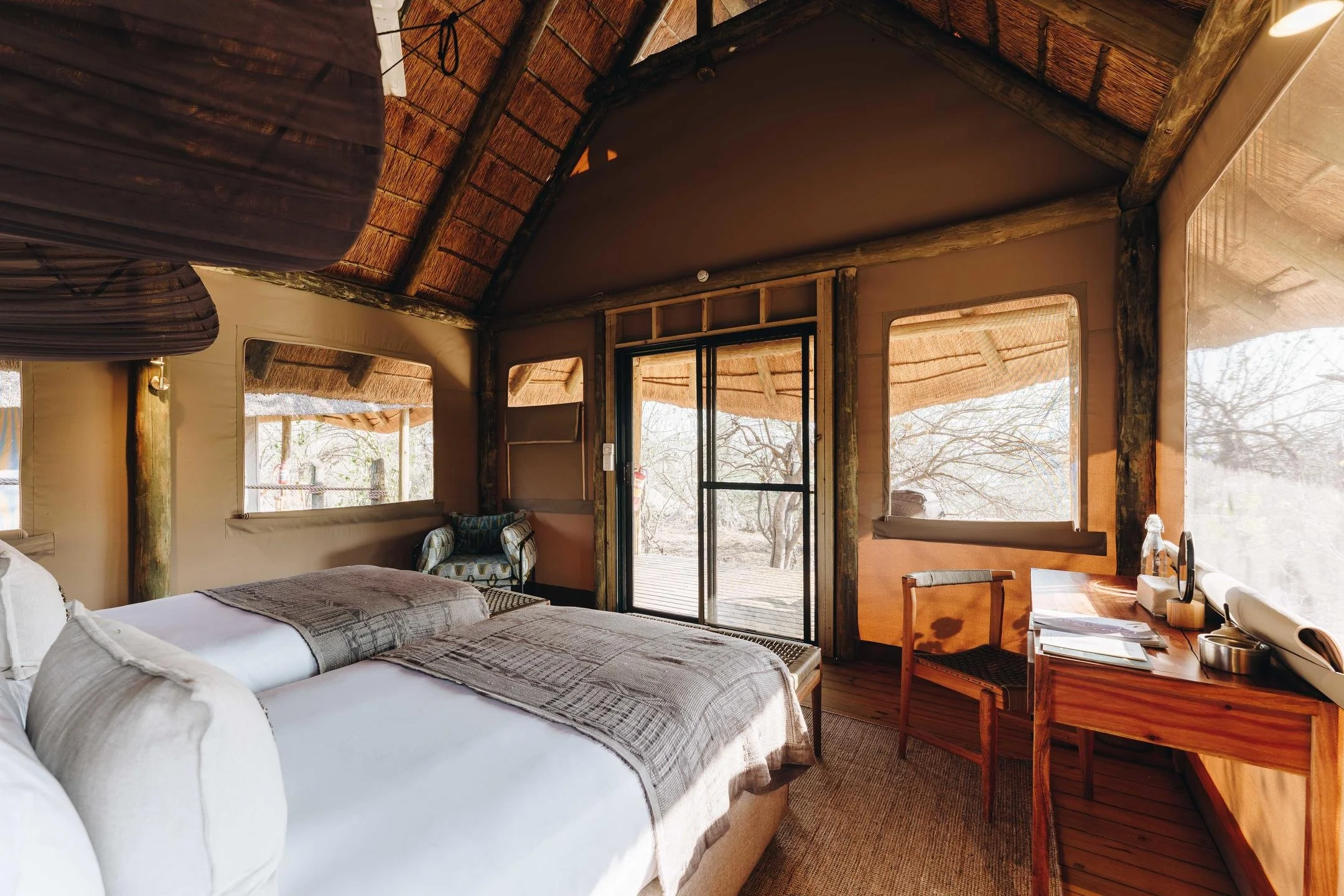
Each suite is essentially three large connected rooms strung together under thatch. The first, as you enter, is a full sitting room: a couch, relaxing chairs, and a complete bar and minibar with alcohol and a coffee station — everything you'd want on arrival. A short walkway connects it to the bedroom, and tucked into that walkway is a small desk positioned to look out over the Gomoti floodplain — an ideal spot to work on photos between drives. The bedroom holds a super-king bed (convertible to twins) with a large closet behind it. The third room is a generous bathroom with a big walk-in shower, a tub, a toilet, a double vanity, and direct access to an outdoor shower.
The whole suite is air-conditioned, with sliding glass doors to the outside from every room and curtains between the rooms — so you can seal off and cool just the bedroom if you prefer. With the doors shut the rooms cool down beautifully, and there was never any concern about sleeping comfortably during the midday siesta or at night. The private terrace can be accessed from any room, though I mostly used the hinged door off the bathroom rather than the sliding doors. Outside there's the outdoor shower, plenty of seating including sun loungers and a couch, and a private plunge pool with its own chairs. I even had a termite mound right in front of my suite — a small, characterful touch.
The plunge pool is unheated, but it sits in the sun, and given how hot the Delta gets for much of the year it reads as a genuinely refreshing dip rather than a missed opportunity. The view is over the Gomoti floodplain — lots of birds and animals around, buffalo along the river's edge, though the water wasn't deep enough for hippos during my stay. Privacy is excellent: the suites are spread far enough apart that I could neither see nor hear any neighbors.
In short, the room is gorgeous. It has everything you need and competes comfortably with the best premier rooms — Great Plains' Selinda, DumaTau, and the &Beyond style — beautifully laid out, well finished, and well maintained. I slept very well and had no frustrations with it whatsoever. It is the single strongest element of the property.
Food
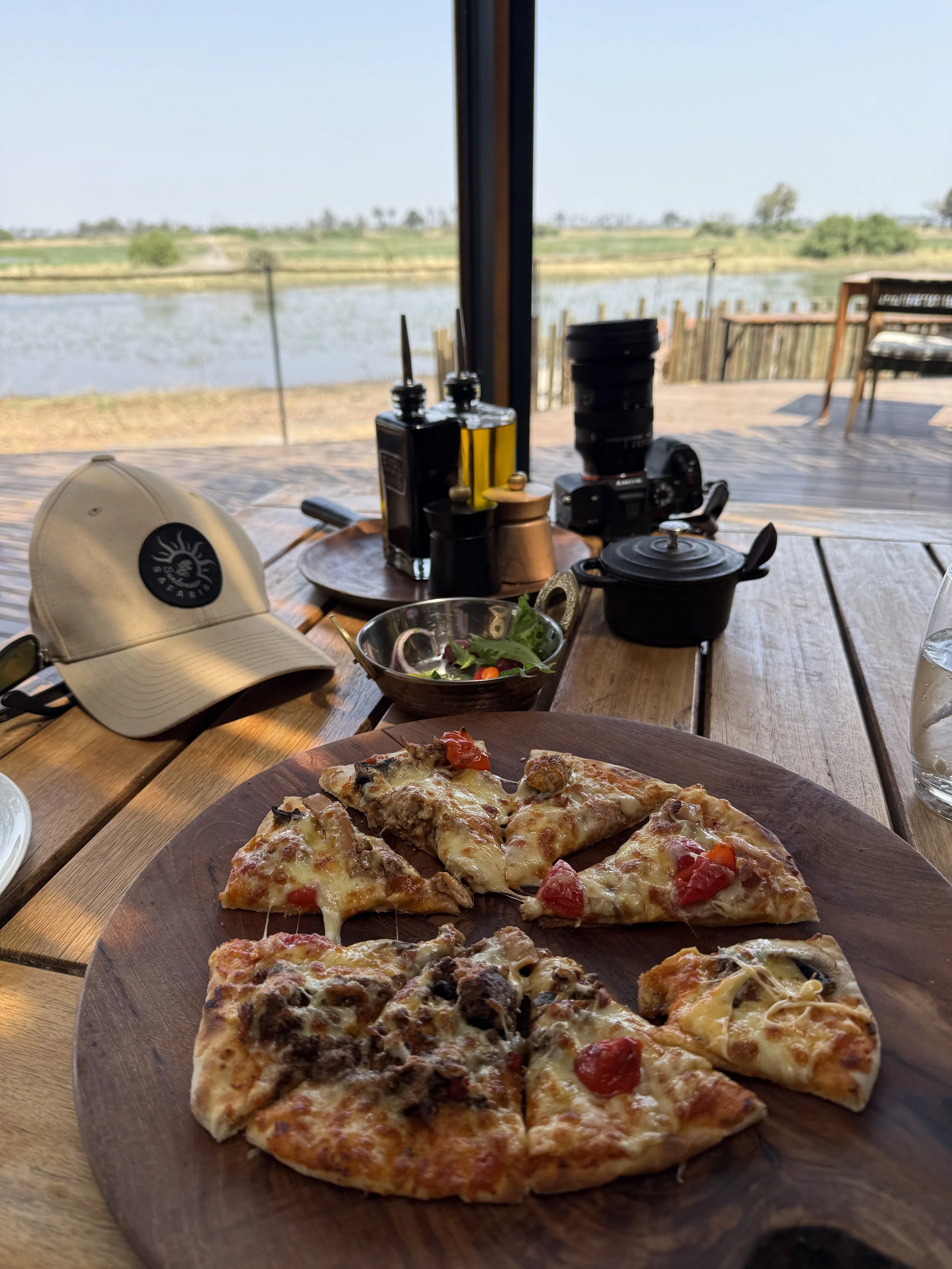
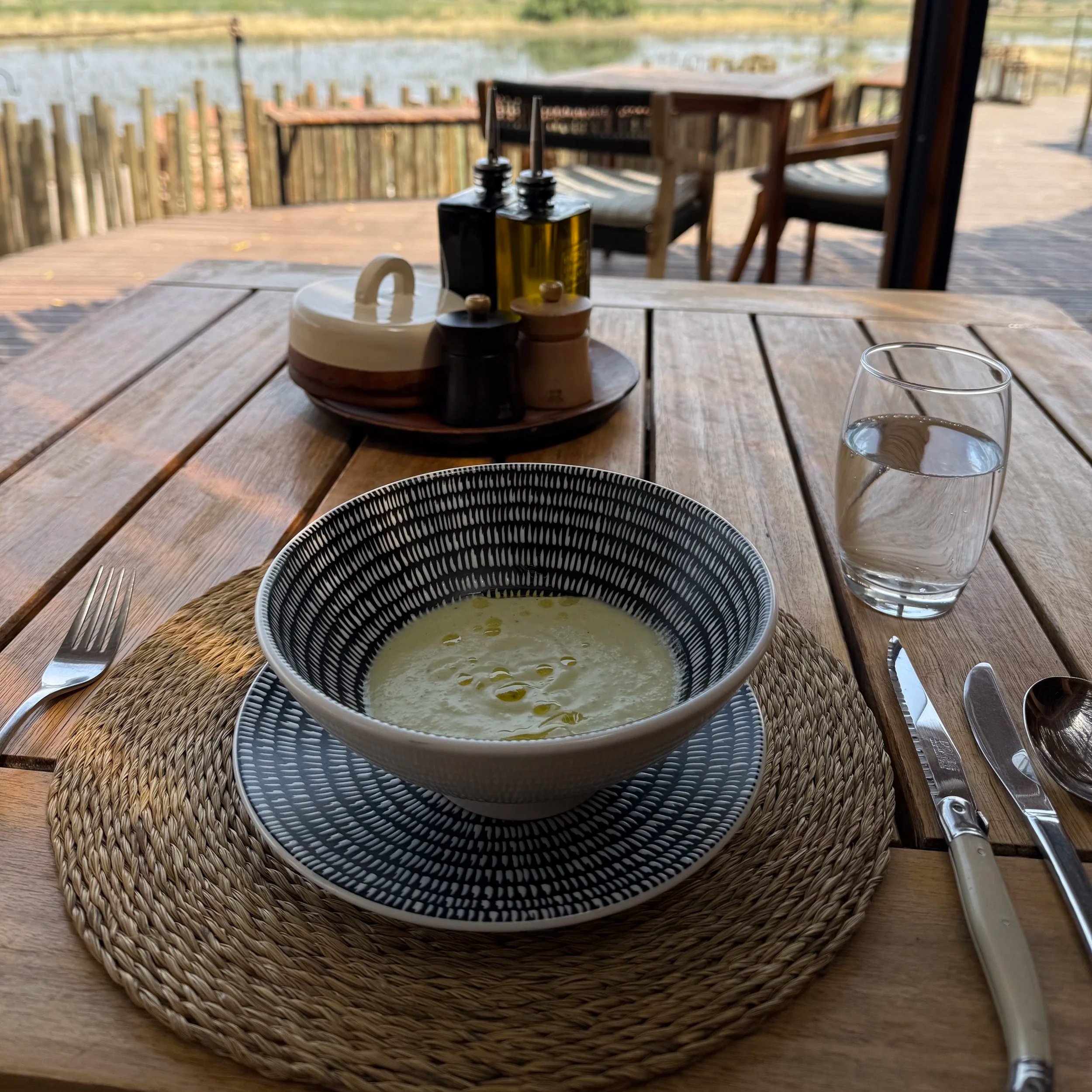
The food at Tawana is excellent, and it comes with a distinctive signature: every meal opens with a wellness shot that changes daily — a small, thoughtful ritual I hadn't seen executed quite this way elsewhere. Meals are multicourse and plated, typically with a choice of two starters, several mains, and a dessert that's always kept relatively light, which I appreciated.
Breakfast is set up each morning as a small buffet with grab-and-go items, with the kitchen happy to prepare what you'd like. I tend to skip breakfast in favour of an early start, so I can't speak to it in great depth — but a lovely mid-drive coffee, tea, and cookie stop on one of the little lakes more than filled the gap and was beautifully staged.
Lunch on my arrival day was a three-course plated meal ordered from the menu and was fantastic; another day featured a build-your-own pizza session at the wood-fired oven, which was good fun. Dinners were all multicourse and plated — a beef dish one night, a lamb dish the other — and consistently very good. Across the whole stay there wasn't a single thing I disliked.
Drinks are all-inclusive, and at premier level the included selection runs generous across the board — all the gin you'd want, good wines, and plenty of options. There's a finer selection of imported wines available to pay for, but I never felt the included offering was lacking. Overall, the food is a clear strength — somewhere in the region of 8.5 out of 10.
Service
Service at Tawana is very well done and lands squarely at the premier level. The team operates as a coordinated whole rather than through a dedicated butler model — no single person was introduced as my host, but someone was always nearby when I needed them, and every interaction was warm, attentive, and well judged.
One detail deserves special mention, because it solves a pet peeve. One of the most tiresome parts of arriving at a new camp is filling out the same guest-preference, personal-information, and indemnity forms over and over. Tawana brought out a tablet with all of it already populated from what I'd provided in advance — nothing to sign on paper, nothing to re-enter. It's a small thing, but it's exactly the right way to do it, and it set the tone for a stay that simply felt organized.
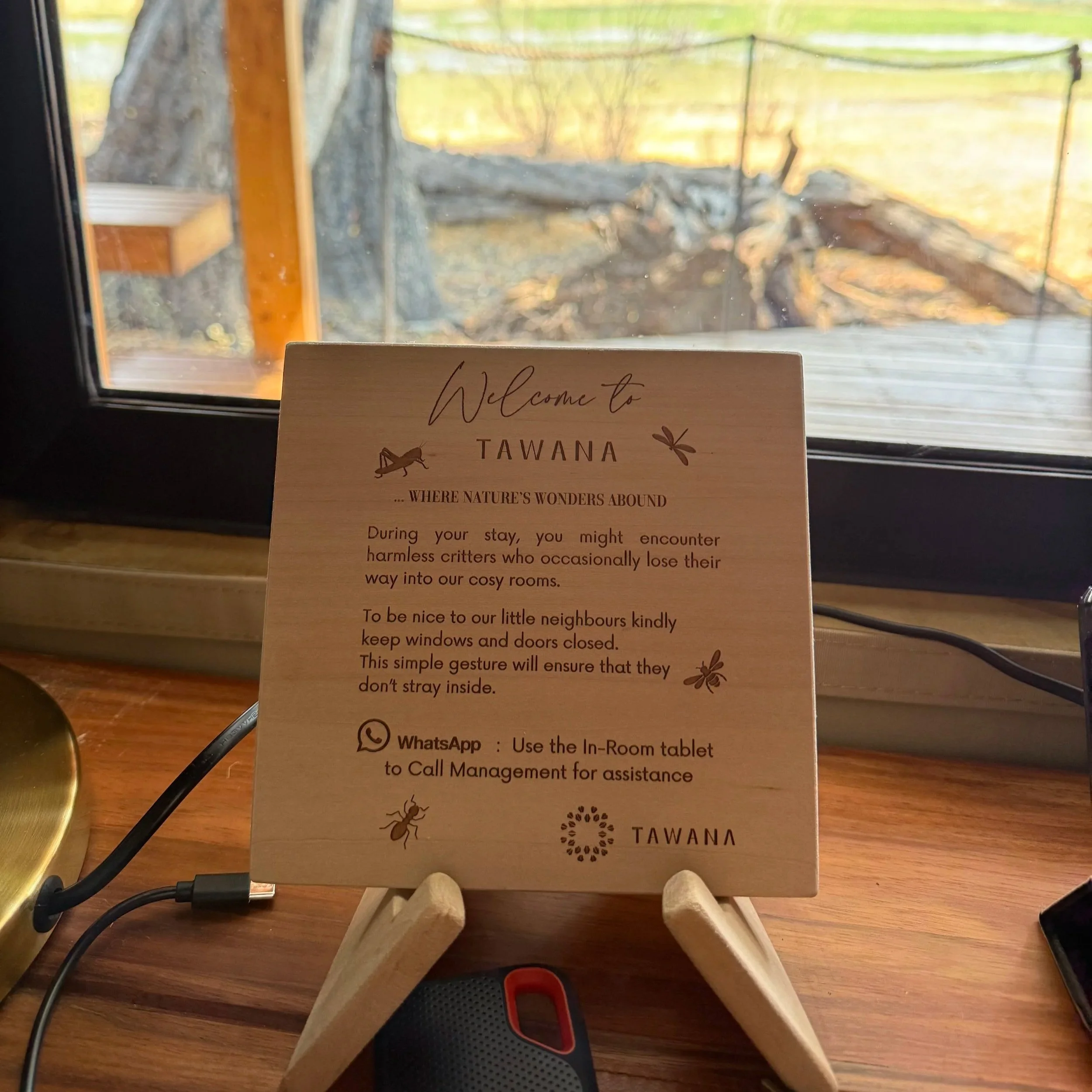
A second tech touch is genuinely useful given the layout: each room has a tablet for messaging the management team over WhatsApp. Because the walk from the far suites to the main area is a long one, being able to reach out from your room and have whatever you need brought to you is a thoughtful, practical solution rather than a gimmick.
The contrast with North Island is worth drawing honestly: Tawana has its service figured out in a way North Island, as a newer and less-resourced camp, hasn't yet. I expect North Island will get there, but as things stand Tawana's service is markedly stronger.
Leadership was visibly present during my stay. As is sometimes the case for visiting trade partners, I was invited to join Natural Selection's senior leadership — including CEO James Ramsay — for dinner one evening. This isn't something a typical guest should expect, and I mention it only because it spoke to how present and invested the leadership is in their premier Botswana camps. The standard across the team was high and consistent, with no service misses worth flagging.
Activities & Guiding
Tawana is drive-focused, and that's a direct consequence of being inside a national park. There are no boating or mokoro activities, no walking safaris, and no cultural or community visits as part of the standard offering — Moremi's park rules don't allow off-vehicle activities. For guests who specifically want water or walking, this is the clearest reason to pair Tawana with a water camp deeper in the Delta — North Island being the obvious companion.
The game-drive rhythm is the standard premier cadence: out at sunrise and back around 11, then out again around 3:30 to 4 after afternoon tea, returning around or just after sunset so you can enjoy a drink while the light goes. Full-day drives weren't on my itinerary, but the camp felt very willing to accommodate different needs, particularly with a private vehicle.
The wildlife, as covered under Setting, was outstanding for a two-night stay — cheetahs hunting on the first drive, lions including a sunset pride, leopards in trees, hyenas playing in the water, a honey badger, large herds of buffalo, abundant plains game, and birds everywhere. My guide was fantastic: knowledgeable, personable, and skilled at making the most of the off-road privileges the camp enjoys.
The one genuine hard-product caveat is the vehicle. Tawana runs six-seat vehicles, the same as North Island, rather than the four-seat configuration used by some premier camps (Wilderness and Great Plains premier properties) that prioritize photography and space. For most guests six seats is perfectly comfortable — but serious photographers, or guests who expect the four-seat premier standard, should be aware of the difference, and a private vehicle is the simple fix. My guiding was private the first evening, then shared with a mother and son who joined the following day.
The Good
Gorgeous, premier-level rooms — roughly 1,075 sq ft across three large connected rooms, full air-conditioning, a desk with a floodplain view, private plunge pool and outdoor shower. Competes directly with Great Plains' Selinda, DumaTau, and the &Beyond style.
Outstanding game density — cheetahs hunting ten minutes into the first drive, a sunset lion pride, leopards in trees, a honey badger, and abundant plains game, all in two nights.
Off-road privileges that the other operators don't have, because Tawana maintains the roads — a meaningful edge inside a public national park.
Remote enough to feel uncrowded — far from the main gates, so very few other vehicles despite being in a shared reserve.
Excellent, distinctive food — the daily-changing wellness shot, a beautifully staged mid-drive coffee stop, build-your-own pizza, and consistently strong plated dinners.
Polished, premier-level service — present without hovering, and a tablet-based arrival process that eliminates repetitive paperwork.
Thoughtful in-room tech — a tablet for messaging management over WhatsApp, which neatly solves the long walk from the far suites to the main area.
A design-forward, bohemian premier camp with a genuine community and heritage story, built in partnership with the Batawana tribe.
Strong sustainability credentials — 100% solar-powered with 24-hour electricity.
The Bad
The honest critiques are few, and most are a function of the location rather than the camp's execution:
It's a national park, not a private concession. You will see some other vehicles, and park rules mean no off-vehicle activities. The remoteness and off-road access soften this considerably, but guests set on true exclusivity should know it going in.
No water or walking activities — no mokoro, boating, or walking safaris. This is the main reason to pair Tawana with a water camp deeper in the Delta.
Six-seat vehicles, rather than the four-seat configuration of some premier competitors. Comfortable for most, but a consideration for serious photographers; a private vehicle solves it.
The far suites involve a meaningful walk (around 1–1.5 km) from the main area — worth flagging for less mobile guests, though staff escort or drive you after dark.
Conclusion
Tawana is a fantastic camp, and I loved it. It is one of Natural Selection's premier camps for good reason: the rooms are among the best in Botswana, the food and service operate at a true premier level, and the game viewing genuinely lives up to Moremi's billing. The thing to understand before booking is that it sits inside a public national park — but because it's so remote, sees so few vehicles, and enjoys off-road privileges the other operators don't, it feels meaningfully more exclusive than the national-park label would suggest.
Tawana is perfect for guests who want a lovely premier camp with all the bells and whistles — excellent food, a good wine program, beautiful views, and that design-forward, Instagram-worthy aesthetic — and who are open to a national-park experience. It's an excellent choice for honeymooners, for couples simply wanting to get away, and for families (there are three family units). It's a less obvious fit for guests who specifically want a water-based safari, walking safaris, or the four-seat photographic vehicle standard — those guests will be better served either elsewhere, or by pairing Tawana with a complementary water camp such as North Island.
Would I return? In a heartbeat — and I'd happily bring family. Would I send guests? Without hesitation. Guests would be hard pressed to find faults with this one.
Final Rating
4.6 / 5
Sub-ratings
Room: 4.9 / 5
Service: 4.5 / 5
Food: 4.6 / 5
Guiding: 4.4 / 5
Location: 4.5 / 5
“Luxury and seclusion, deep in Moremi.”
Tawana is one of Botswana's newest luxury safari camps, but seeing it in motion is even better than reading about it. We've shared a video from our stay so you can experience the camp, the surrounding wilderness, and the magic of the Okavango Delta firsthand. Watch our walkthrough of Tawana Camp and the Okavango Delta below!
More reviews nearby
- Vumbura Plains, Okavango Delta: Vumbura by the Sea. (4.6/5)
- Wilderness Chitabe Camp, Okavango Delta: Big cats, big family, real bush camp. (4.7/5)
- North Island Okavango, Okavango Delta: Beautiful water camp with great game. (4.1/5)
Planning a trip? See our Botswana safari guide or all our camp reviews.