Review: Magashi Peninsula, Rwanda
Sundowner Safaris | January 2026When most people think of Rwanda, they think of gorillas. And rightfully so — the mountain gorilla trekking experience is extraordinary. But Rwanda has been quietly building something else: a traditional safari destination. Magashi Peninsula, a Wilderness property in Akagera National Park that opened in September 2025, offers something truly unique — a water-based safari experience in a country better known for its primates. We spent two nights here in mid-January 2026, just a few months after opening, and it exceeded our expectations in almost every way.
The Conservation Story
Before we get into the details of the lodge, it is worth understanding what makes Akagera special. This park has one of the most remarkable comeback stories in African conservation.
Founded in 1934, Akagera was once home to over 300 lions, more than 50 black rhinos, and so many wild dogs it was nicknamed the 'Parc aux Lycaons.' Then came the 1994 genocide. In the aftermath, returning refugees settled within the park, clearing forests for farmland and grazing. The park lost more than half its original size. Lions were poisoned by cattle herders. Rhinos were poached to local extinction. By 2010, the park was a shadow of itself.
That year, African Parks partnered with the Rwanda Development Board to transform the park. The results have been extraordinary. Poaching has been essentially eliminated. Lions were reintroduced in 2015 and now number over 50. Eastern black rhinos returned in 2017, followed by 30 white rhinos in 2021 and another 70 in 2025. Wildlife numbers have grown from under 5,000 animals in 2010 to over 13,500 today. The park is now over 90% self-financing through tourism revenue, with 10% of income going directly to community development projects including schools, healthcare facilities, and cooperatives.
When you visit Magashi, you are not just having a safari — you are participating in one of Africa's great conservation success stories.
Getting There
The journey from Kigali takes approximately four hours by road. For those who prefer not to drive, helicopter transfers are available — just 22 minutes from Kigali direct to the park, which is a spectacular way to arrive if your budget allows. The first three hours are on smooth, paved roads — Rwanda's infrastructure is impressive. Our driver Moses was outstanding, sharing stories about Rwandan culture and providing thoughtful, honest context about the genocide and the country's remarkable recovery. It was an education as much as a transfer.
The final hour gets bumpy as you approach the northern gate of Akagera National Park. Wilderness uses this exit gate rather than the main southern entrance, which most day-trippers and other camps use. This means their guests avoid the lengthy game drive through the park that other properties require. Smart logistics.
About halfway through the drive, we stopped at a roadside cafe — clean, clearly set up for tourists, with good coffee, samosas, clean restrooms, and some crafts for sale. A welcome break.
One special moment on the drive: as you approach the park, you pass Rwabiharamba School, which Wilderness supports through their Children in the Wilderness program in the nearby Akayange Village. The smiles on the children's faces as they wave at passing vehicles is a beautiful reminder of the connection between conservation, tourism, and community. It is these moments that make the four-hour drive feel worthwhile.
The arrival experience is where Magashi Peninsula distinguishes itself. Our guide Bosco met us at the gate with the game vehicle, and after about 60-90 minutes of driving, we reached a dock where a pontoon boat was waiting. They handed us glasses of champagne, and we cruised toward camp. As we approached, a herd of elephants was playing in the water right in front of us. It was one of the most memorable arrivals I have experienced on safari.
Setting & Location
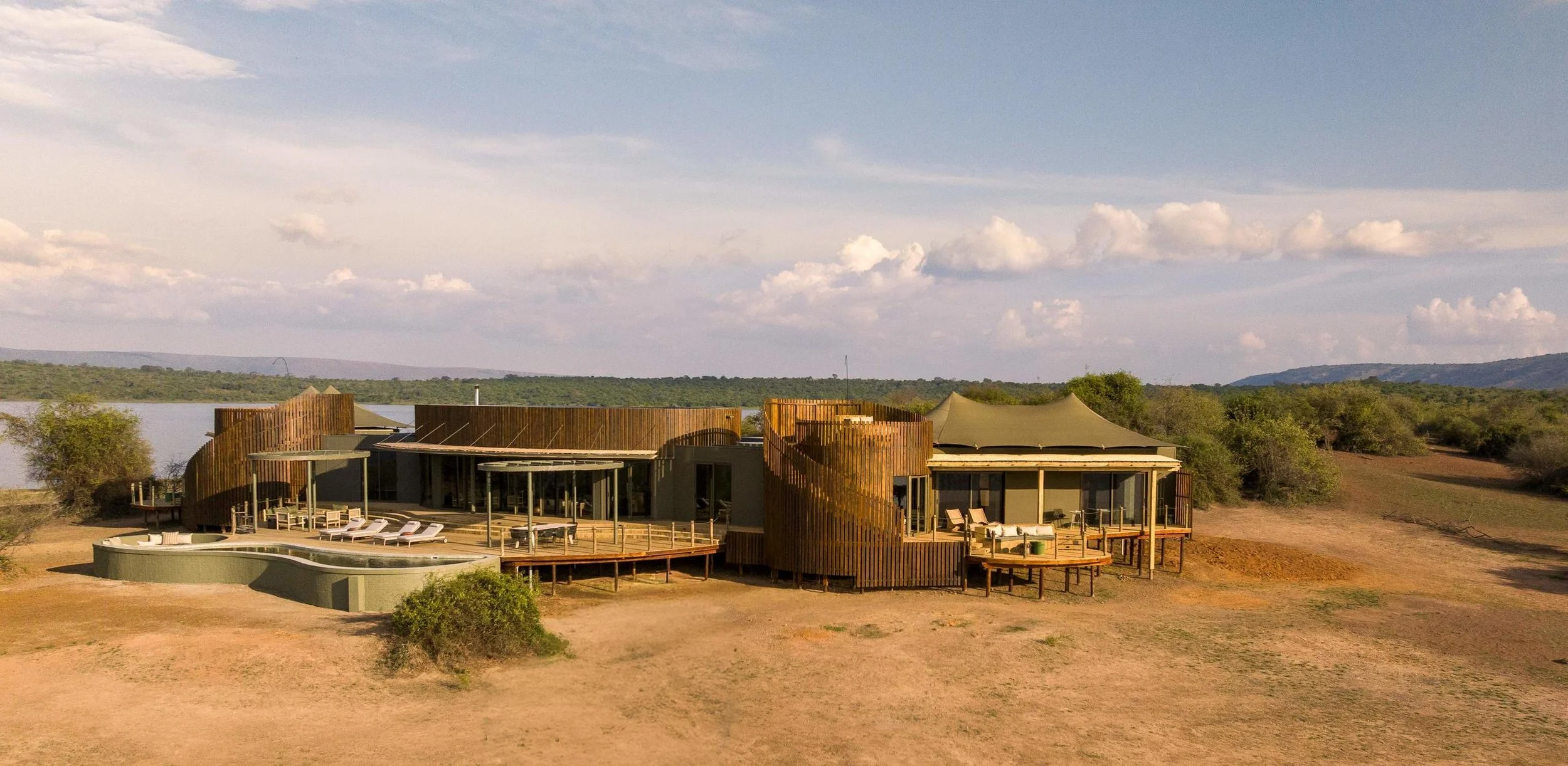
Aerial view of Magashi Peninsula
Magashi Peninsula sits on a private concession within Akagera National Park, shared with its sister property Magashi Camp (which has 6 rooms). The Peninsula is the more exclusive option with just 2 rooms plus a private-use villa. We saw a few vehicles here and there on the concession, but it felt genuinely private and uncrowded. One key distinction: the pontoon boats are exclusive to Magashi Peninsula. The sister property Magashi Camp has their own fishing-style boats, but the luxurious pontoon experience — the slow cruises, the onboard lunches, the champagne arrivals — that is only available at the Peninsula.
What makes this place special is the water. Most safari destinations offer plains, woodlands, or swamps. Magashi gives you a stunning lake. The views from camp are gorgeous — looking out across the water to the opposite shore, watching animals come down to drink, hippos wallowing, elephants bathing. It is unlike most safari experiences and reminded me of some of the water camps in Botswana's private concessions.
Wildlife was plentiful. We saw the Big Five, though at Sundowner we do not like to emphasize checklists — it is about the quality of sightings and time spent with animals. There was excellent birding throughout. The wildlife density is not quite at the level of Kenya's Masai Mara or Tanzania's Serengeti, but here is the trade-off: you will have it almost entirely to yourself. No convoys of vehicles surrounding a lion pride. No jostling for position at a leopard sighting. Just you, your guide, and the wilderness. For experienced safari-goers who have done the busy parks, this is incredibly refreshing. One honest note: there were tsetse flies on the open plains that we had to battle. Not a dealbreaker, but worth knowing.
The weather in mid-January was ideal. Rwanda's short dry season meant warm to hot afternoons (mid-80s F) and pleasantly cool nights (mid-50s F).
Facilities
The main lodge is surprisingly spacious for a property with just two rooms and a villa. There is a beautiful bar and lounge area with plenty of seating — more than enough for the small number of guests who would ever be dining together. The main area also features a lovely boma fire, perfect for evening drinks and storytelling under the stars. That said, we spent most of our time between activities in our room, which tells you something about how spectacular the rooms are.
The architecture is classic Wilderness style — similar to their other premier camps like Duma Tau. Stunning, simple, and completely functional. Everything felt polished and well-established, which is impressive given how relatively new the property is.
There is a nice gym with the basics: treadmill, bike, and weight equipment. Spa services are done in your room. The rooms are very well spaced for complete privacy — we only saw other guests at dinner in the main area, and even then, the space is large enough that we had our own section.
One note: at night there were lots of midges around any light source. These are tiny bugs that do not bite but can be annoying. Not a major issue, just something to be aware of.
Room
The rooms at Magashi Peninsula are breathtaking. We stayed in one of the two standard rooms (the third option being the exclusive-use villa), and at approximately 1,200 square feet or more, there was nothing standard about it.
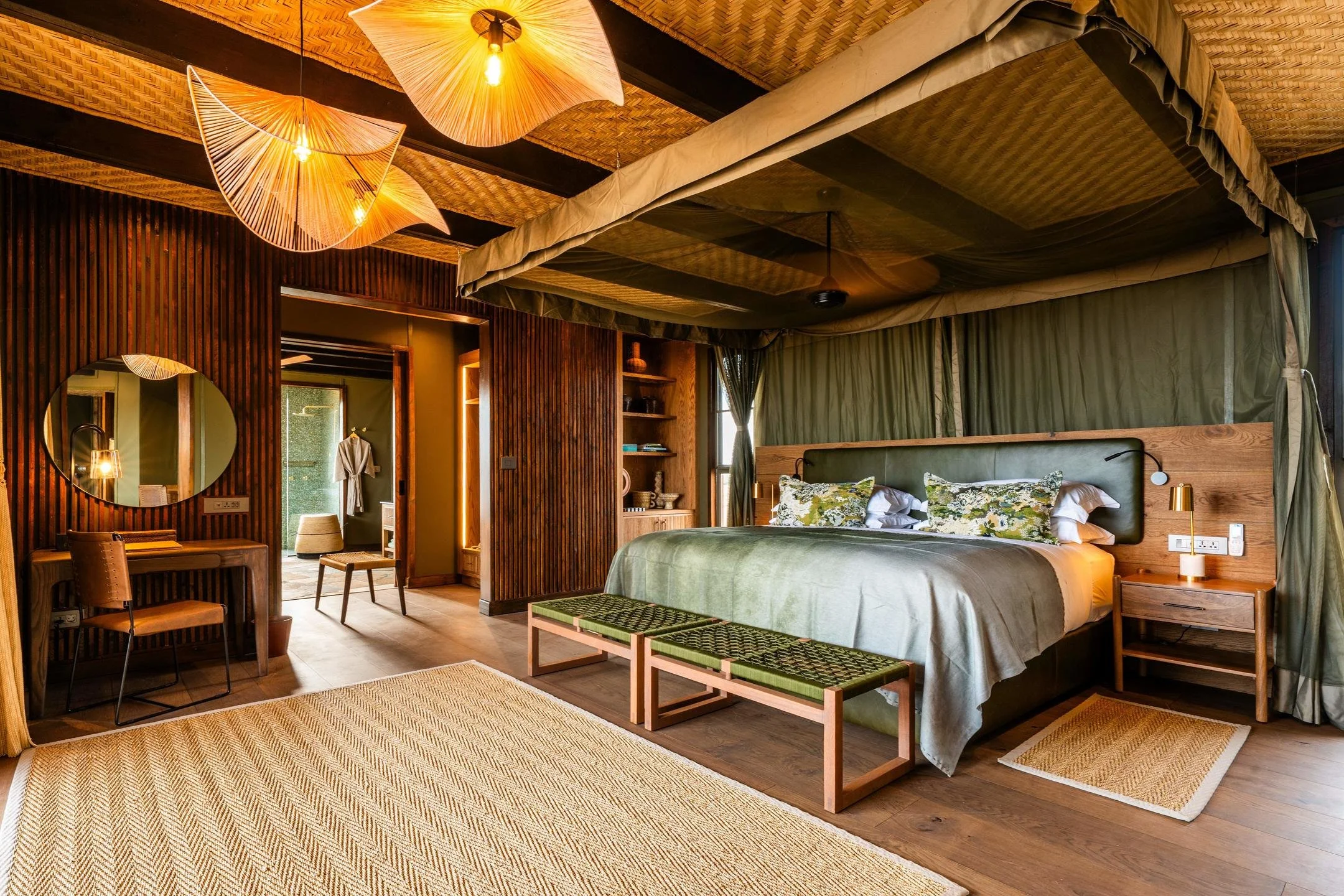
Family Room
The layout is essentially three large spaces. You enter into an area with a bar, comfortable seating for meals and snacks, and two chairs positioned to look outside. The bar setup was impressive — a fridge fully stocked with beer, wine, sodas, sparkling water, and other non-alcoholic options, with an offer to bring any hard liquor you wanted to the room.
The bedroom features a giant king bed, excellent air conditioning (essential for afternoon naps), a desk, and an area with games. The closet is large with separate sides for each person, and even includes yoga mats. The bathroom continues the impressive scale: double vanity, a large tub overlooking the lake, and a double shower with two heads plus a sliding glass door to an outdoor shower.
Outside, there is a plunge pool (cold, but perfect for a midday dip) with views of the water. We would grab a glass of wine from our in-room bar, sit by the pool, and watch hippos come out to graze. There is also a fantastic outdoor sitting area — a perfect spot for morning coffee or evening drinks while taking in the views. And for a truly magical experience, they will set up a starbed on your deck at night. Falling asleep under the African sky, listening to the sounds of the bush, with hippos grunting in the distance — absolutely magical.
Small touches that mattered: a Jura coffee machine with milk frother, excellent AC in the bedroom, and genuinely everything just worked. No complaints other than the midges outside at night. Privacy was complete — the rooms are very, very well spaced.
Food
Food was excellent throughout our stay, and I would rate it an 8 out of 10.
Breakfast was typically served in the main lodge area, though on our longer game drive day we had breakfast in the bush, which was lovely. Dinners were three-course meals served in the main camp area — tasty and well-executed. I especially enjoyed discovering Akabanga, a Rwandan hot sauce that I am now slightly obsessed with.
But the standout meal was lunch on the pontoon boat. On our second day, instead of returning to camp, we were picked up from a dock and did a slow cruise back while eating. They served a tapas-style meal with cold salads, protein options, and a cold soup. For dessert: a berry tiramisu that was genuinely the best dessert we had in three weeks of traveling through Africa. The combination of exceptional food, warm afternoon sun, and the slow cruise through beautiful scenery made this one of the most memorable safari meals I have experienced.
All drinks are included with a great selection, and sundowner snacks on game drives were excellent.
Service
Service was perfect — attentive without being overbearing, which is exactly what you want at this level. There is no dedicated butler; instead, it is a team approach with your guide being the primary point of contact.
Management was always visible in the main camp, checking on us between game drives and experiences. No service hiccups to report. The camp feels like it has been operating for years, with everything running smoothly — impressive for a relatively new property in a relatively new safari destination.
Everyone was excellent, but one person stood out above all: our guide Bosco.
Activities & Guiding
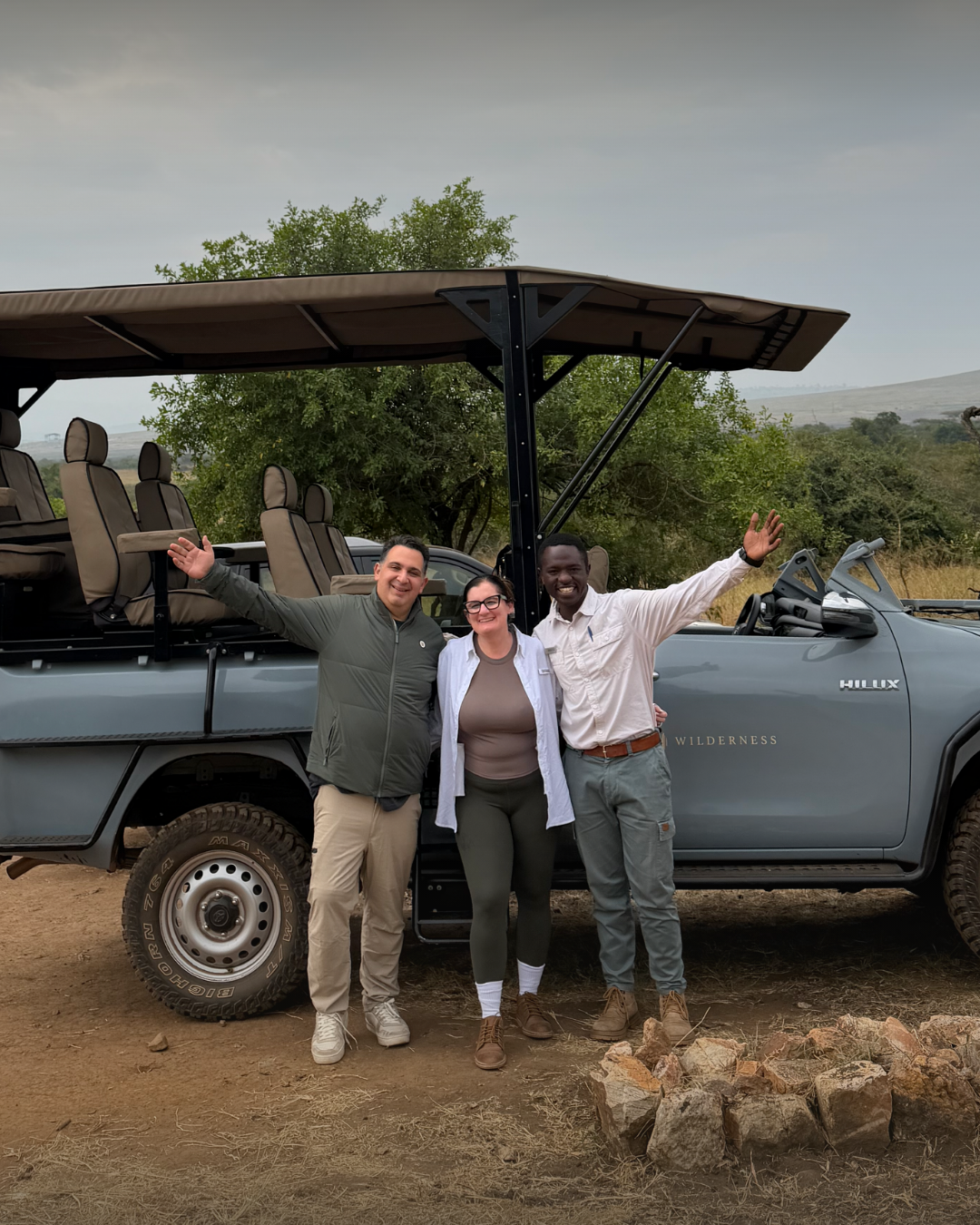
Bosco was outstanding. Young but incredibly knowledgeable, with a genuine excitement to learn and teach. He comes from the Volcanoes area, so he knows the gorillas and golden monkeys well — perfect for guests like us who were heading there next. He was able to prep us for the trekking experience and answer our questions. I would highly recommend requesting him.
We did two game drives per day — morning and afternoon/evening. One evening we did a later drive that allowed us to watch a leopard hunting impalas at night, which was thrilling.
But the pontoon boat is what makes Magashi Peninsula truly unique. We used it for most evening activities, and it was a wonderful way to experience the warm afternoon sun while getting ready for sunset. The boat rides could be as long or short as you wanted — when we spotted elephants by the water or elands on the shore, we would linger. To access game drives, you cross the lake by pontoon and a vehicle is waiting on the other side. It is a completely different rhythm than a typical safari.
We heard about a leopard that likes to fish in the evenings — we found his tracks but never spotted him. Still, the story of leopards and crocodiles fishing in these waters adds to the intrigue of this unique ecosystem.
The Good
The pontoon boat experience — truly unique in the safari world
Stunning lake views and animals by the water
Breathtaking rooms (1,200+ sq ft with private plunge pool)
Bosco — exceptional guide with gorilla knowledge
Pontoon lunch with berry tiramisu — best dessert in three weeks
Arrival experience — champagne cruise with elephants playing in the water
Privacy — only 2 rooms + villa, extremely well spaced
Full bar setup in room
Starbed experience — sleep under the African sky
Service — attentive but not overbearing
The Bad
Midges at night around light sources (annoying but do not bite)
Tsetse flies on the open plains
4-hour drive from Kigali (last hour bumpy)
Not as game-dense as Kenya's Mara or Tanzania's Serengeti (but far fewer crowds)
Conclusion
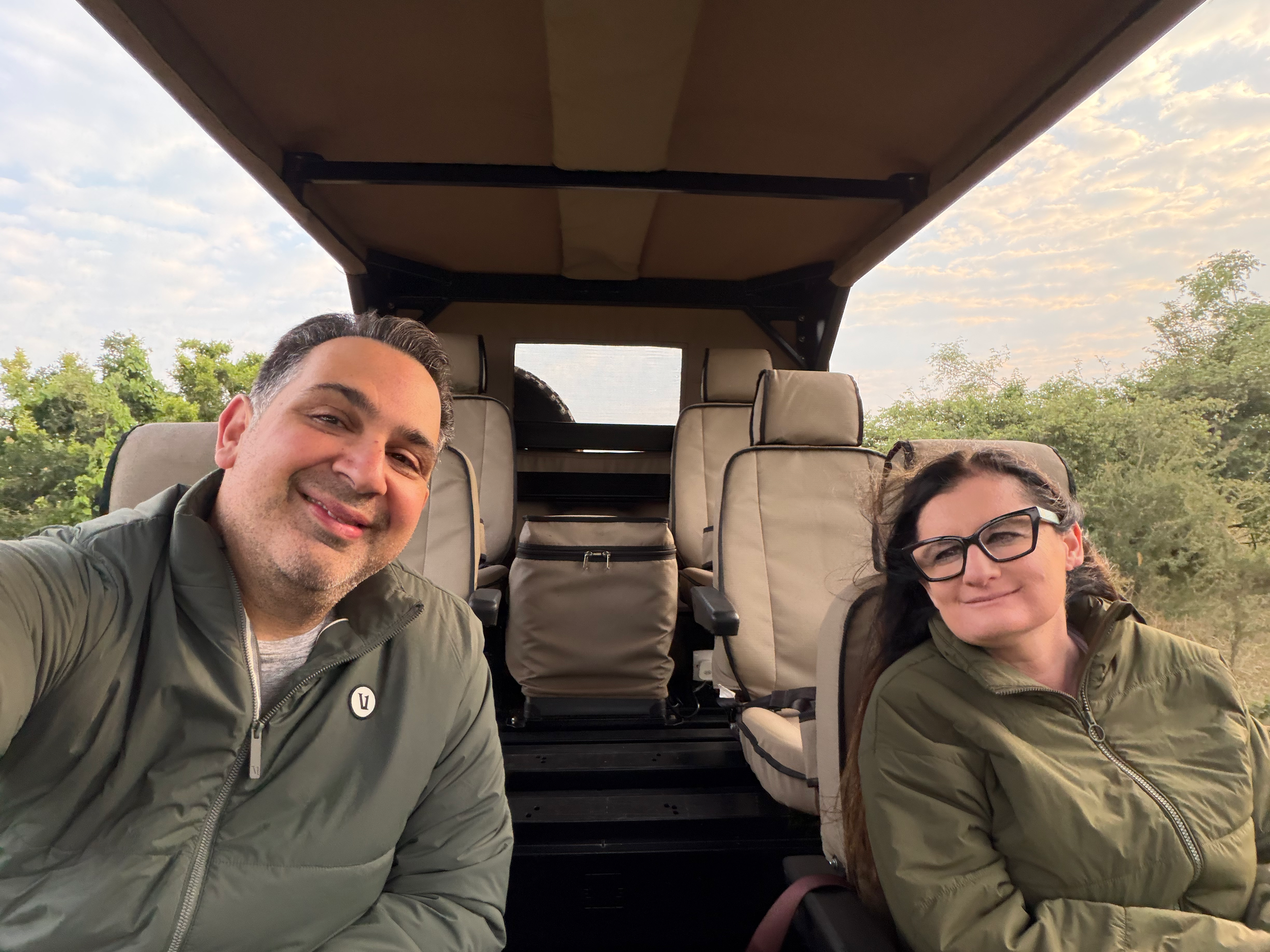
Magashi Peninsula surprised us. We came expecting a nice add-on to our gorilla trekking. What we found was a genuinely exceptional safari property that stands on its own merits.
The water element changes everything. Seeing elephants bathing, hippos grazing while you are in your plunge pool, cruising to sundowners on a pontoon — it is a different rhythm than traditional safari, and it is wonderful. The rooms are among the best we have experienced, the food was excellent (that berry tiramisu!), and the service was exactly right.
Who is this for? Travelers visiting Rwanda for gorillas or golden monkeys who want a traditional safari experience as well. Experienced safari-goers looking for something different. Couples seeking privacy and romance — only 2 rooms plus a villa means genuine exclusivity.
Who should look elsewhere? First-time safari guests who want the classic East African experience. If this is your only safari, Kenya or Tanzania will deliver higher wildlife densities and that iconic savannah feel. Magashi Peninsula is best enjoyed by those who have already experienced traditional safari and are looking for something different, or as an addition to a Rwanda gorilla itinerary.
Would we return? Absolutely. We have sent guests to the sister property Magashi Camp before, and we will continue recommending both. This is a wonderful conservation story, an important protected area for Rwanda, and a genuinely special place to spend a few nights.
Sundowner Safaris Rating
4.7 / 5
A beautiful conservation area in an exclusive part of Akagera National Park for a more traditional safari experience
Want to see Magashi Peninsula come to life? Check out our full video tour with behind-the-scenes footage and wildlife encounters!
Visited: January 2026 | Reviewed by Reza, Sundowner Safaris
sundownersafaris.com