Review: GweGwe Beach Lodge, South Africa
Sundowner Safaris
Three nights • May 11–14, 2026
Introduction
GweGwe Beach Lodge is one of those rare places where the marketing language — “beach and bush, wild as one” — actually understates the reality. Tucked into the 5,000-hectare private northern sector of the Mkambati Nature Reserve on South Africa’s Wild Coast, GweGwe opened in March 2024 and has already collected both a Michelin Key and a place on the Condé Nast Hot List — the only property in Africa to hold both. Those credentials matter less than what makes them deserved: a property that delivers genuine remoteness without sacrificing intimacy, real adventure without forcing it, and warmth without any of the polish that usually weighs lodges of this caliber down.
Samar and I spent three nights here in May 2026, as the middle chapter of a three-act South African itinerary — &Beyond Phinda Forest Lodge for traditional safari before, and the dunes of Sossusvlei in Namibia after. We were the only guests on property for the first two nights, and even when others arrived for the third, the lodge’s clever design and 5,000 hectares of private concession meant we never knew it.
Full disclosure: this trip almost didn’t happen the way it did. Samar wanted a proper safari — game drives, dust, big cats, the whole script. GweGwe wasn’t on her list, and she wasn’t entirely sure why it was high on mine. I’d been talking about it for months, mostly because Colin Bell — the co-founder of Wilderness Safaris and Natural Selection, and one of the most respected voices in African conservation — had spoken about it with the kind of conviction that’s hard to ignore. I wanted to understand what he saw. I also, frankly, love a beach. So we went. One day in, Samar leaned over and whispered that she was so glad I’d “made” her come. That moment is essentially this whole review in one sentence.
This review covers what GweGwe does extraordinarily well, the few things to set expectations around, and exactly which kind of traveler will fall in love with this place. Spoiler: a lot of them will.
Getting There
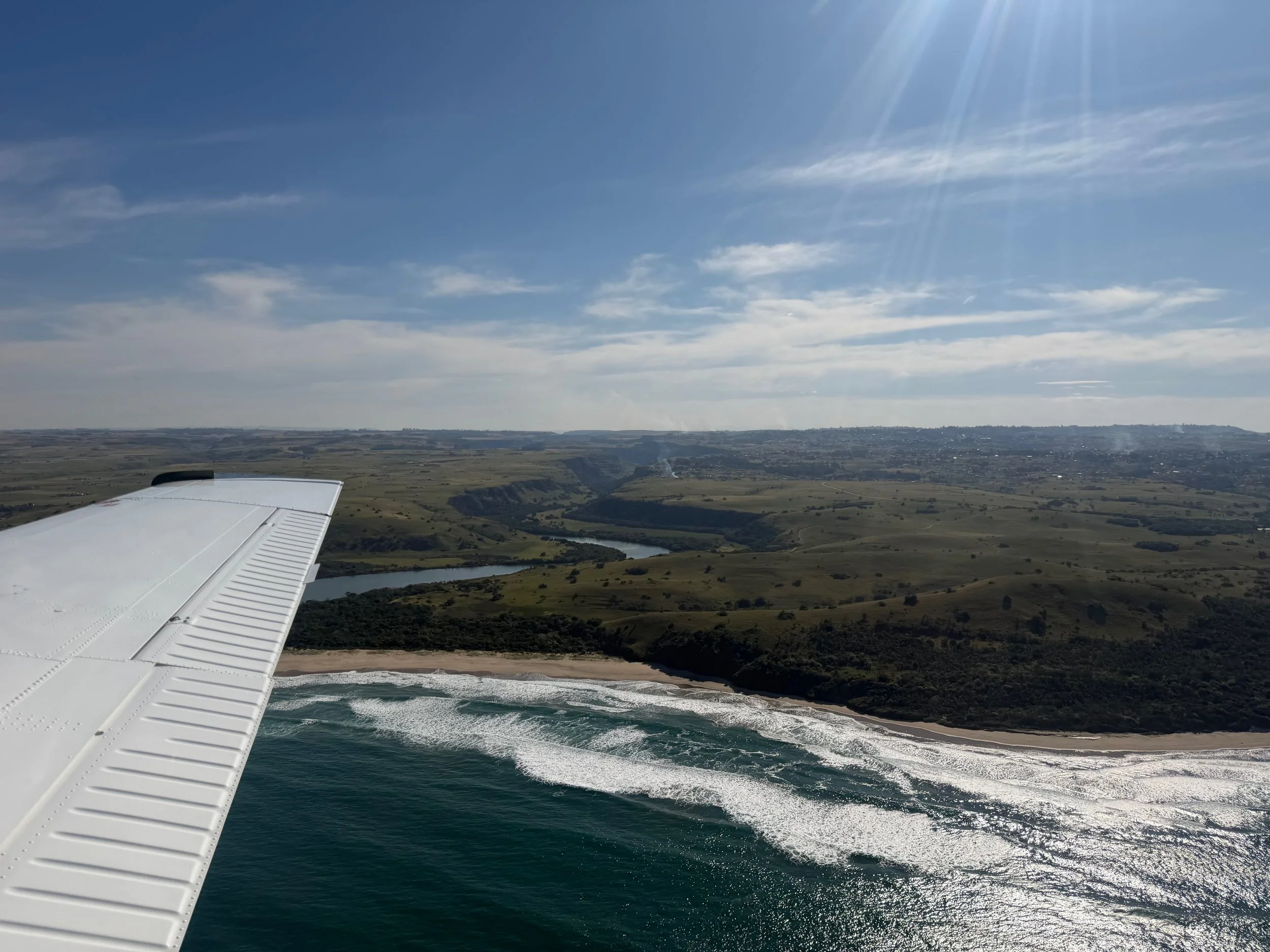
We were already in South Africa, finishing up at &Beyond Phinda Forest Lodge, when we made our way to GweGwe. Logistically, getting here takes some intent — it sits about an hour’s charter flight west of Durban, and the remoteness is the point. The Wild Coast is hard to reach by road, and the lodge’s distance from any city is part of what makes it feel like a different world.
We arranged a rental vehicle on arrival in Durban and self-drove the roughly 3.5 hours to Phinda. After our stay there, we drove back to Virginia Airport in Durban and left the rental for pickup. The drive is a highway run, unremarkable but easy.
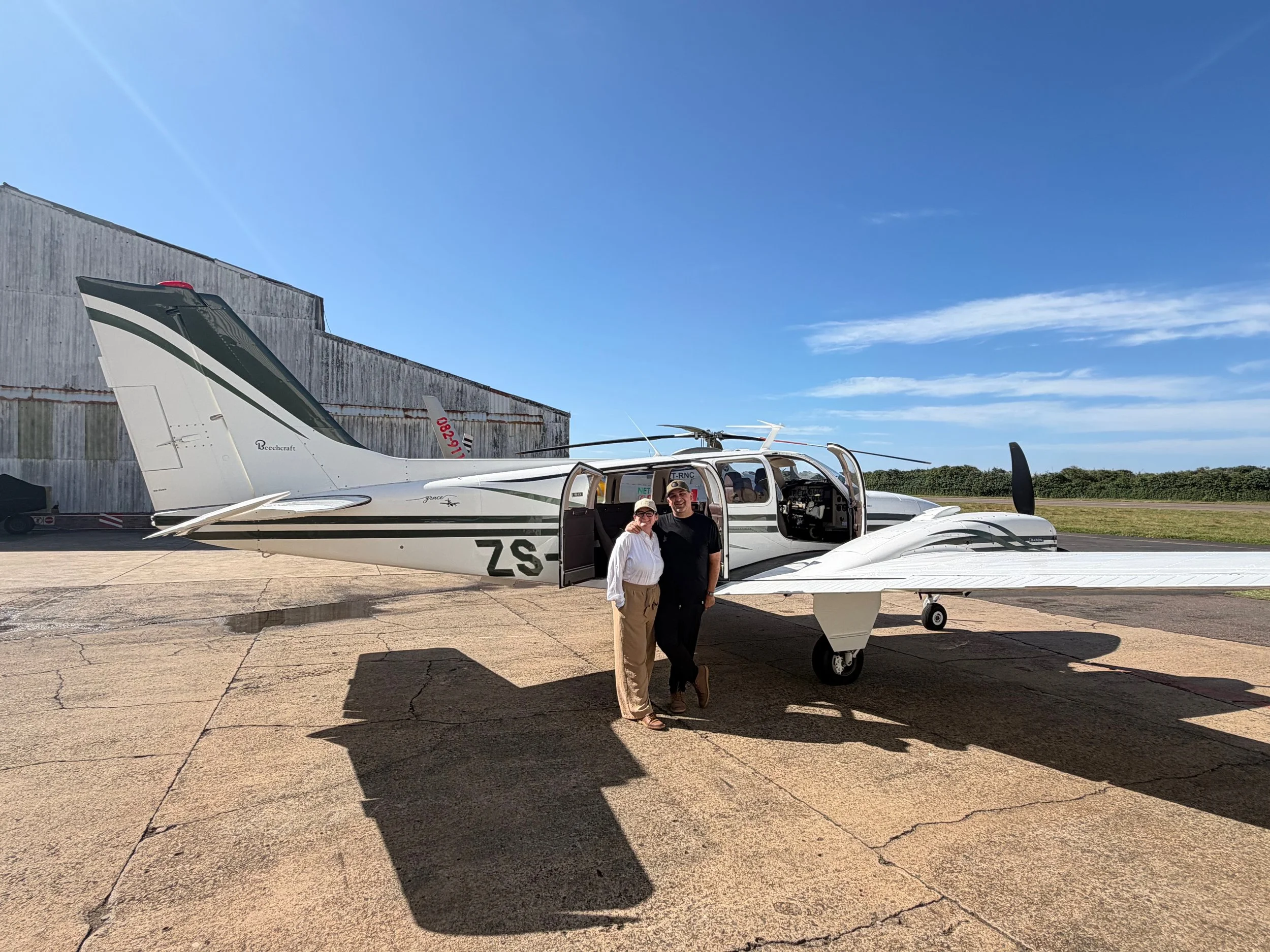
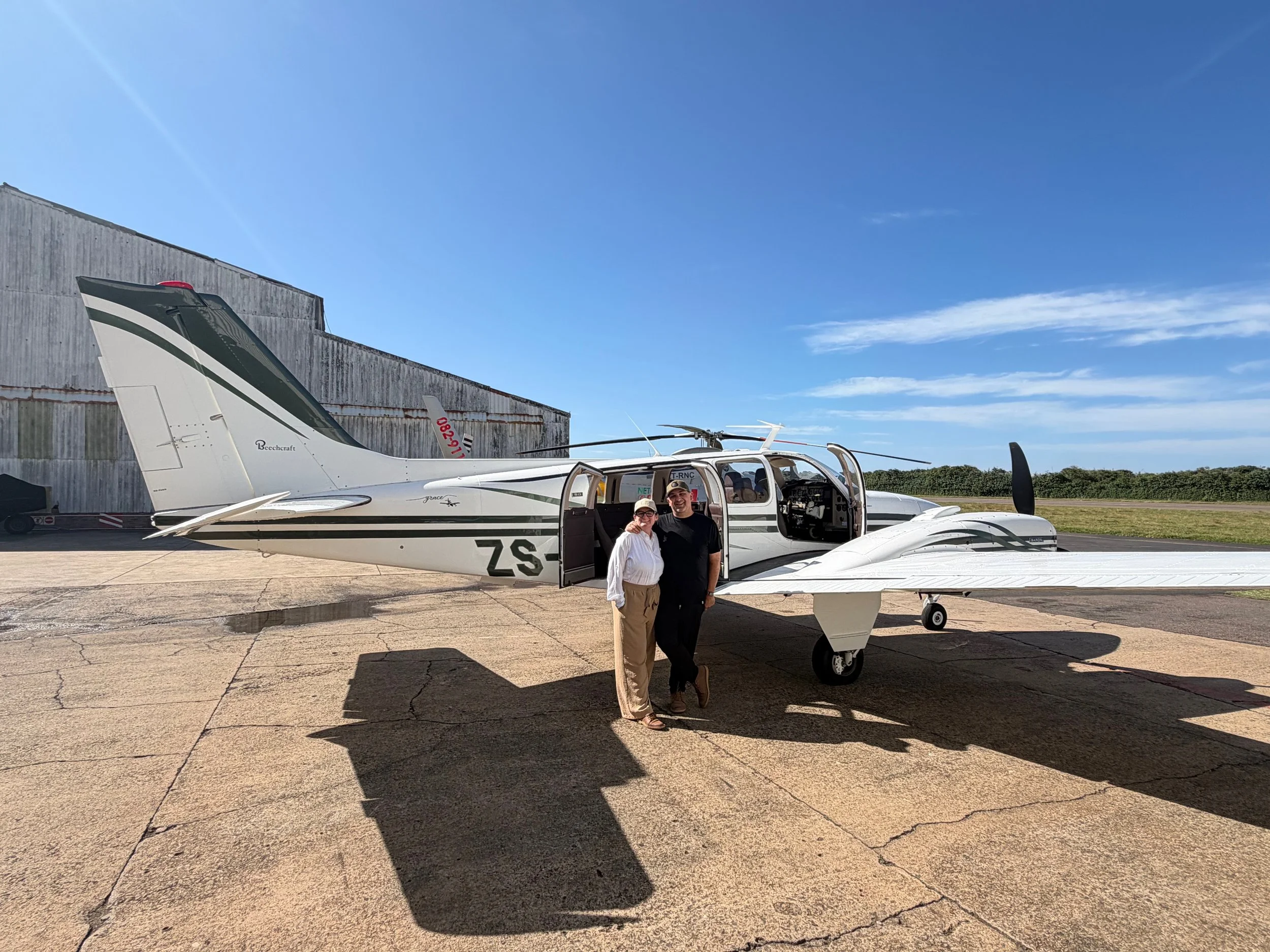
GweGwe operates a scheduled roundtrip flight from Virginia Airport on Mondays and Fridays. We flew in on the Monday scheduled service and ended up the only passengers on the plane. Because we wanted to depart on Thursday — not a scheduled day — we chartered the return leg. Either way, the aircraft was the same: a beautifully refurbished six-seater Beechcraft Baron, and the pilot was Nigel, a former SAA captain who now flies these routes for the love of it. The flight is about 45 minutes, mostly over the Indian Ocean at around 1,000 feet — smooth, scenic, and the kind of arrival that sets the tone for what’s to come. As a charming touch, it was Nigel’s wife’s birthday on the day we arrived, and she had flown along to have lunch at the lodge — not with us, but the time we spent around them on either end of the flight was lovely.
The lodge has its own airstrip on the private concession, about a 10–15 minute drive from camp. A lodge staff member met us at the airstrip and drove us in. The arrival itself was one of the most beautiful welcomes we’ve experienced anywhere in Africa: ten or so staff gathered to sing a traditional GweGwe song, with cold towels and beverages in hand. It was warm without being theatrical — exactly the lodge’s voice in miniature. Our guide Asanda — who would be with us for every activity over the next three days — came to meet us at the lodge that evening to walk us through the plan.
Setting & Location
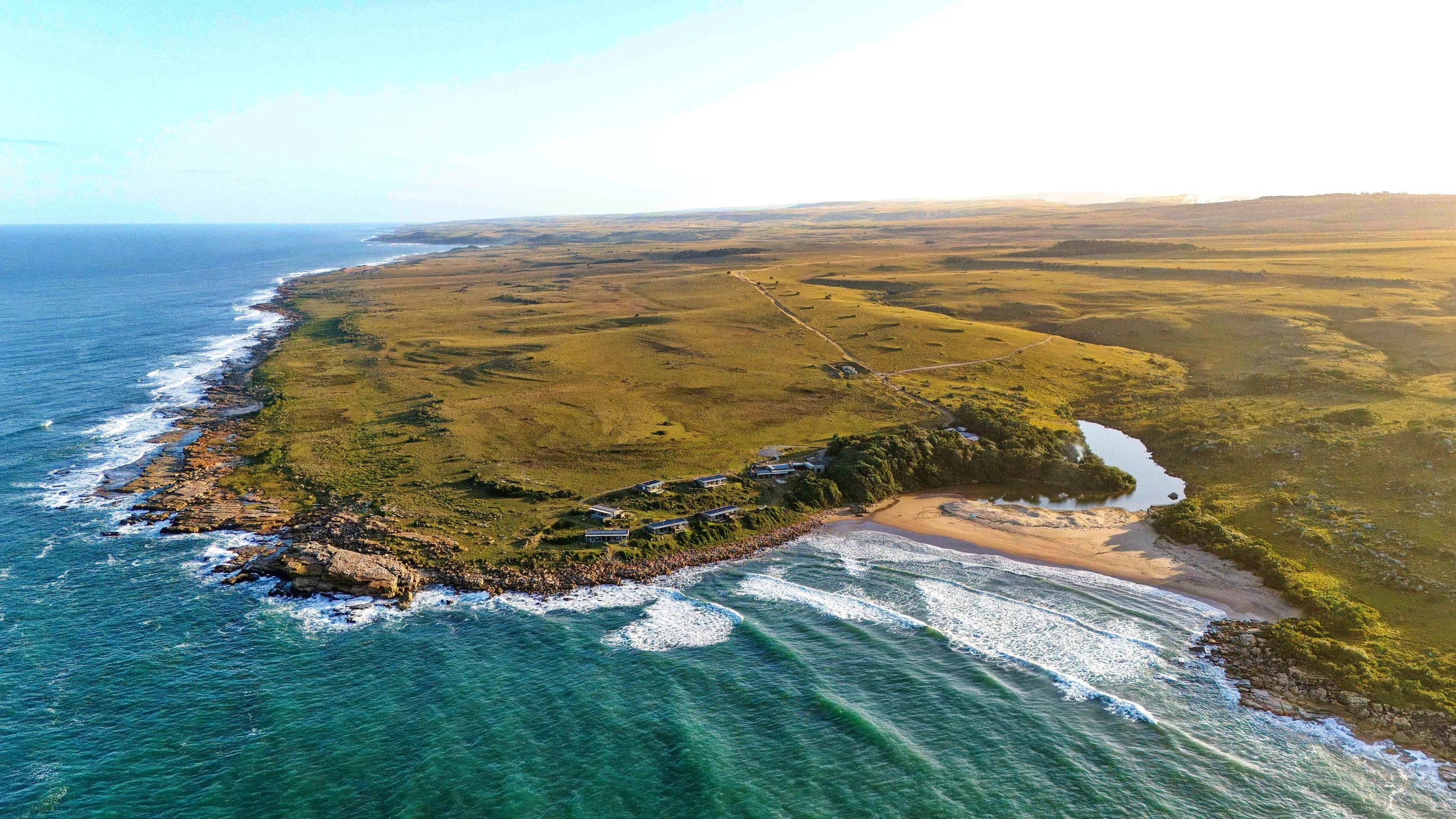
GweGwe sits within the Mkambati Nature Reserve, a 7,720-hectare coastal reserve in Pondoland on the Wild Coast of South Africa’s Eastern Cape. The reserve is part of the Maputaland–Pondoland–Albany biodiversity hotspot — one of only thirty-four such hotspots globally — and earned Ramsar wetland status in 2025. Of those 7,720 hectares, GweGwe occupies a private 5,000-hectare concession in the northern sector. To give a sense of scale: that’s roughly the size of Manhattan, dedicated to a single nine-room lodge.
It is also currently the only camp inside Mkambati.
The land itself has one of the most meaningful ownership stories in African conservation. After decades of forced removal under colonial and apartheid rule, the land was returned to the original amaPondo communities in 2004 through South Africa’s post-apartheid restitution process. The reserve is now owned outright by the Mkambati Land Trust, representing approximately 6,600 families across seven local villages, and the lodge pays 9% of gross revenue back to the community and conservation authorities. Nearly all the staff are drawn from these surrounding communities, and the majority are women — many in formal employment for the first time. This story isn’t a marketing line. It’s something you feel in the way the lodge is run.
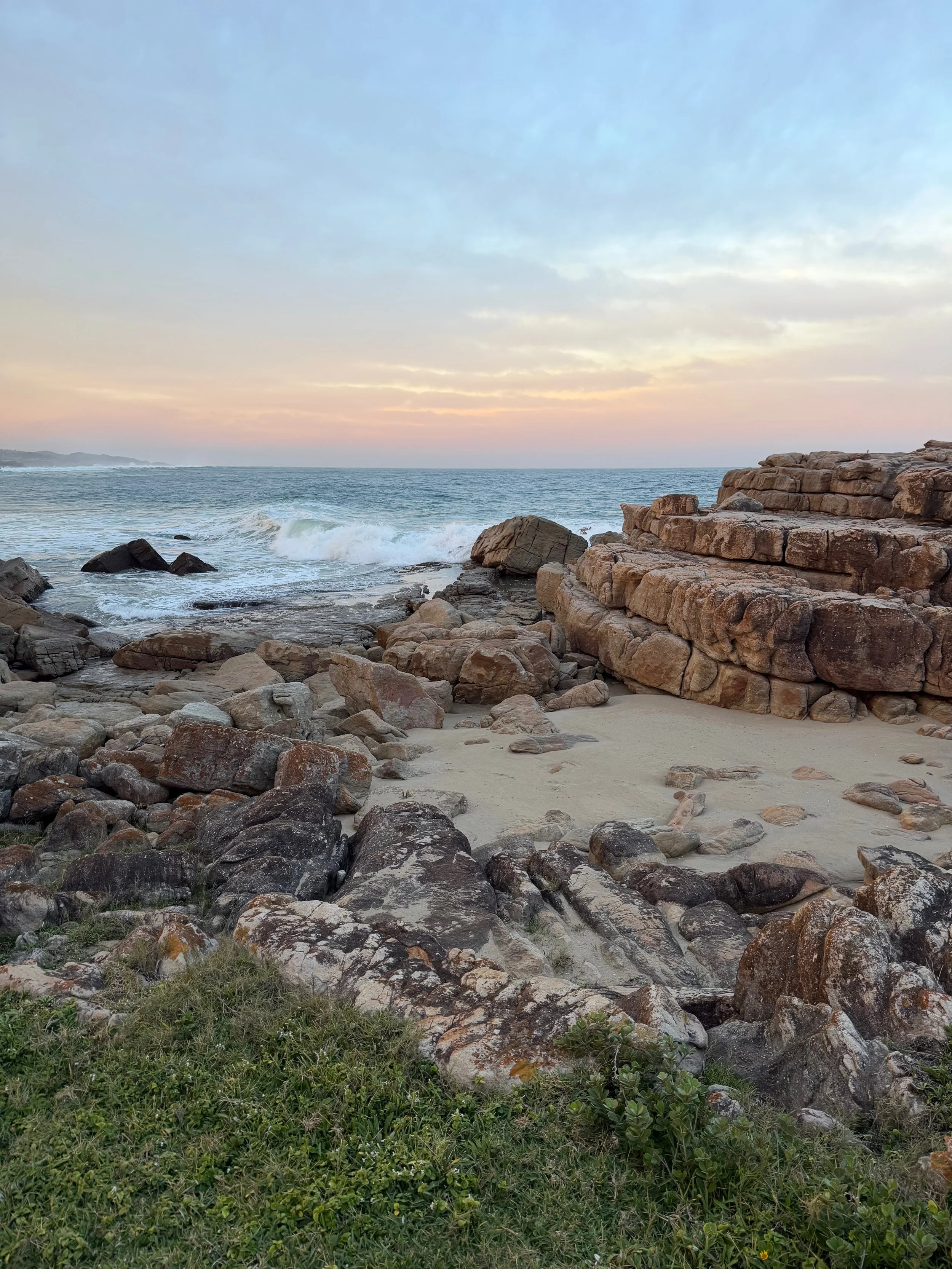
The main lodge sits on a hill about fifty meters above the beach, ocean-facing, with views down to the boma and the surf. The architecture is beach-style with a deeply considered layout — a series of intimate courtyards, fireside nooks, and outdoor spaces designed so that no matter which direction the wind is blowing, there is always a sheltered spot to retreat to. Even at full capacity of twenty-two guests, the design ensures you never feel like you’re in a crowd.
The view from the lodge is exceptional. The views from the rooms are out of this world.
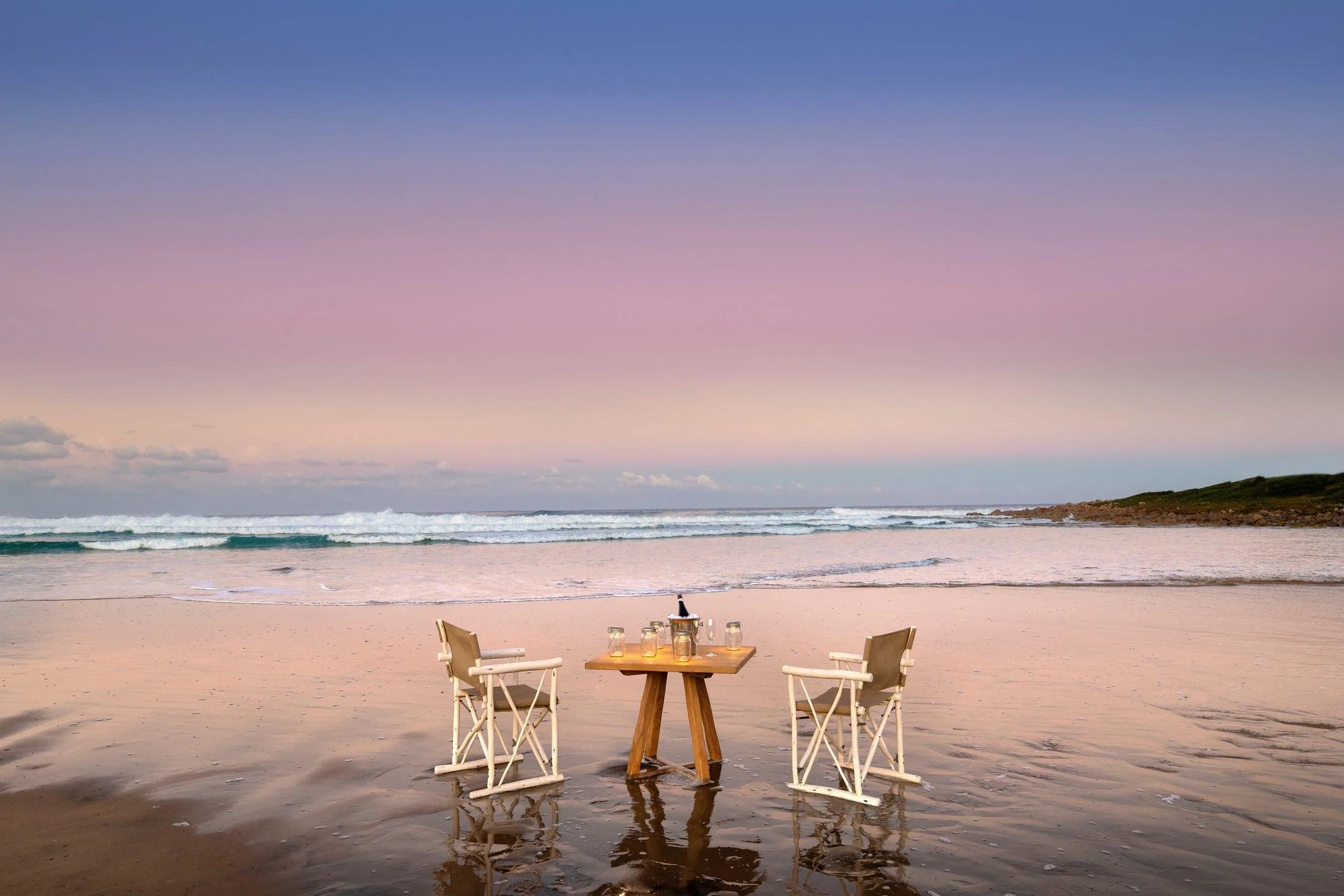
The beach itself is a sandy cove just a two-minute walk down from the main lodge — beautiful, mostly empty, and exclusive to GweGwe guests. The Indian Ocean here runs warmer than the Atlantic side of the country, and Samar and I walked down one morning specifically to dip in. On one of our nights, the lodge surprised us with a private beach dinner — they had asked us in advance whether we preferred surprises or to know the plans, and we opted for the surprise. Toes in the sand, ocean as soundtrack, an extraordinary canopy of stars overhead, and food that I genuinely can’t remember in detail because the setting was so all-consuming. That, in itself, is the highest possible compliment to both.
Wildlife is a beautiful bonus here, not the headline. We saw plenty of zebra — including two rare melanistic (mostly-black) individuals that Asanda told us are quite shy. We saw red hartebeest, blesbok, and a generous range of birds during our drives to and from the airstrip and the waterfalls. Most strikingly, the reserve is in the process of building out an all-female anti-poaching unit — the Green Griffons Rangers — in preparation for reintroducing white rhino to the area. Evidence suggests white rhino historically lived here, and the prospect of seeing them against an Indian Ocean backdrop is the kind of thing you don’t get anywhere else on earth. We saw the Rangers once, in training, in their vehicle.
Offshore, the lodge sits adjacent to the Pondoland Marine Protected Area, which hosts the famous sardine run each June and July — the lodge’s new rigid inflatable boat takes guests out for it in season.
The weather during our stay was as good as we could have hoped. Daytime temperatures sat in the low 80s Fahrenheit (around 27–28°C), evenings cooled to the high 50s and low 60s (14–17°C), and we had bright sun on two of three days, with one cloudy, windy afternoon that brought a brief drizzle in the evening. We were able to do everything we wanted across all three days.
I’ve been a lot of places, and I genuinely struggle to compare GweGwe to anything else. The closest mental analogue is the kind of stay you’d wish you could have on the Road to Hana in Maui — a beautiful waterfront lodge with privately guided activities and waterfalls to yourself. But Hawaii cannot actually deliver that experience. It’s too crowded, too car-bound, and you’re never alone. GweGwe delivers what Hawaii promises but doesn’t fulfill.
Facilities
To picture the property: imagine standing in the Indian Ocean and looking back at the lodge. The main lodge sits in the center on a hill. The guest rooms run along the coast to the left. The river and activities cluster sits to the right, a little upstream — close enough that everything feels connected, far enough that the activities area has its own quiet identity. And tucked behind the rooms on a separate stretch of coast is the hot tub. Everything is walkable, but each zone has its own character.
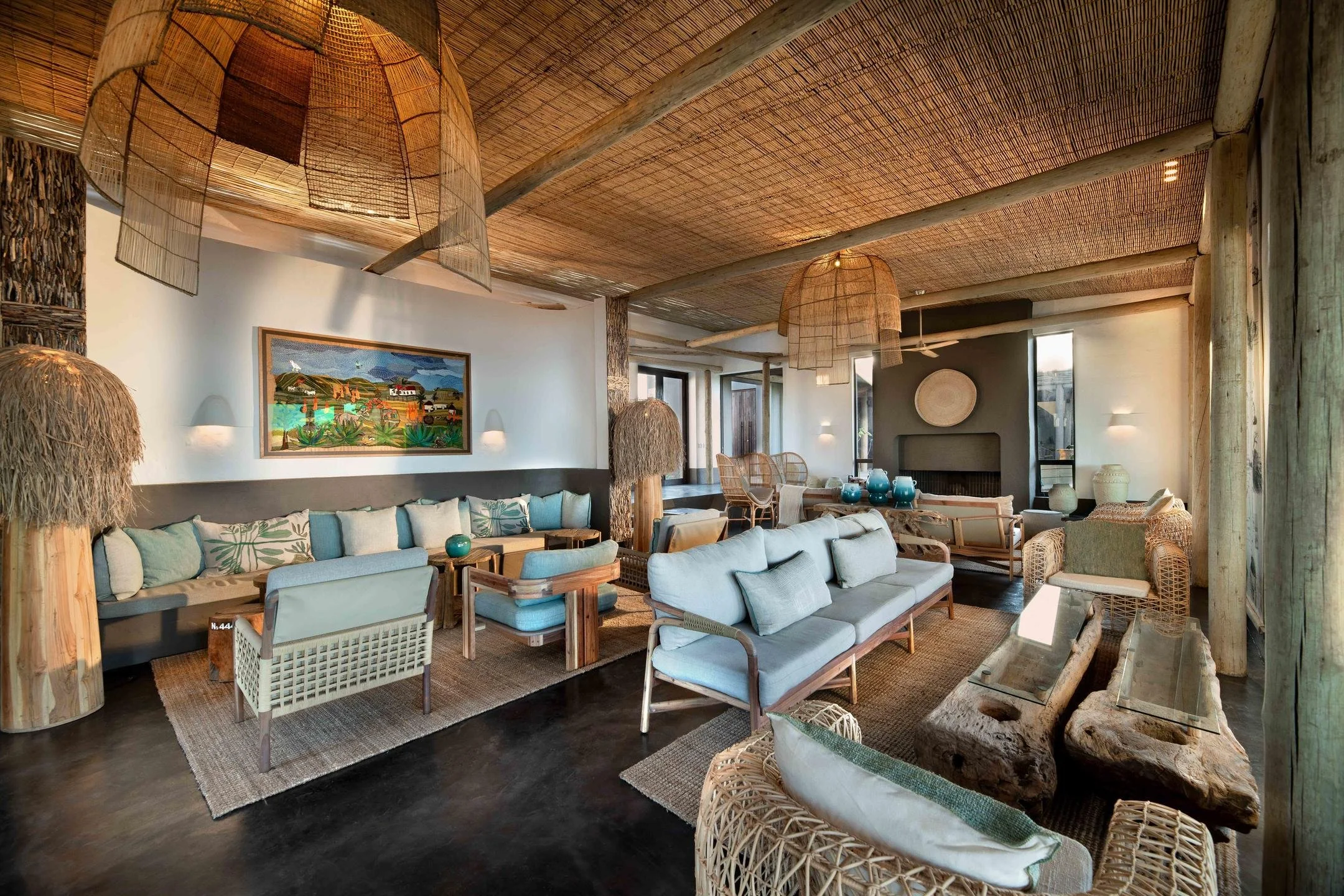
The main lodge is the design statement of the property. Beach-style architecture with weather-aware layout — courtyards, sheltered nooks, multiple fireplaces, and outdoor spaces that flex to wind and mood. The interiors lean into a coastal-natural palette: earth-tone furniture in rattan and warm wood for the beach vibe, with greens and blues woven through cushions and textiles to echo the ocean and the grasslands just beyond. Nothing feels overdecorated; everything feels considered. The bar has a six-seat top with the bartender backed by an uninterrupted view straight to the beach and ocean — the ocean is, quite literally, behind the person pouring your drink. Bartenders make whatever guests want; there is no rigid cocktail list. We had some excellent gin and tonics, dry lemon gins, and Samar’s pink gin and tonic. Beyond the bar, a series of small fireplace seating areas provides intimate spots for pre-dinner drinks or post-dinner debriefs.
The boma is informal and lit every night — even on our drizzly evening, the fire stayed on until the rain actually started. Sitting by it became the rhythm of our evenings.
There is no communal pool, and the lodge is right not to have one. Each room has its own private plunge pool, and there is, as the staff cheerfully put it, “an entire ocean and river to swim in.”
The river and activities area is a five-to-seven minute walk from the main lodge, set upstream along the river rather than down at the beach (you can’t actually reach it from the beach itself). This is where the lodge clusters most of its experiential infrastructure: the spa, gym, kids’ club, activity room, secondary kitchen, bar, changing rooms, and toilets. The river setting is lush — banana trees, palms, birdsong — and the walk down through the coastal forest is part of what makes the area feel like its own little world.

The spa is in the activities zone, a single open-air treatment room set among the trees with birds and the river sounds around you. Samar had a massage and described it as wonderful and relaxing enough that she fell asleep. Pricing is reasonable by South African standards; treatments are à la carte rather than included.
The gym is intentionally weight-focused. There’s no cardio equipment because the cardio happens outside — running, walking, biking, e-biking, kayaking, surfing, ocean swimming. It’s a thoughtful design choice that respects the setting.
The activity room holds e-bikes, regular bikes, and kids’ bikes. There’s also a kids’ club with toys, books, a wooden playground built on real sand, and an outdoor TV area discreetly placed so that anyone wanting to watch a big match can do so without affecting other guests.
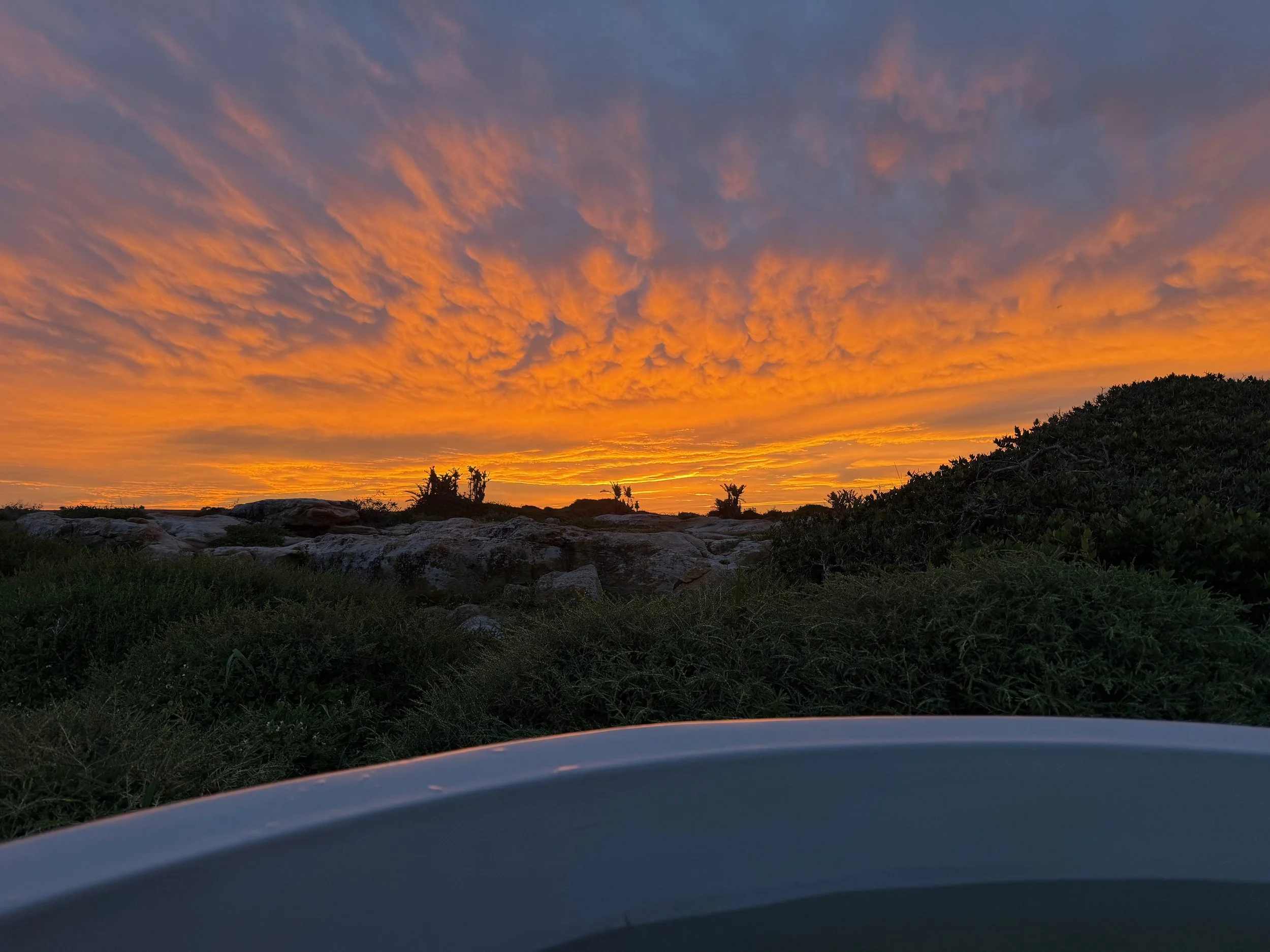
The hot tub deserves its own paragraph. It sits on the other side of the rooms — behind them, on a separate stretch of coast from the main lodge’s beach — and is hidden behind a rock with no signage by design. We got lost finding it the first night because we hadn’t listened to the directions. It is a wood-fired tub that takes a couple of hours to heat, so it has to be requested in advance. It comfortably fits two and is sized for a maximum of three or four; it’s effectively single-party use. The view from the tub is extraordinary: the sunset on one side and the ocean on the other. We did the hot tub on two of our three nights. The lodge tells you to bring your robe from the room; towels are provided at the tub itself. Drinks are made by the bartenders and placed at the tub waiting for you before you arrive. The walk back to the room in full darkness is part of the experience — the flashlight in the room is essential.
Wi-Fi is available throughout the camp, works well near the main lodge, and is not blazing fast — but it does exactly what most guests will need it to do. For the rest of it: this is not a property where you should be on Wi-Fi.
Room
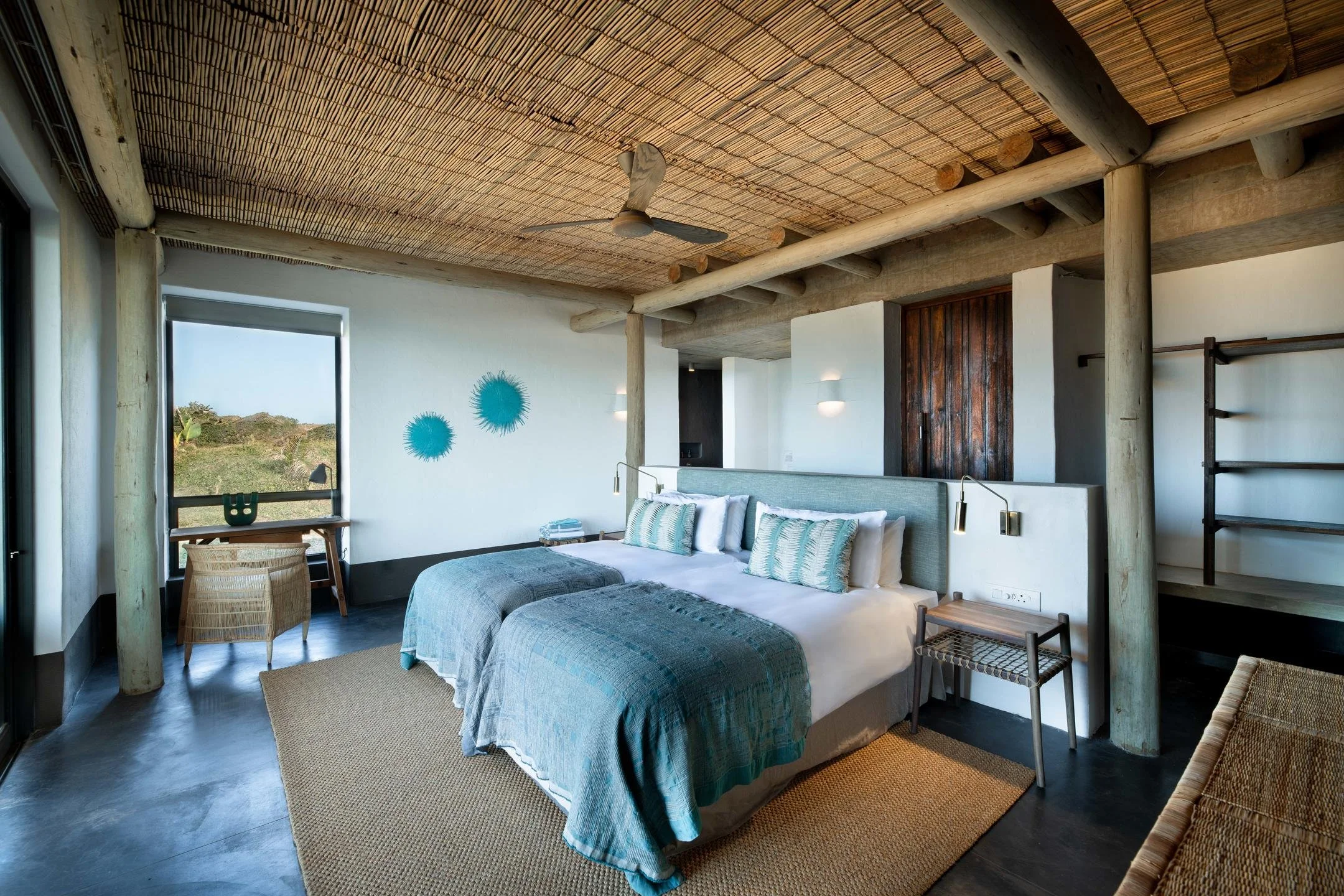
We stayed in Room 3, a standard Beach Suite. The lodge has nine rooms in total: seven twin deluxe suites and two family suites.
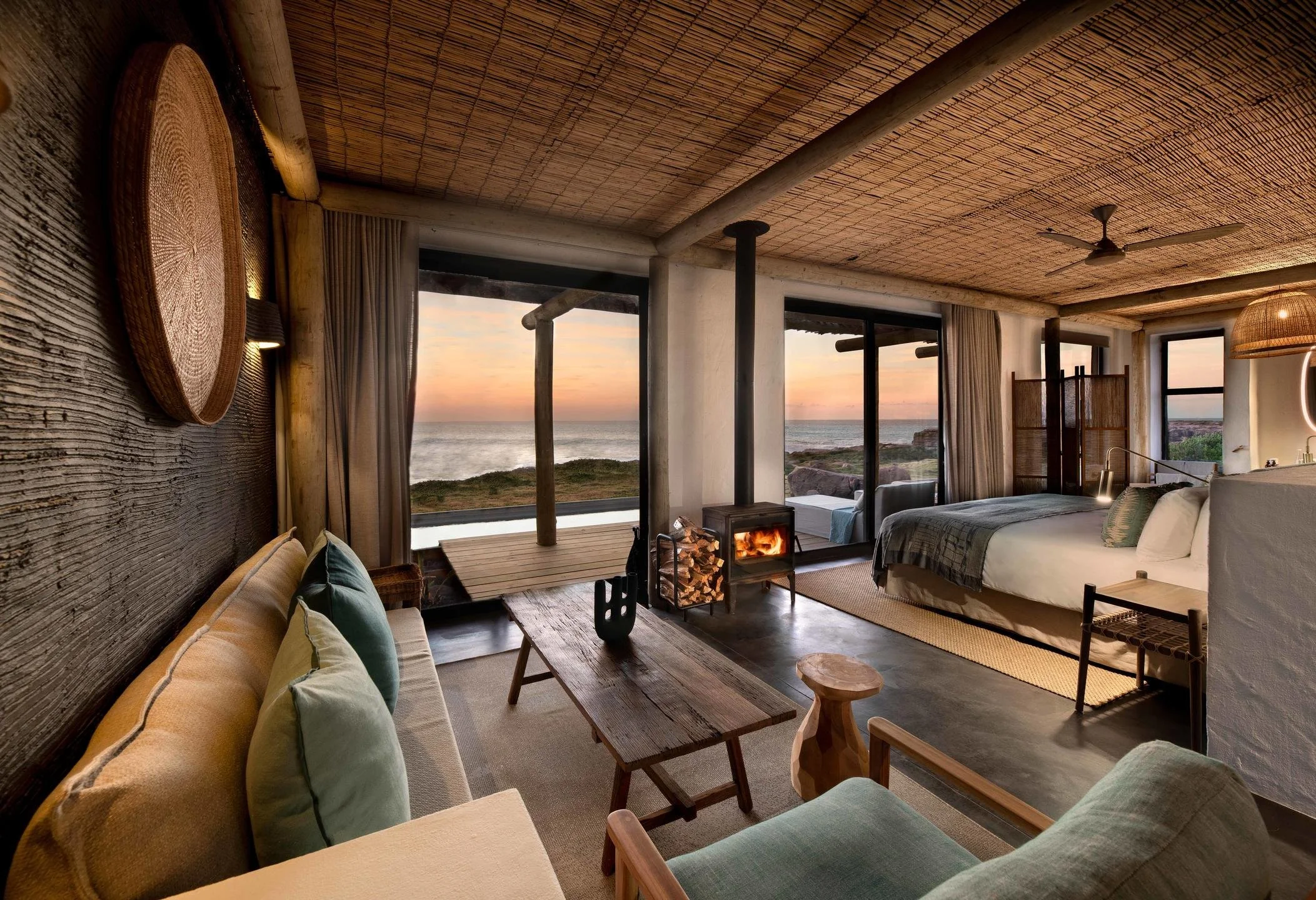
The room itself is not enormous — roughly 700–800 square feet — but the layout is exceptional. It is open-plan, running across three zones. On one end is a living area with a built-in sofa, cushions, a couple of chairs, and a coffee table. In the middle sits a king-size bed. On the far end is the bathroom — indoor shower, dual vanity, and an enormous standalone tub positioned in front of a window that looks out over the surf breaking on the shore. The windows have been placed with such intentionality that the ocean is visible from almost anywhere in the room, including while you’re brushing your teeth at the vanity.
The bed itself is comfortable — and the highest compliment I can give it is that it disappeared. We slept beautifully.
The bathroom has both an indoor shower and an outdoor shower, the latter accessed directly from the indoor one. The outdoor shower was one of my favorite features of the entire property — water pressure was excellent, hot water was reliable, and showering outside in the Wild Coast air with the ocean nearby is something I’ll remember. Toiletries are from Healing Earth, a premium South African wellness brand used widely across luxury lodges on the continent.
The room has two outdoor decks, which is one of the smartest design choices on the property. The front deck has a table and lounging area at the entrance side; the back deck has the private plunge pool with direct ocean views. The two-deck design means that even when the ocean side is windy, you have a sheltered alternative — and when it’s calm, you have the view. This kind of design thinking — “whatever the weather, you can be outside” — is consistent across the entire property.
The plunge pool is roughly 20 feet by 10 feet, gets sun for most of the morning and early afternoon, and is unheated. We visited in early autumn / Southern Hemisphere winter, and the pool was quite cold. In peak summer it would be perfect.
There is a ceiling fan over the bed and no air conditioning. We never needed AC — we kept the window open at night to hear the ocean. The room was empty on either side for two of our three nights, and we heard nothing from any neighbor on the third. The minibar and a Nespresso machine are stocked; the coffee was great. The minibar could have used a slightly broader range of snacks and drinks for in-room lounging, though anything we asked for was happily provided.
One detail I didn’t expect: each room has an adorable wood-burning fireplace. Every evening at dinner, the staff asked whether we’d like our fire lit for when we returned to the room. We said yes every night — the ambiance walking back to a warm, crackling fire on the cool Wild Coast evenings was a small luxury that landed every time.
The overall feel of the room — and of the entire lodge — is that it is meant to feel like home, with the right amount of service and help, but ultimately a relaxed atmosphere. It does not feel fancy and stuffy at all. That balance is rare.
Food
Food at GweGwe is a 9 out of 10 for me, and the framing matters: it is simple, delicious, and unpretentious — but never so casual that it loses the sense of occasion. Most lodges either try too hard or not hard enough. GweGwe just gets the food right.
The chef, Nozi, leads a menu that leans into Pondoland flavors and locally inspired South African cooking. She came out from the kitchen regularly — to say hello, to check in, to ask for feedback. It felt like an ongoing dialogue rather than a one-time meet-the-chef performance. Samar fell in love with her crunchy biscuits designed to be dipped in coffee, and we both forgot to ask for the recipe before we left. A good reason to come back.
Our arrival lunch was a platter-style spread of crayfish samosas, prawn pancakes, chicken skewers, salad, and potatoes — all excellent.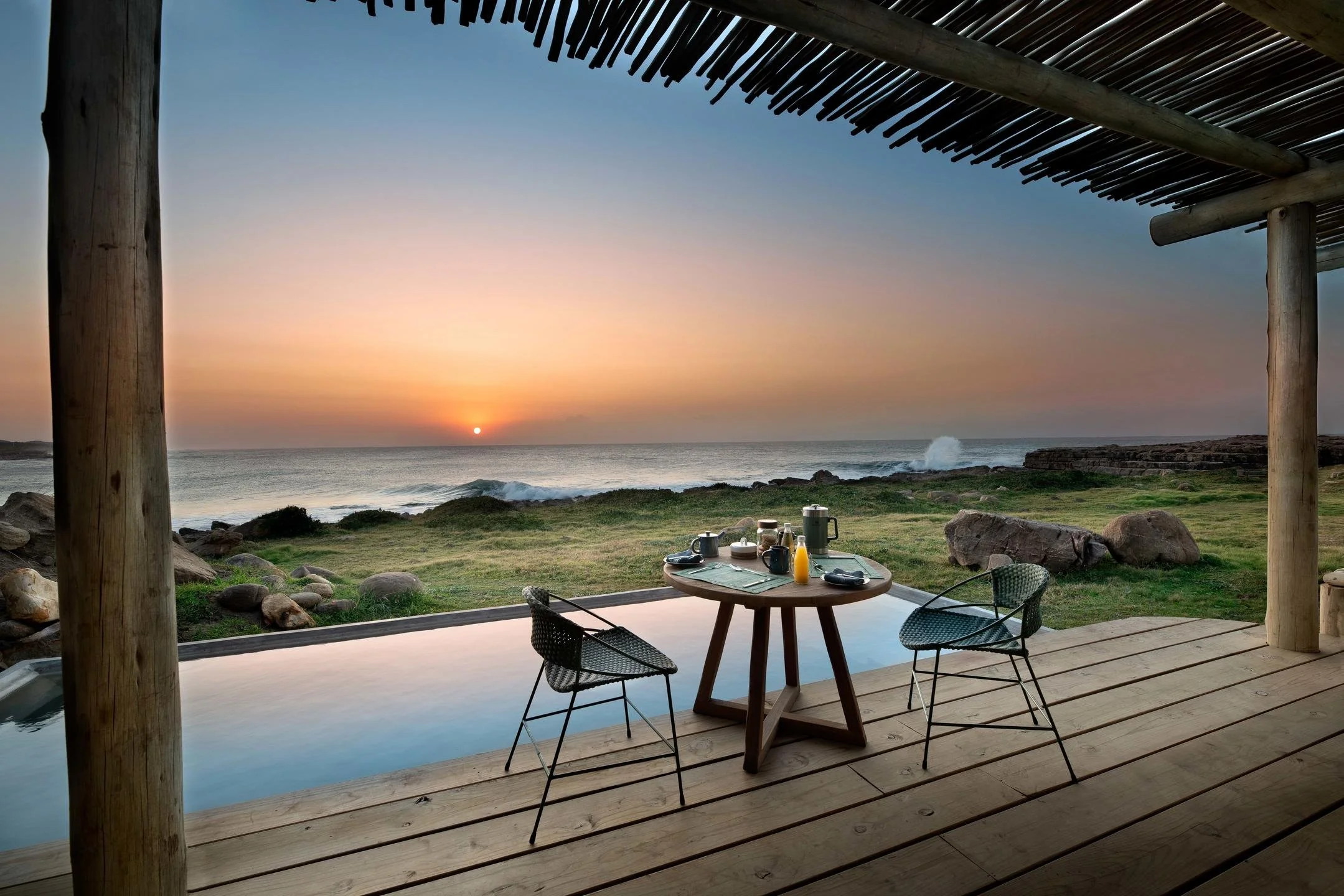
Outdoor setup on the room’s deck at sunset
Breakfast has no formal menu but follows a pattern: a cold spread of yogurt, muesli, exceptional fresh fruit (some of the best mangoes and pineapples I’ve had), and whole loaves of fresh-baked bread with jam. Hot dishes are made to order — eggs any way, omelets, sausage, bacon, mushrooms, the ingredients for a full English if you want one.
Dinner setups were tailored to who we were. As a couple, we ate by fireplaces — intimate, romantic, beautifully staged. Each of our dinners was three courses with two choices of starter, two of main, and one (excellent) dessert. The poached pear on our first night was out of this world. For groups or families, I’d imagine the setup would shift more casual and beachy. GweGwe leans heavily on outdoor dining when the weather cooperates — meals on decks, by the boma, on the beach, in the cave — and the indoor option, the main dining room, has a gorgeous view of its own. That dining room is where breakfast is served and where the lodge falls back to when the weather doesn’t cooperate.
The lodge also pulls off some special meal moments. Our Day 2 lunch was at Baboon Cave, a stone cave overlooking the river and waterfalls, set up with cold fried chicken skewers, baked halloumi, veggie quiche, fish, pita-like breads, and banana bread for dessert. Beautiful — and made entirely possible by our butler Aubrey, who carried it all up to the cave. Our Day 2 dinner was the surprise beach dinner described earlier. And our Day 3 lunch was Pizza Day, complete with a chakalaka pizza — chakalaka is a spicy South African vegetable relish, and on a pizza base it’s exactly the kind of unpretentious local-flavors-on-a-familiar-format playfulness that captures GweGwe’s identity. Pizza Day wasn’t a coincidence: on our arrival tour I’d mentioned that I love pizza, and the lodge quietly worked it into our stay. That kind of casual remembering is the lodge in miniature.
On drinks: food and beverages are essentially all-inclusive, and the included selection is more generous than most guests will want. There’s a beautiful South African wine list with premium upgrades available (French champagne for celebrations, for instance), but we never ordered anything outside the included offering and never felt restricted. We are flexible eaters with no allergies, but the kitchen handled Samar’s preferences (she’s not a lamb fan) gracefully by leaning on local seafood and chicken options. Sundowner moments are guest-directed rather than staged — we did ours in the hot tub for two of three nights, and on the third night Samar did the spa while I rode an e-bike toward Shelly Beach.
Our front-of-house team during meals was led by Andy for nights one and two and Amanda for night three. Both were warm and attentive without being intrusive.
Service
The simplest description of service at GweGwe is also the most accurate: it felt relaxed, but someone was always watching over us.
That balance is the hardest thing to achieve in hospitality. Too much attention and the service tips into hovering; too little and you feel forgotten. GweGwe gets it right by reading guests carefully and adjusting in real time. The lodge does not formally announce “this is your butler” the way some high-end properties do — but Aubrey, our butler, somehow always felt like he was there for us specifically. He handled the in-room touches and also did the heavy lifting on the special meal setups, including hauling the Baboon Cave picnic up the trail and setting up the beach dinner. He was wonderful, and a quiet hero of our stay.
Lodge leadership during our visit was Channel and Jan, both of whom were a genuine pleasure to spend time with — warm, engaged, and visibly proud of the property and the community story behind it.
A few small service signatures captured the lodge’s instincts:
When we booked the hot tub, drinks were waiting for us at the tub — we never had to ask.
For the beach dinner surprise, the lodge asked us first whether we preferred to be surprised or to know the plans in advance. That single question respects different guest preferences without sacrificing the magic.
The chef coming out from the kitchen repeatedly, not just once.
Because nearly all the staff come from the surrounding communities, the warmth here doesn’t feel rehearsed or scripted. It feels like people doing work they’re proud of, in a place they know well.
We had no service misses worth flagging.
Activities & Guiding
GweGwe is not a game-drive lodge, and that’s the first thing to understand. There are no dedicated wildlife drives, no Big Five expectations, no extended hours sitting in a vehicle. The vehicle is a standard 4x4 Land Cruiser — perfectly fit for purpose, but used as a short transfer to the start of each activity rather than as the activity itself. Wildlife sightings happen organically along the way.
What GweGwe does offer is one of the most varied activity menus I’ve encountered at any African lodge: hiking, waterfall jumping, kayaking, e-biking, surfing, snorkeling, ocean swimming, beach time, birding, marine and botany walks, nature drives, canoeing, fishing, and seasonal sardine-run boat excursions when the run is on (June and July). Everything we did was included in the rate — the waterfall expedition, the kayaking, the e-bike rides, the hot tub, all of it. The only à la carte item we encountered was the spa, where Samar’s massage was reasonably priced by South African standards. Scuba may also be additional, but worth confirming with the lodge at booking. Compared with other high-end safari and beach properties, the inclusions here are unusually generous.
Our guide for the entire stay was Asanda, the lodge’s head guide, who is from the local amaPondo community and spoke openly about what working in this nature means to him personally — the chance to do meaningful work in the land his people grew up loving. He is quiet, but deeply knowledgeable and quietly confident. The confidence is what makes the adventurous activities accessible to less adventurous guests. As I put it to Samar at one point: I rarely cliff jump or kayak, but having Asanda there made me want to try things I would otherwise not want to try. That is the highest praise I can give a guide.
Worth noting on how guiding actually works at GweGwe: we happened to have Asanda for every activity because we were the only guests and our choices fit within his specialty, but at a fuller lodge the model is activity-based rather than party-based. Guides check the weather each morning, check in with each guest group to see what they feel like doing, and then assign the right guide to the right activity. A couple choosing kayaking might be paired with one guide while another couple on the waterfall expedition is with a different one. The trade-off: you may not have the same guide all stay, but you’ll always have the guide best suited to what you want to do that day. Evening briefings happen at the main lodge — Asanda ran ours, but any of the guides can. The briefing is conversational rather than scripted: a quick check on what you feel like doing based on the next day’s weather, and a few ideas tailored to your appetite for adventure.
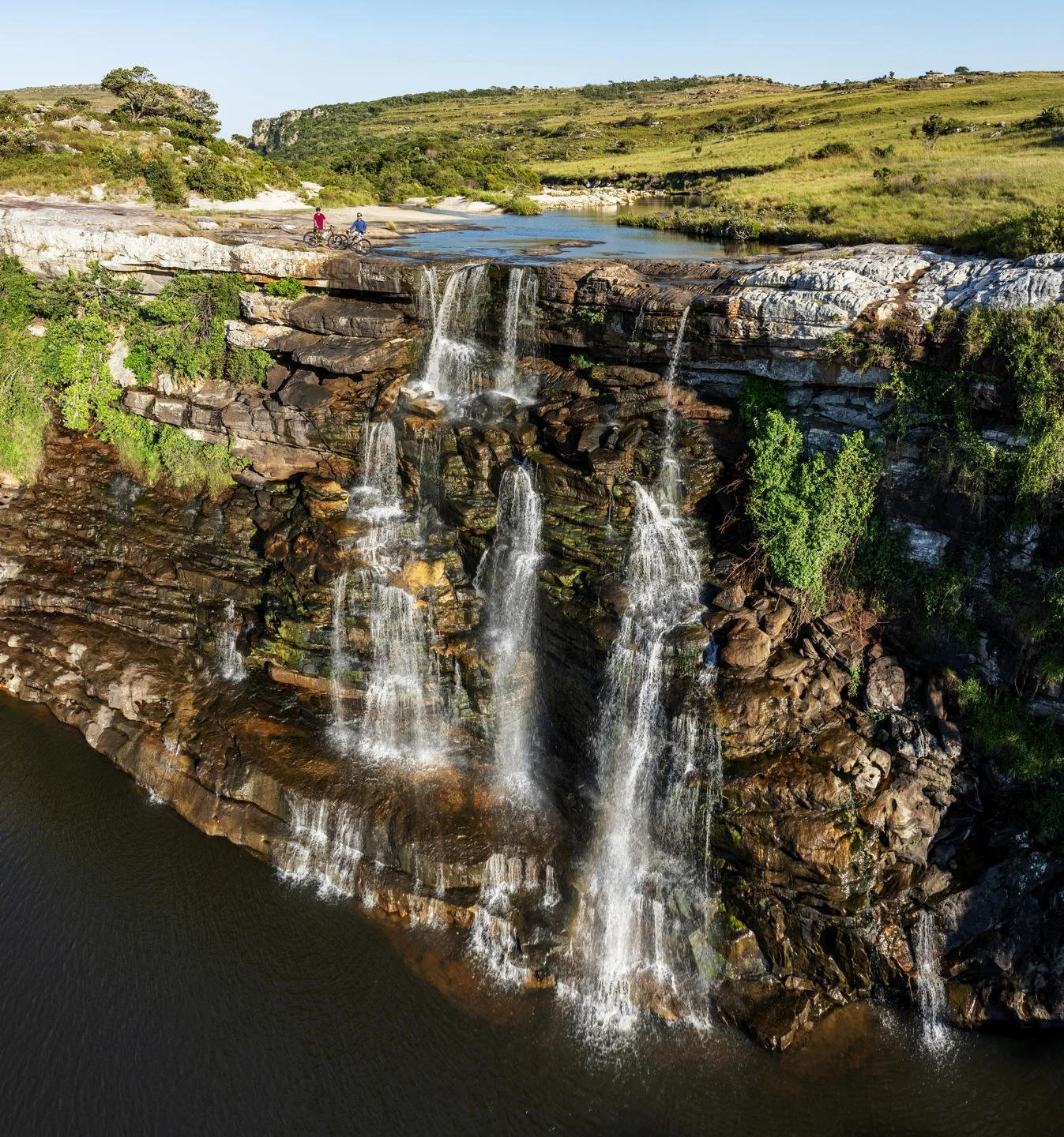
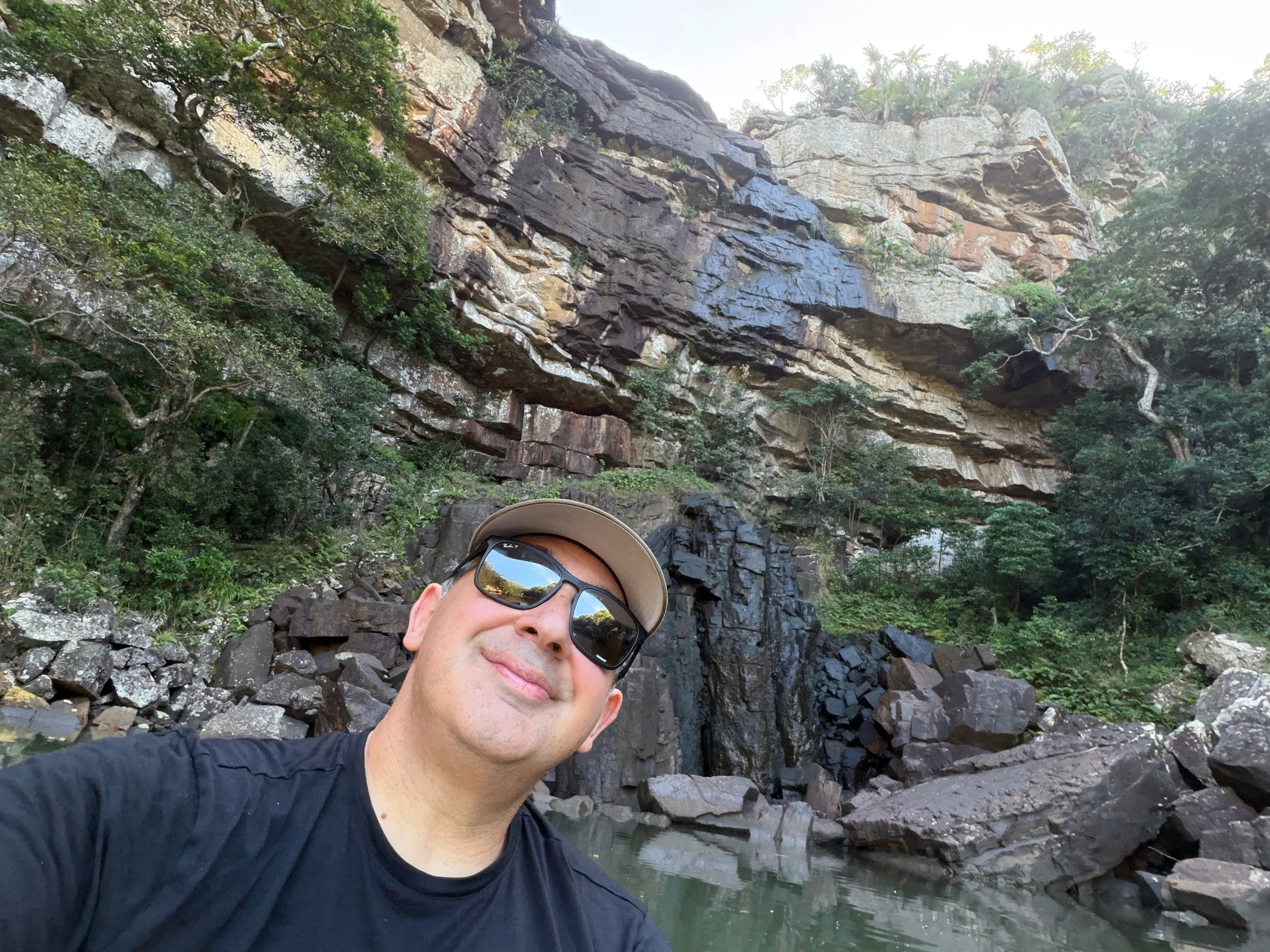
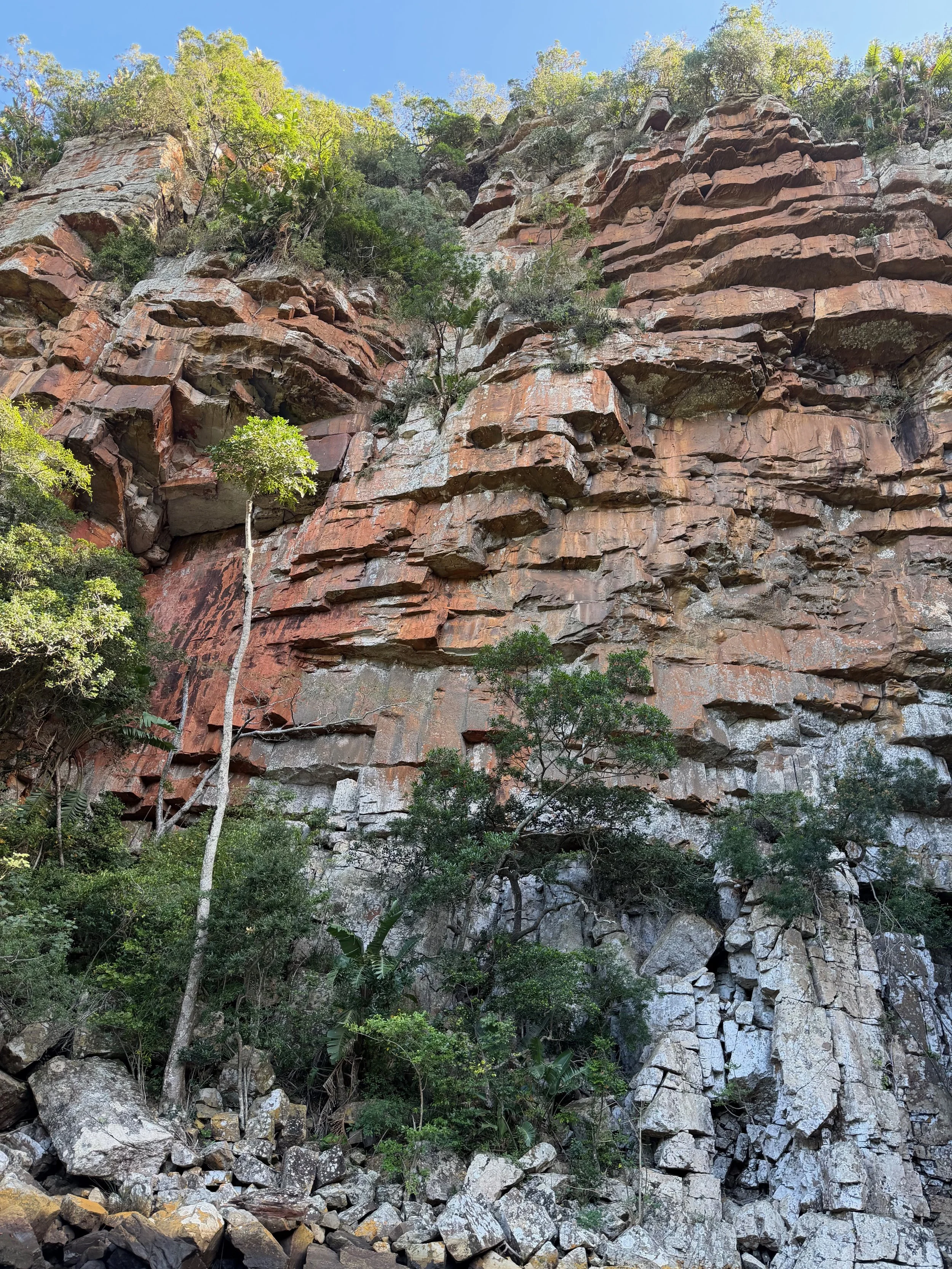
Our Day 2 waterfall expedition was the heart of the trip’s adventure. We drove about thirty minutes to the trailhead at Horseshoe Falls, hiked down past an ancient rock-art cave (Asanda explained the centuries-old paintings of animals native to the area), and reached a beautiful natural pool below the falls. We did two jumps there — a one-meter (~3 ft) introductory jump, then a five-meter (~15 ft) jump that was my first rock jump ever. The water was freezing and the experience was unforgettable.
From there we went to a scenic overlook with views of multiple waterfalls together, then to a remarkable spot Asanda calls the Portal — a naturally carved stone basin where a waterfall plunges into a deep, relatively narrow pool. There’s a four-meter and a three-meter jump option; Asanda did the four-meter directly into the waterfall, and Samar and I did the three-meter. We then stopped on the rocks for sodas and snacks (crispies similar to a Nature Valley bar, biltong, nuts, dried fruit chips) and visited the spot where Asanda’s “eel friend” lives — though the eel didn’t come out to greet us initially.
We hiked up to Baboon Cave for the picnic lunch (described in Food), which sits over the river with views of multiple waterfalls. There’s an eight-meter jump from the cave that Asanda did; I’d considered it but ultimately skipped after a few too many safety instructions made me overthink it.
On the way back to the lodge, Asanda spotted dolphins from the vehicle. We rushed down to the beach in an attempt to swim with them, but by the time we got ready they had moved on.
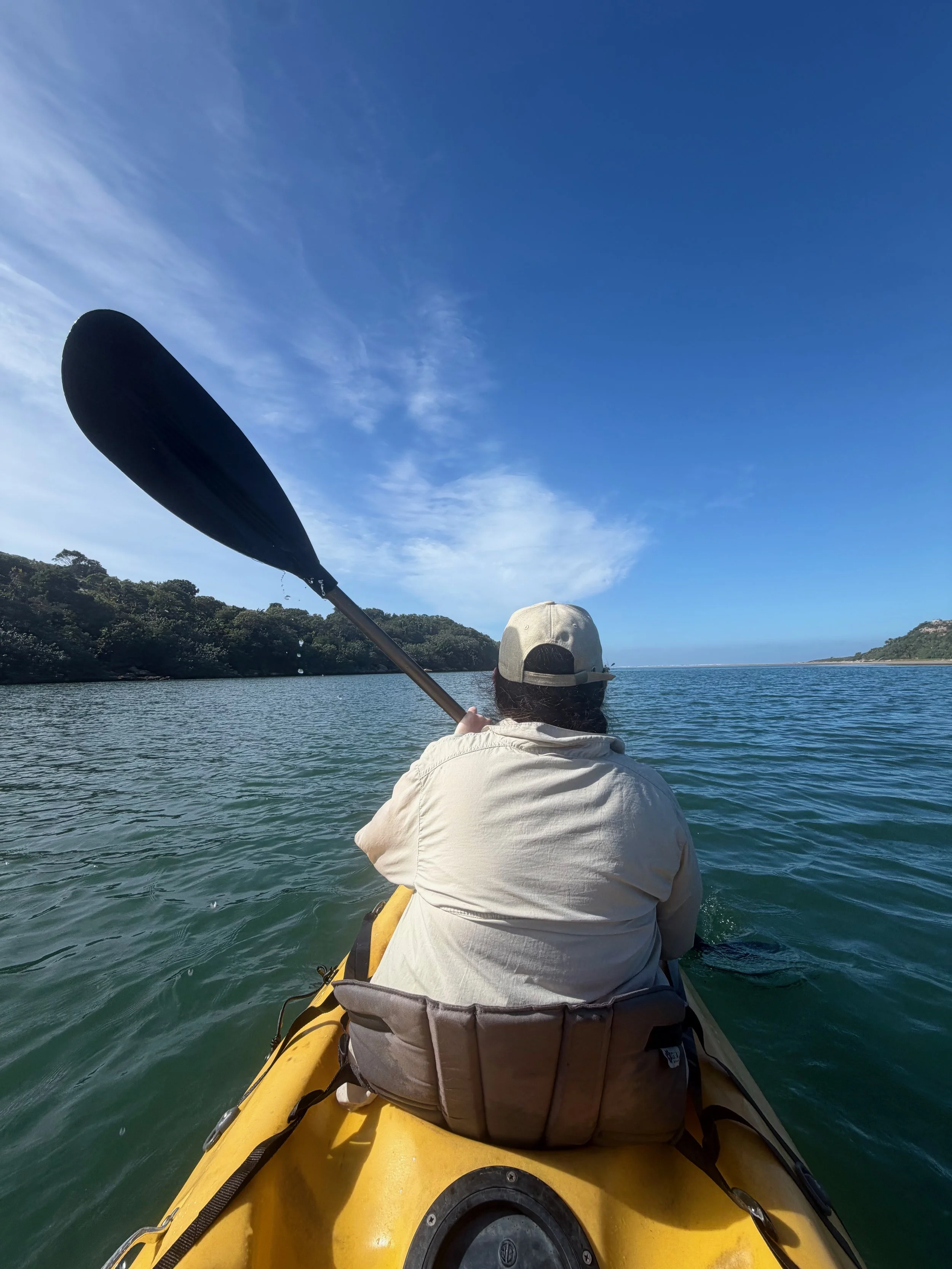
Our Day 3 kayaking was magical. We drove forty-five minutes to a river on the edge of the reserve and paddled for about ninety minutes — Samar and I in a double kayak, Asanda in a single. We were the only three people on the river. The conditions were forgiving (minimal wind, minimal current), and Asanda did all the navigational work. We paddled to a private waterfall, and on the way back stopped to see a centuries-old shipwreck and another beach. The Wild Coast has wrecked many ships over the centuries — we saw remnants from a wreck about fifty years old, and Asanda pointed out beautiful porcelain shards that have washed up dating back to the 1600s. The exclusivity and the quiet, along with being somewhere so completely untouched — that’s what made this morning special.
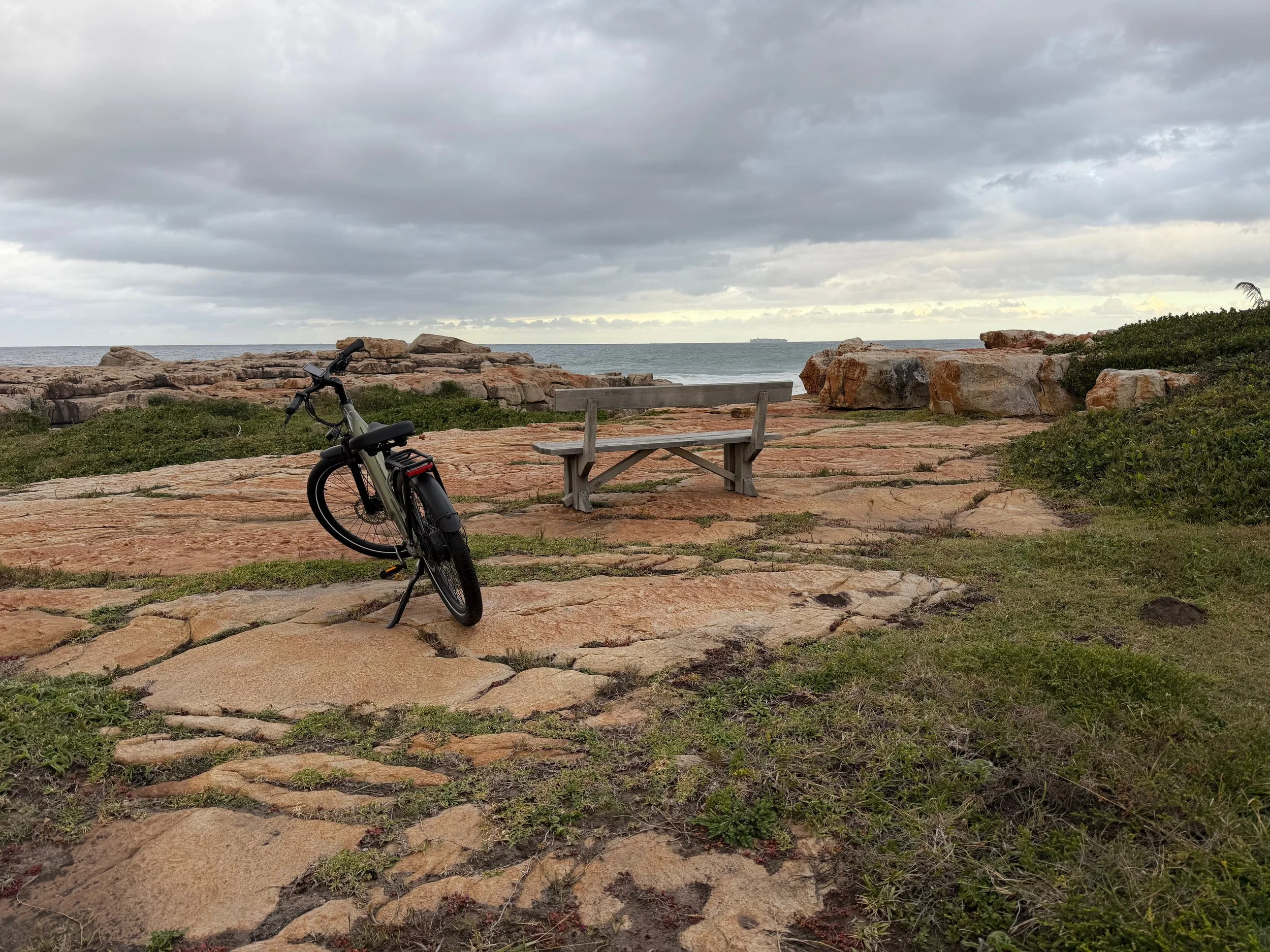
Day 3 sundowner was a solo e-bike ride toward Shelly Beach. There are no dedicated bike paths on the reserve, which is both a feature (you’re riding genuinely wild terrain) and a caveat (it’s harder for inexperienced riders). I turned back early after about an hour as the wind and a light rain rolled in. The ride was wild, beautiful, and a real reminder that this is not a manicured resort.
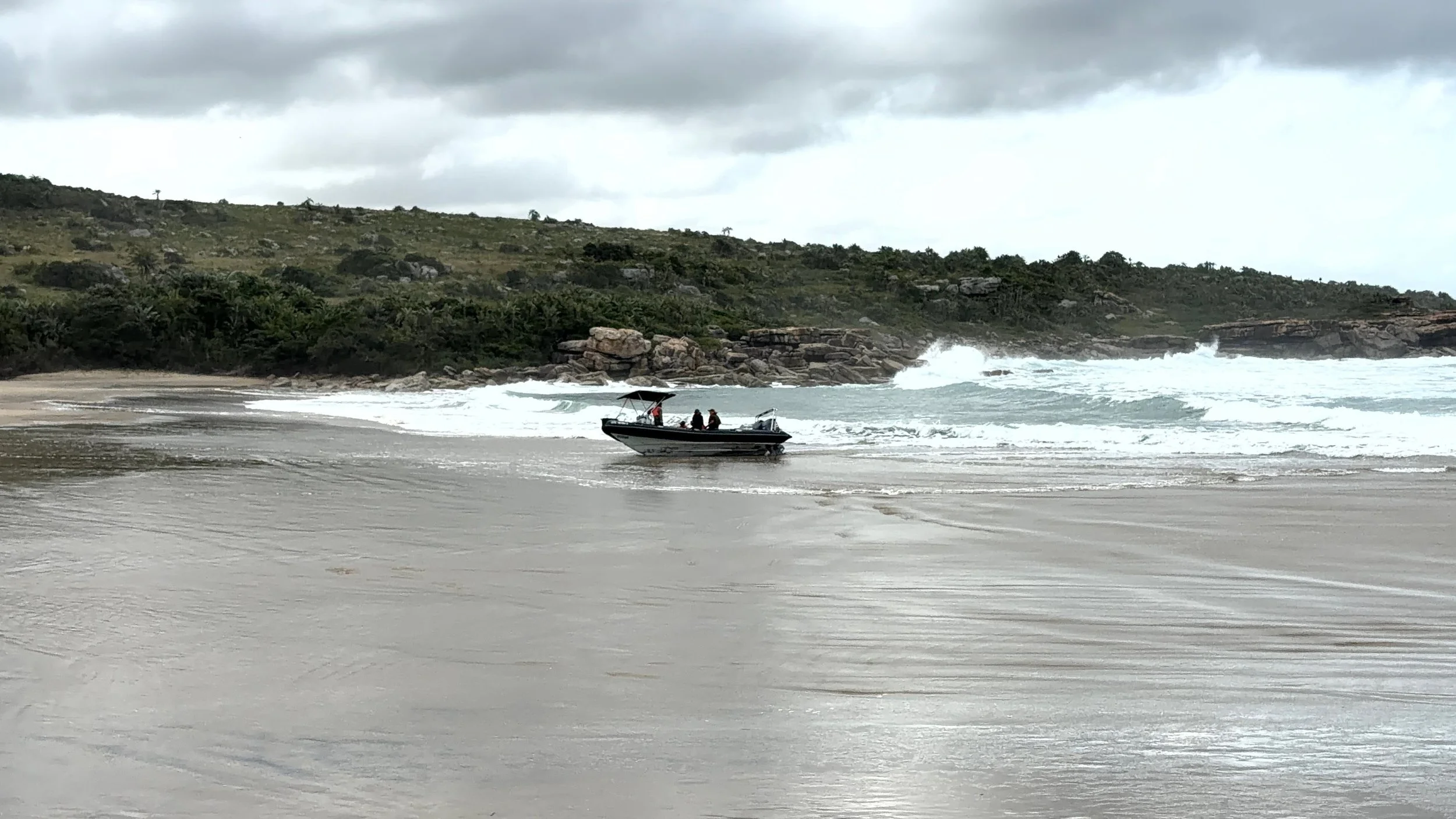
We saw the Green Griffons Rangers in training in their vehicle during one of our drives. We met the lodge’s new boat captain, who is also leading the buildout of the anti-poaching unit. We did not go out on the boat — the rigid inflatable launches directly from the beach (no dock, so the launch goes through the surf) — but the option is there for sardine run season and other coastal excursions.
The most important thing about activities at GweGwe is that they are tailored to your adventure level. Nothing ever felt too much, and nothing felt uncomfortable. The lodge reads guests well and meets them where they are — then gently expands the comfort zone if you’re up for it.
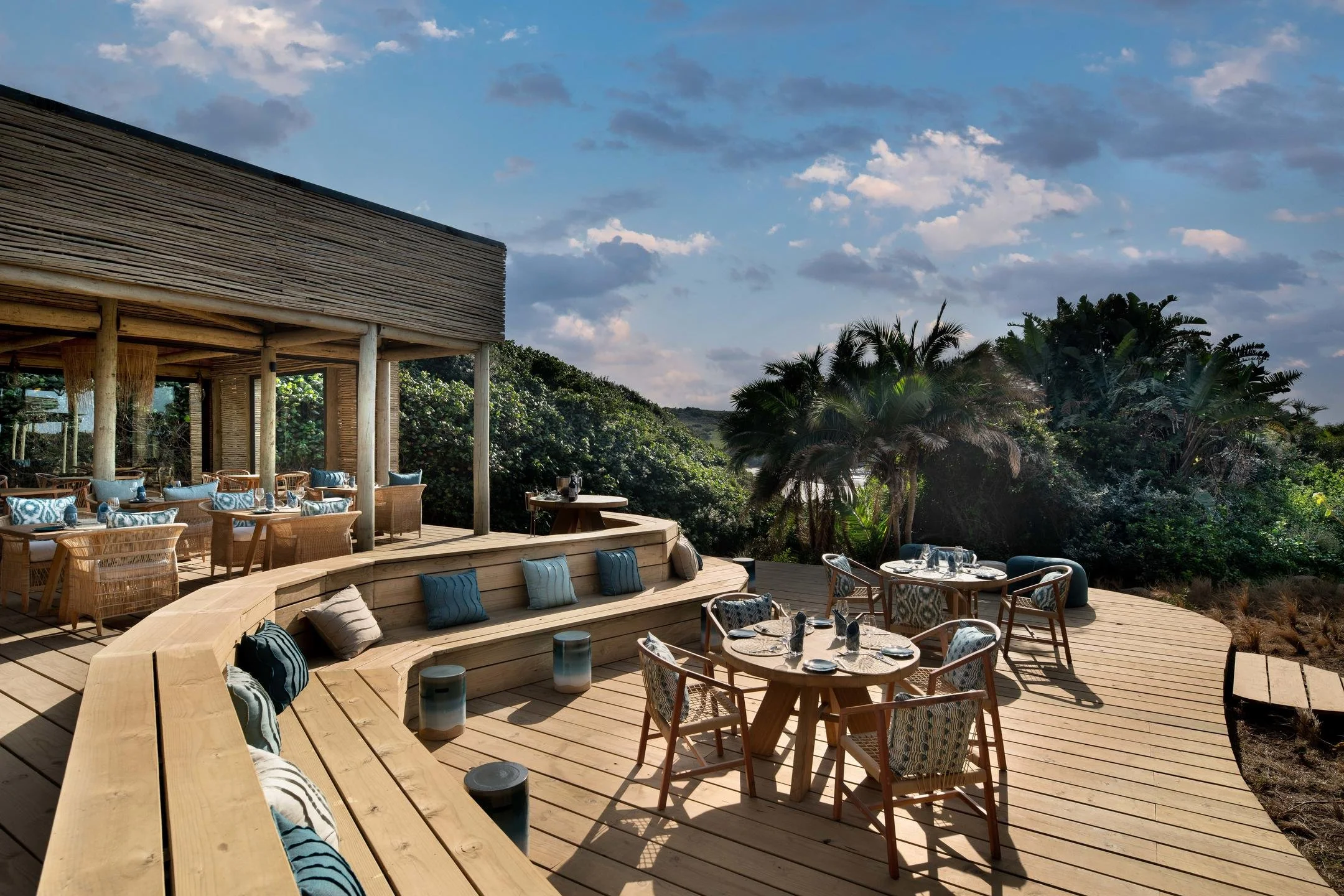
Outdoor dining at Gwe Gwe
The Good
The setting is genuinely unlike anywhere else — a remote, private 5,000-hectare slice of the Wild Coast with no other lodges, no other people, and a beach you walk down to in two minutes.
The community-ownership and conservation story is real and felt in the texture of the lodge — the staff, the rangers, the chef, the leadership, the design.
The room design is one of the cleverest I’ve seen — two outdoor decks for any wind direction, ocean views from everywhere including the bathtub, an outdoor shower connected to the indoor one, and a layout that makes 700–800 sq ft feel exactly right.
Asanda — quiet, confident, knowledgeable, and able to make adventurous activities accessible to non-adventurous guests.
The food — simple, delicious, unpretentious, and balanced; the chef Nozi engages personally with guests.
Service that feels like home, with someone always watching over you — Aubrey in particular.
The hot tub — wood-fired, hidden behind a rock, ocean on one side and sunset on the other, with drinks waiting on arrival.
The activity menu — broad, varied, and calibrated to each guest’s adventure appetite.
The private beach dinner — extraordinary on its own merit, made better by the lodge asking first whether we wanted to be surprised.
All-inclusive food and drink — generous, with premium upgrades available.
The arrival ritual — ten-plus staff singing a traditional GweGwe song with cold towels.
Nigel and the charter flight — a delightful start.
The Bad
The honest critiques are few and minor:
The minibar could use a slightly broader range of snacks and drinks for in-room lounging. Whatever we asked for was happily provided, but a more pre-stocked offering would suit guests who’d rather not call for every small craving.
The e-bike riding has no dedicated paths, which is wild and authentic but harder for inexperienced riders.
The plunge pool is unheated, which is wonderful in peak summer and quite cold in winter. Worth knowing if you’re traveling in the shoulder or cool seasons.
The Wi-Fi is functional but not fast — appropriate for the remoteness, but worth flagging for guests who plan to work.
The rigid inflatable boat launches directly from the beach through the surf — adventurous and authentic, but more rugged than some guests might expect.
Conclusion
Who is GweGwe perfect for? Anyone who loves a beach and is open to any level of adventure. Honeymooners. Couples celebrating anniversaries. Multigenerational families. Travelers decompressing after a traditional safari. Travelers who don’t want a traditional safari at all and prefer water and waterfalls to game drives. Active travelers seeking somewhere genuinely secluded.
Who should look elsewhere? Hard-core Big Five travelers chasing checklist sightings and full vehicles — that’s not what this is. Travelers expecting a polished, white-glove, Maldives-style beach resort with paved paths and a boat dock — GweGwe’s edges are deliberately rugged.
Honestly, though, that’s a short list. The honest verdict is that GweGwe is a little bit of everything to almost everyone, and I mean that in the best way.
Would we return? In a heartbeat — and I’m planning to bring my mom as soon as I can.
Would we send Sundowner guests? Without hesitation.
Final Rating
5 / 5
Room: 4.0 / 5 · Service: 5.0 / 5 · Food: 4.7 / 5 · Guiding: 4.7 / 5 · Location: 5.0 / 5
Perfect. Among the best four-day trips I have ever experienced.
Beach. Bush. Yours.
Want a closer look? Dive into our video tour of GweGwe Beach Lodge below.